
Easter Notes from the Aventine | February-March 2026
Abbot Primate Jeremias writes from Rome on death, the human and divine eternities, life at Sant’Anselmo and the upcoming Jubilee.
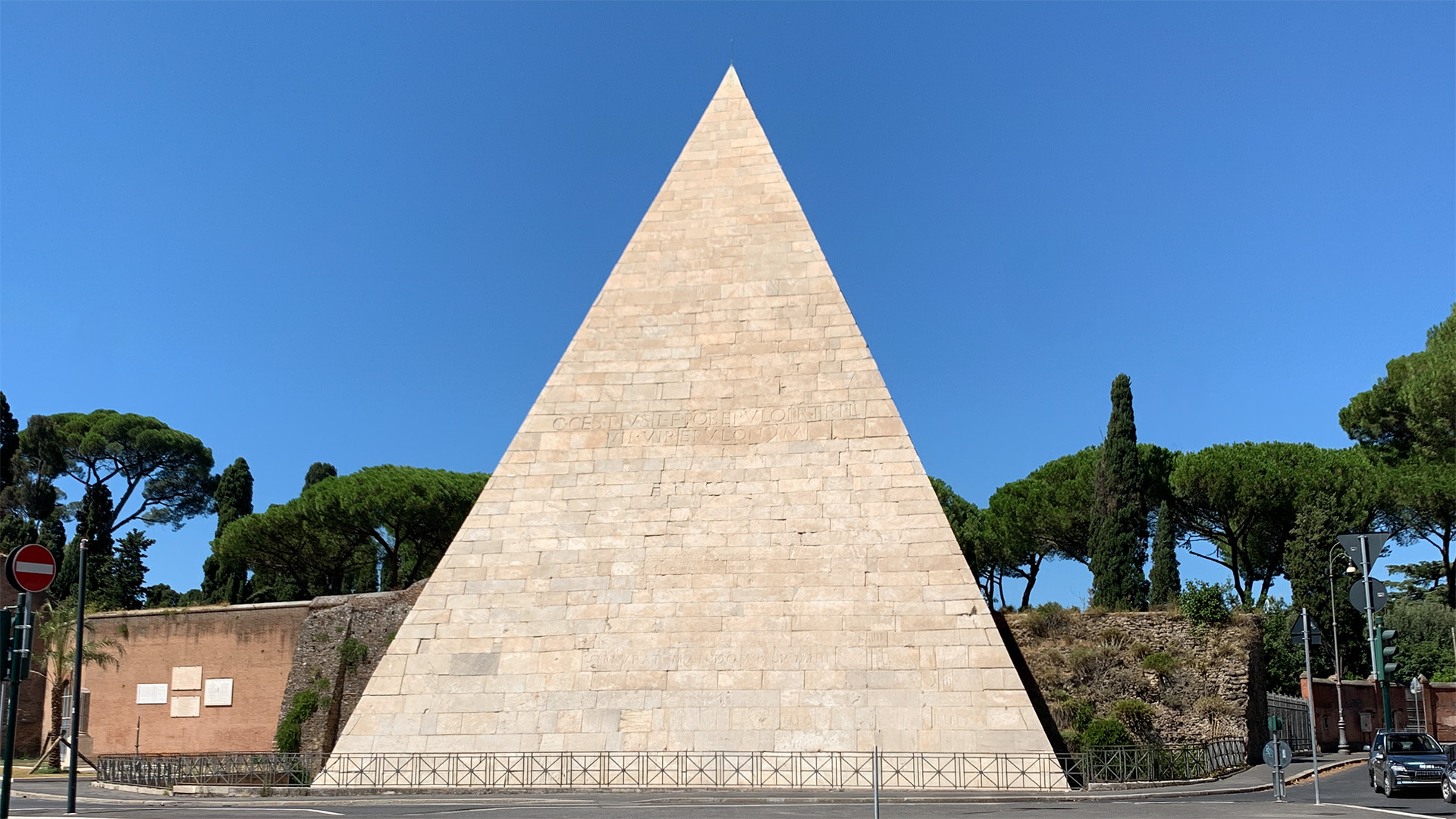
Photo: Pyramide Caio Cestio, Rome (cropped, adjusted) by Chabe01 - Own work, CC BY-SA 4.0
4 April 2026
The Ephemeral and the Eternal
Here in Rome, Memoria is cultivated with particular intensity—often through grand edifices or, at the very least, marble plaques. The history and glorious deeds of past generations are omnipresent: Popes and Caesars, the Duce as well as ordinary Romans from antiquity to the present day. Paradoxically, this striving for eternity creates a profound awareness of the ephemeral. A few hundred yards from here lies the grave of the English poet Percy Bysshe Shelley. In his sonnet "Ozymandias", he gave voice to the frailty of human attempts to achieve immortality. His grave lies in the shade of the Protestant Cemetery near the Pyramid of Cestius. The pyramid itself is another such attempt to seize immortality by human means: a tomb for a high official from the era of Emperor Augustus. Nevertheless, 2,000 years later, we are still speaking of them both.
My Easter memories of recent years are strongly marked by the death of Pope Francis on Easter Monday of last year, and by the death of Abbot Primate Emeritus Notker Wolf, to whom I was very close. The news of his entirely unexpected passing on Easter Tuesday 2024 struck the Salzburg Abbots’ Conference, which was in session at the time, like a thunderbolt.
Our Christian tradition deals with this circle of themes—death, resurrection, and eternal life—in many diverse ways. The Christian doctrine on this is so multi-faceted that even Popes have found themselves entangled in it, such as John XXII in the 14th century. For me, the Easter faith as it is found in the Gospels is sufficient—not a "convoluted book," but a collection of testimonies: from the empty tomb to Thomas, and to the appearance by the lakeshore.
At Sant’Anselmo, we always welcome a special guest at the beginning of the Triduum. According to ancient custom, our Titular Cardinal arrives to preside over the Mass In Coena Domini. The current holder of our titular church, Cardinal Baldisseri, still does this with great verve and energy. However, the washing of the feet is a little much for the 85-year-old prelate. That is when the Abbot Primate’s hour strikes.
I have often had cause to "lament" a little in NEXUS that we here at Sant’Anselmo often lose our best people quite suddenly when they are appointed superiors of their home monasteries. In my short term of office, this has now happened for the fourth time; two weeks ago, Fr. Karol Cetwiński was appointed Prior Administrator of Tyniec. Unlike the usual cases, he was still a student, but already the director of our Schola and in charge of the new programme for Gregorian chant. It is not easy for us to do without him, especially so close to Easter. Yet we also know these are good decisions: Our best people are called upon because they are truly needed at home to take on vital tasks. The years spent at Sant’Anselmo have given them all a broader horizon, which is certainly no disadvantage for leadership roles back home. Therefore, our best wishes go with Fr. Karol and his community in Poland.
Recently, I picked up the minutes of the 1992 Congress of Abbots. While reading, I stumbled across a casual remark by the then-Abbot Primate Viktor Dammertz: He noted that during his 15-year term, he had visited around 700 monasteries. I was astonished and thought: I will certainly not manage that! I am happy if I can attend most of the regional meetings of superiors. Most recently, I was in South Africa with BECOSA and in Dakar with the French-speaking brothers and sisters of our Order. After Easter, I will attend the Salzburg Abbots’ Conference for the German-speaking abbots, followed by the assemblies of the Italian abbots and, a little later, the abbesses, and then the Union of Monastic Superiors of Great Britain. These encounters bring me great joy and—more importantly—they offer the opportunity for good conversation, both with the whole assembly and often with individual superiors. Let me say quite boldly: Invite me! If at all possible, I shall come.
In addition to my travels for these meetings, I have received a few special assignments from the Holy See which occasionally require me to travel. So far, these absences are manageable because the house here is in good hands. Prior Brendan leads the domestic community, and Rector Jákó leads the University. Many others help to ensure that Sant’Anselmo runs smoothly—thank God!
Two weeks ago, we briefed the Confederation and the CIB for the first time and in more than a little detail regarding the "Benedictine Jubilee: Places of Hope since 529." The website jubilee.osb.org will be filled with more content over the coming months. It is intended to be the central platform for the worldwide Jubilee. In preparation for this celebration, 2026 is themed "Awakening," which we link particularly to Norcia: the place where Benedict and Scholastica came into the world, where they were baptised, and where they first encountered the Christian faith within their family. There is much to reflect upon there! On 25 April, this "Norcia Year" will be officially opened on-site under the theme of "Awakening."
Our Benedictine tradition has produced many magnificent monuments. But the true heritage we owe to Saint Benedict is not found in tombs or pyramids. It is a living tradition that points toward the future and gives us hope.
With this Easter blessing, I remain
Yours,
Jeremias Schröder OSB
Abbot Primate
Elections, Appointments and Events | October-November 2026
Notes from the Aventine | August-October 2026
Pope Leo’s Benedictine Summer
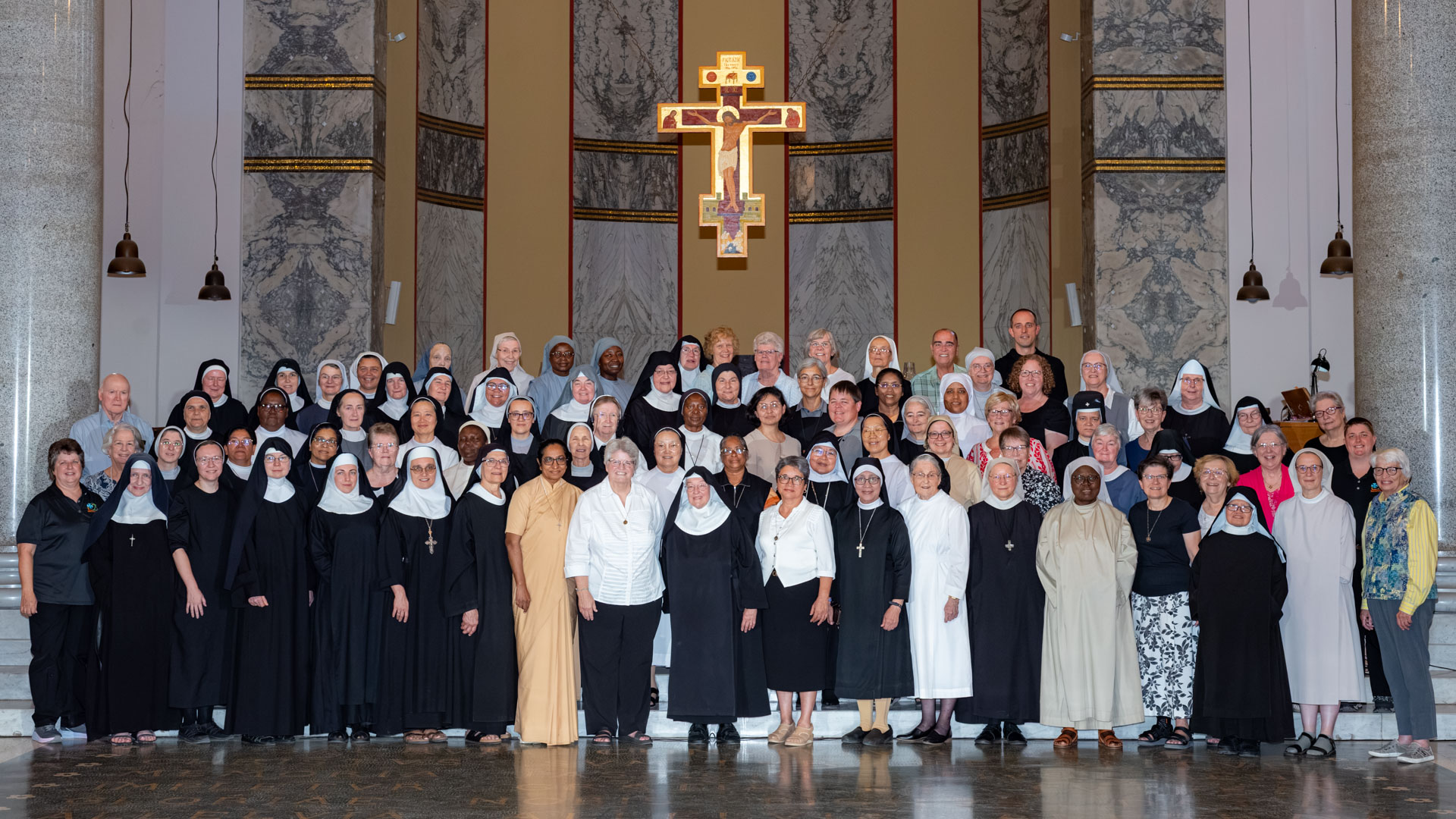
CIB Approves Milestone Restructuring at Rome Meeting

A Glance into the Catalogus: Large Monasteries and Popular Names
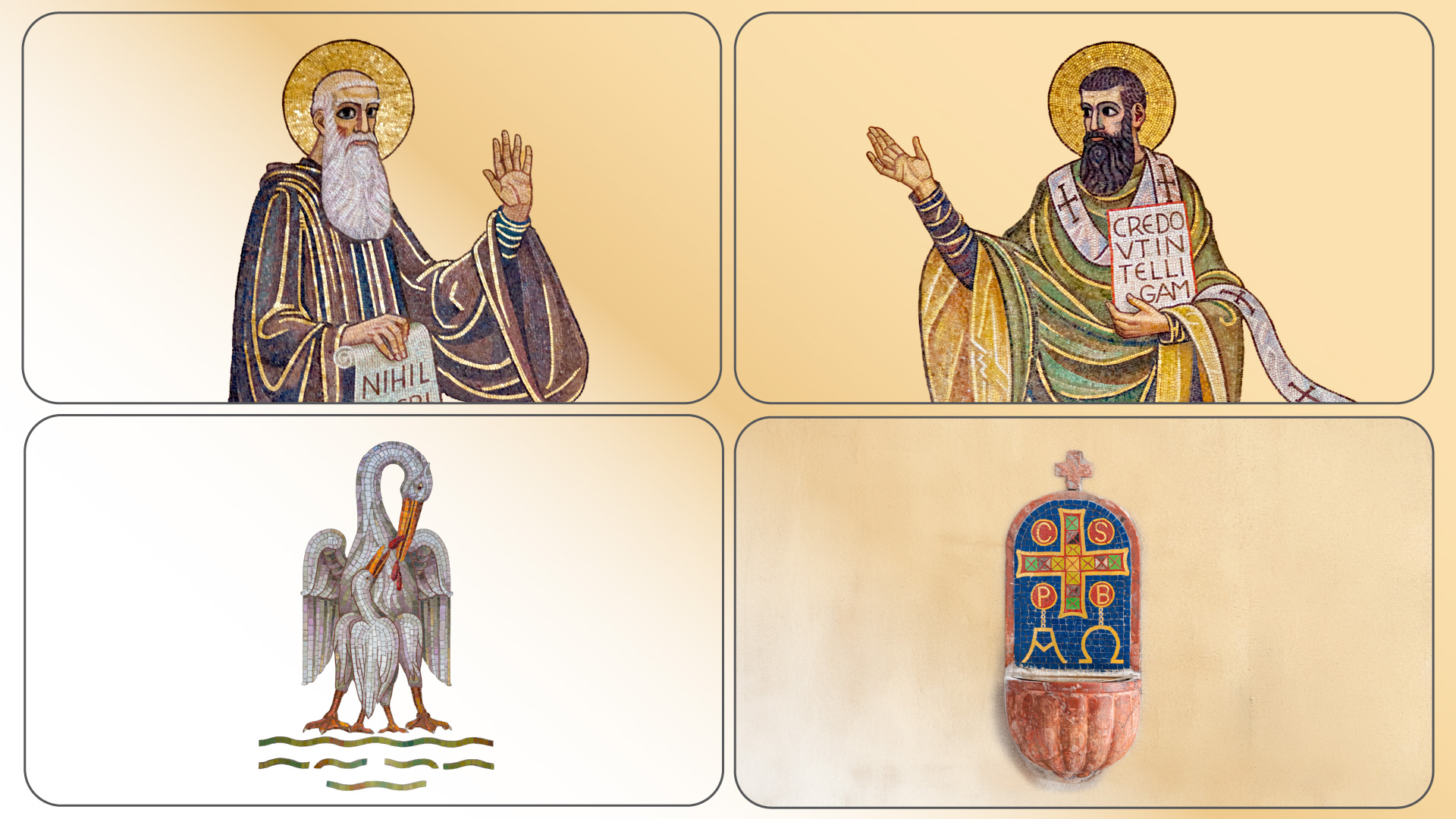
Summer Formation at Sant’Anselmo: Four Programmes for 2027