
Students of Monastic Institute Encounter Eastern Monastic Tradition in Romania
Students of the Monastic Institute of Sant’Anselmo recently concluded a study pilgrimage to Romania, engaging with Orthodox communities to explore the shared roots of Eastern and Western monasticism.
Photos and videos courtesy of Sant'Anselmo Monastic Institute
15 June 2026
Prof. Fernando Rivas OSB
Monastic Institute
Faculty of Theology
Ateneo Sant’Anselmo
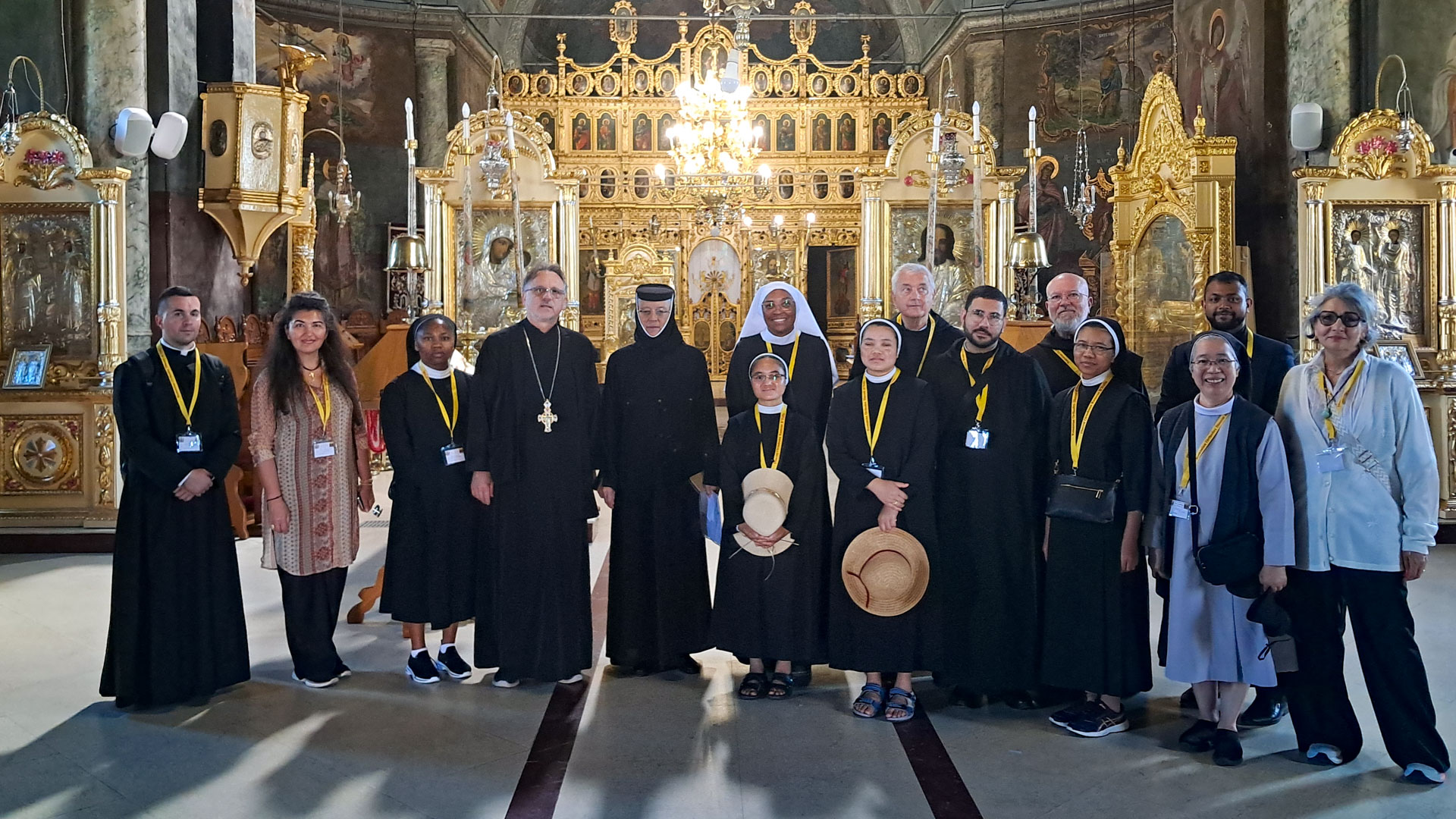
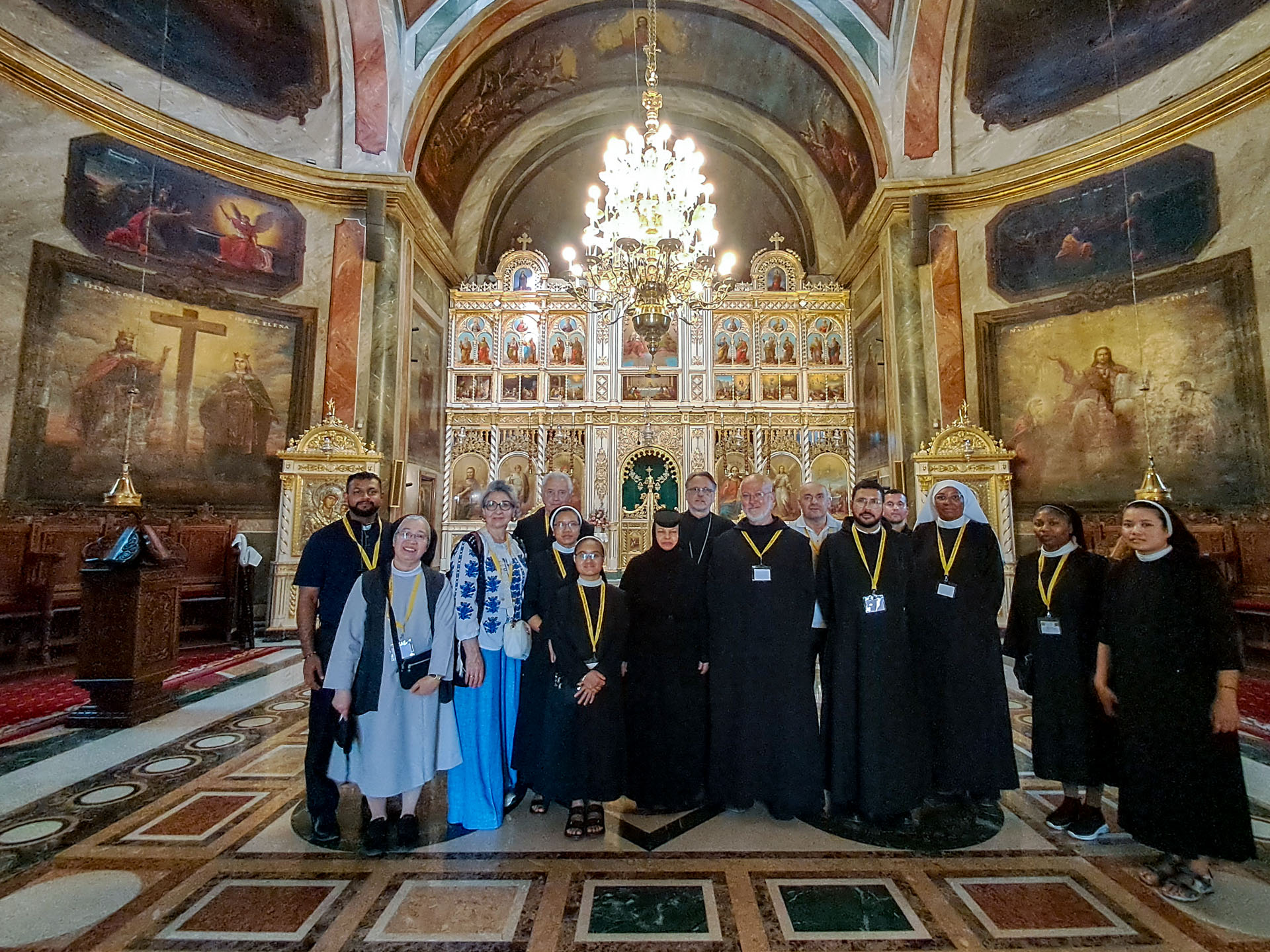
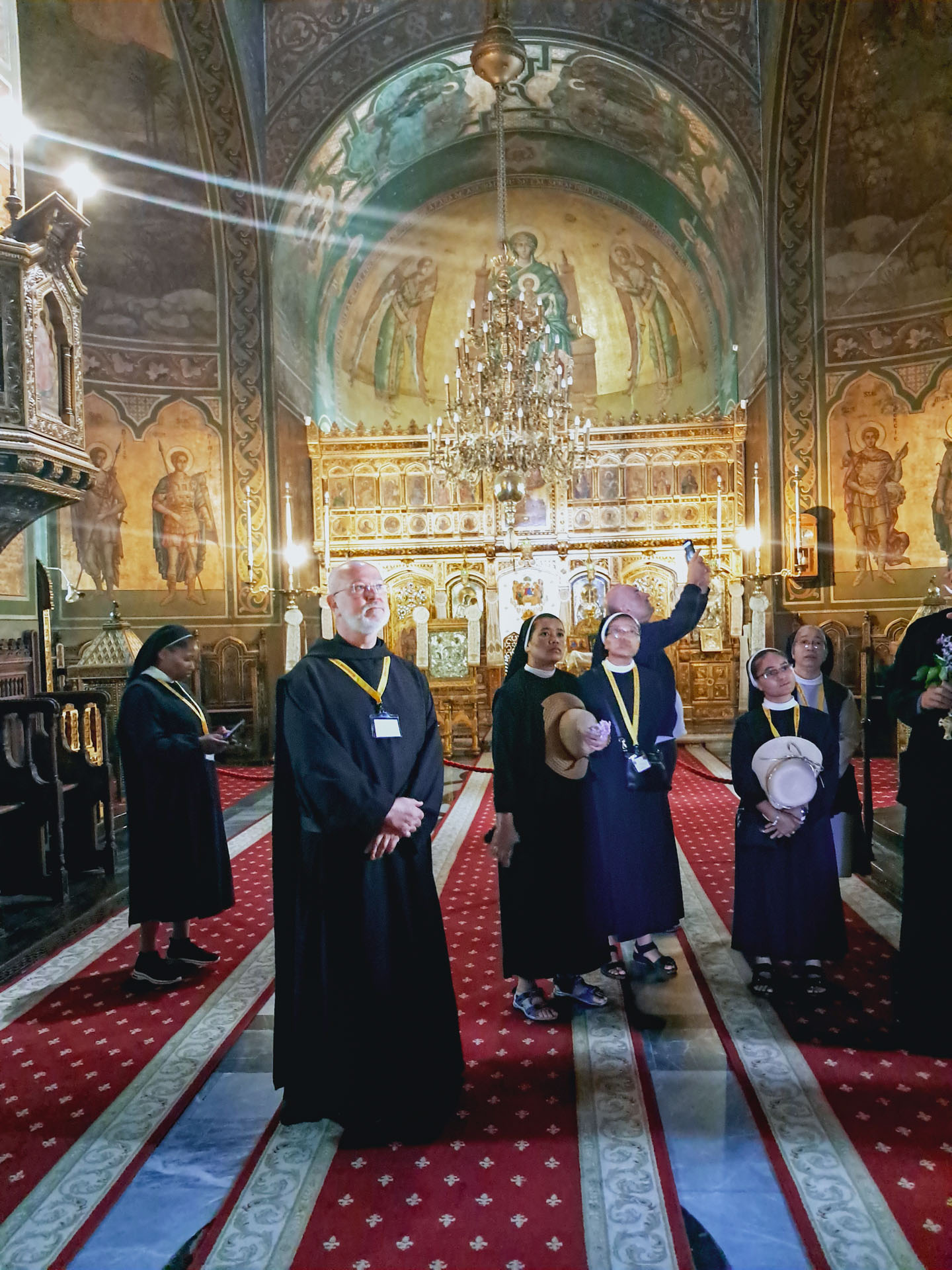
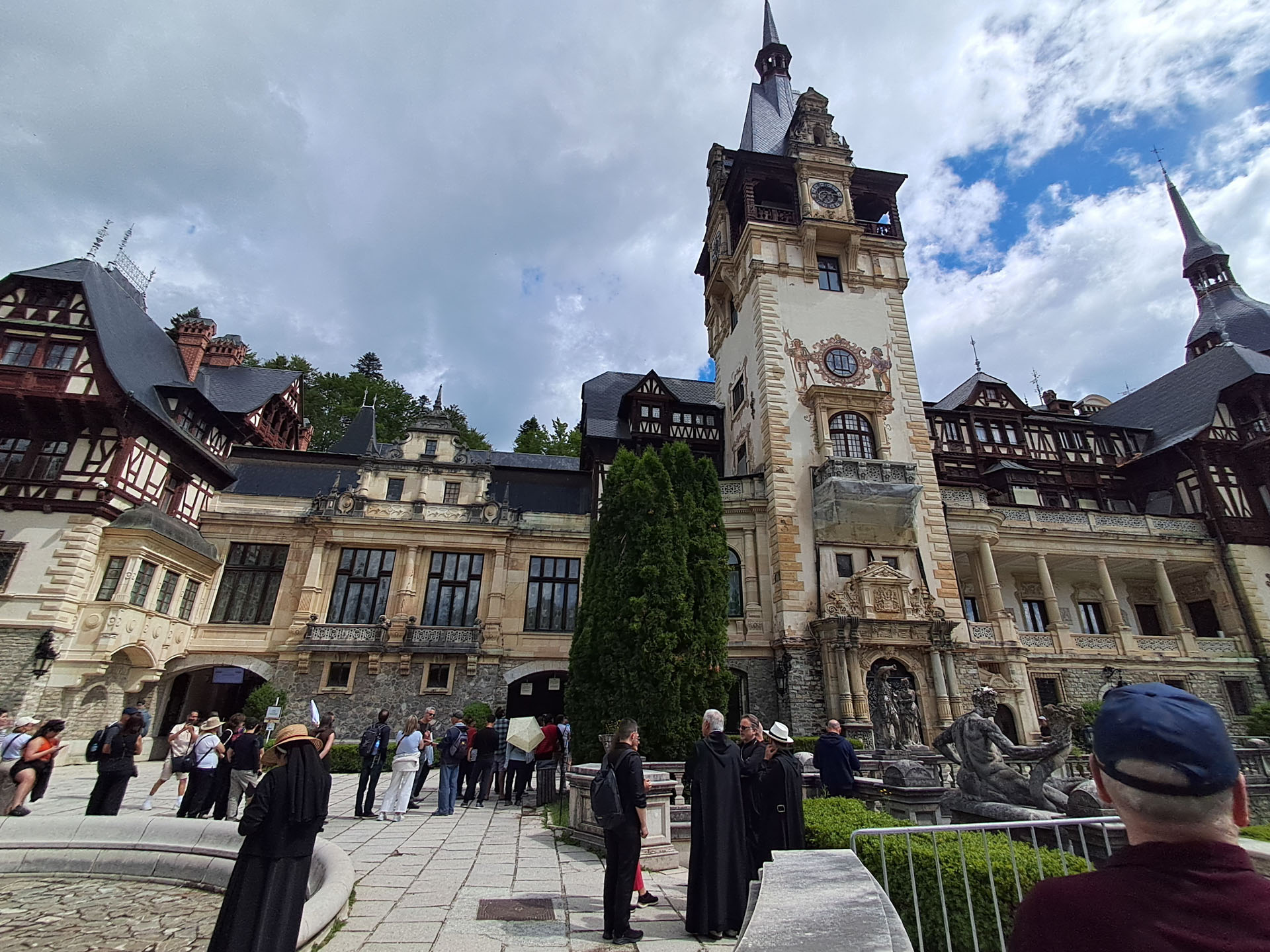
From 28 May to 3 June 2026, a group of students from the Monastic Institute of Sant’Anselmo undertook a pilgrimage to Romania, a land deeply marked by Christian faith and the Eastern monastic tradition. Coming from numerous countries and belonging to different monastic families, we departed from Rome not as mere tourists but as pilgrims eager to encounter a sister Church and to experience from within the spiritual richness of Romanian Orthodoxy and its monastic life.
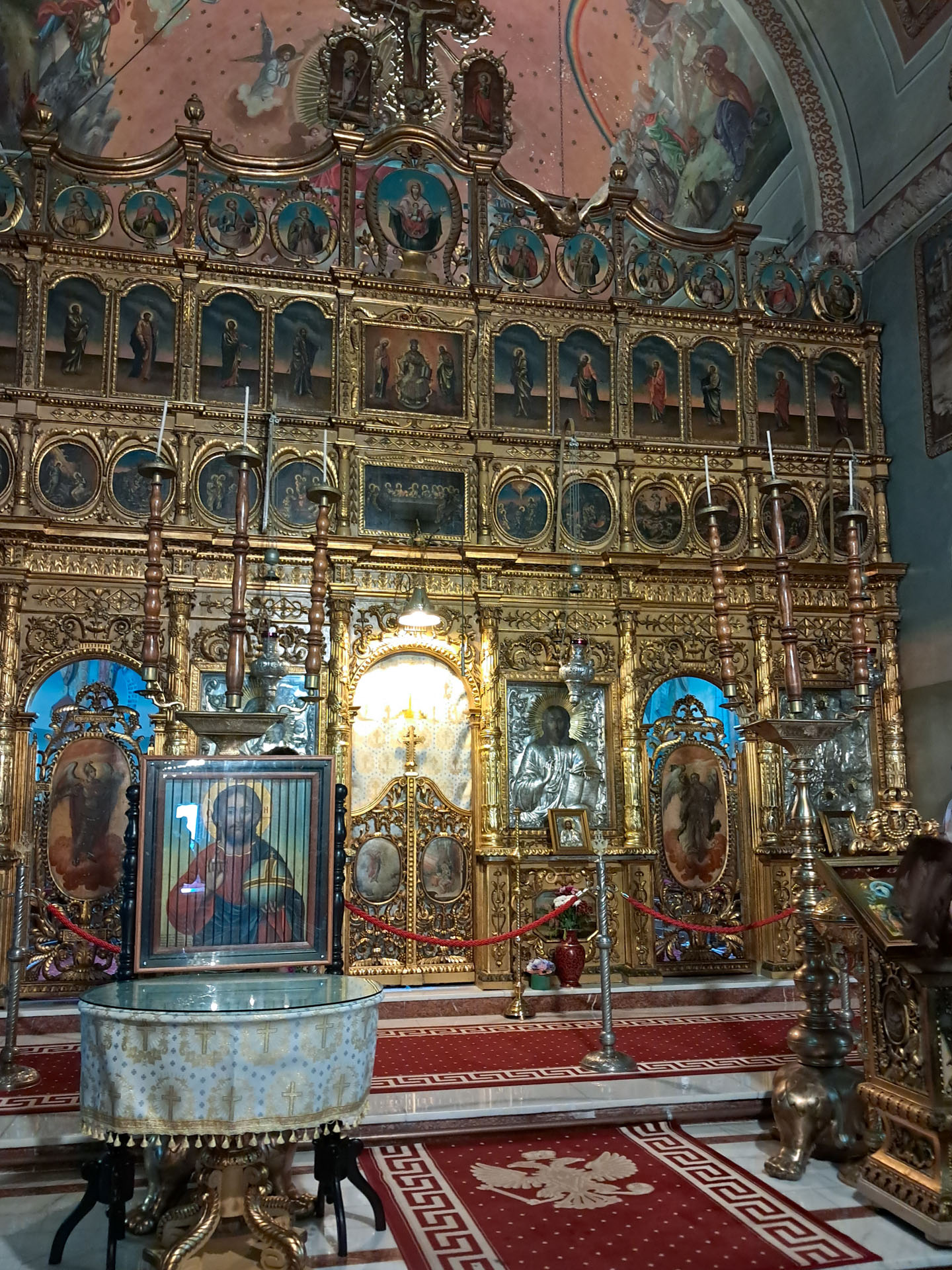
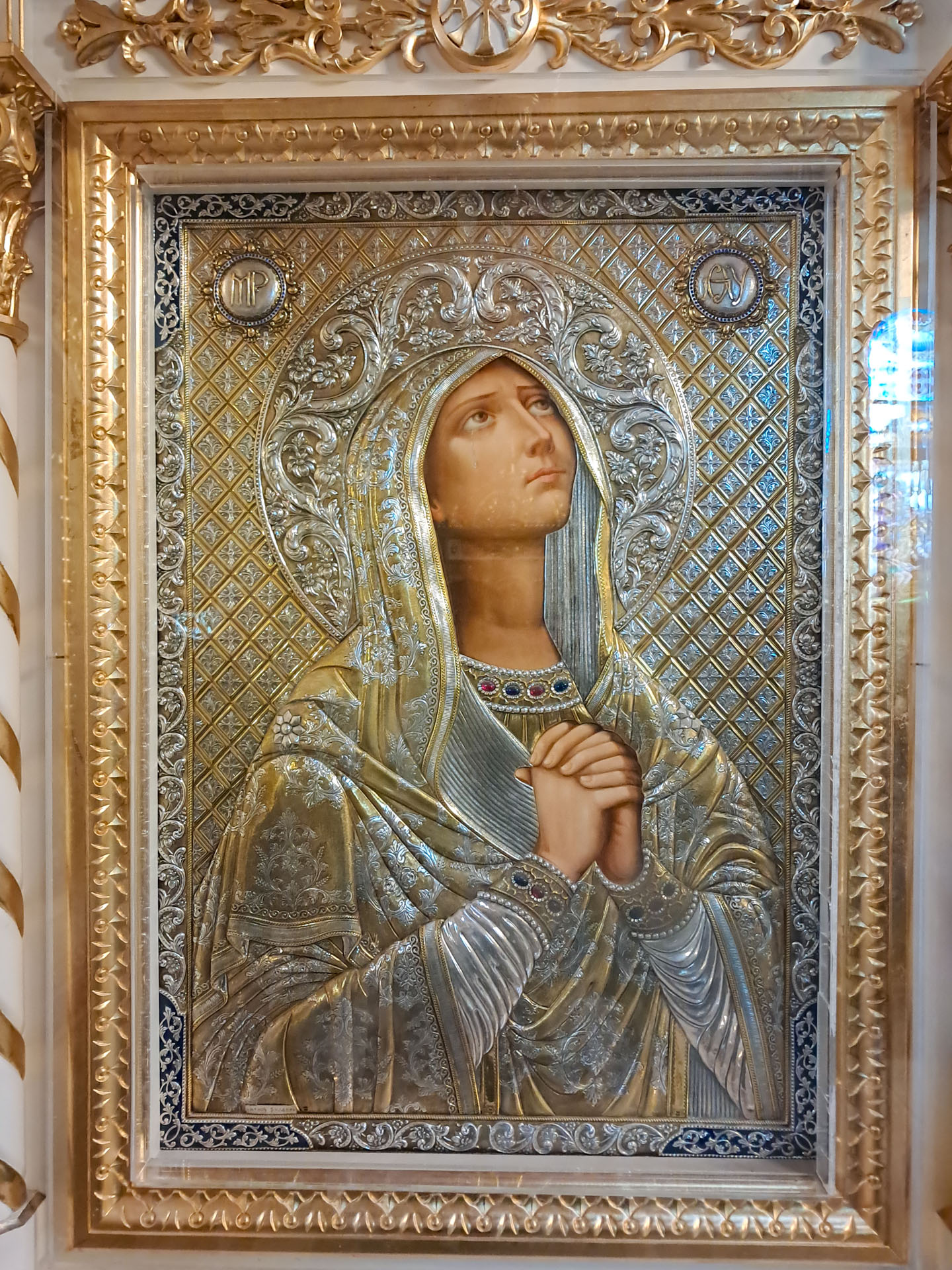
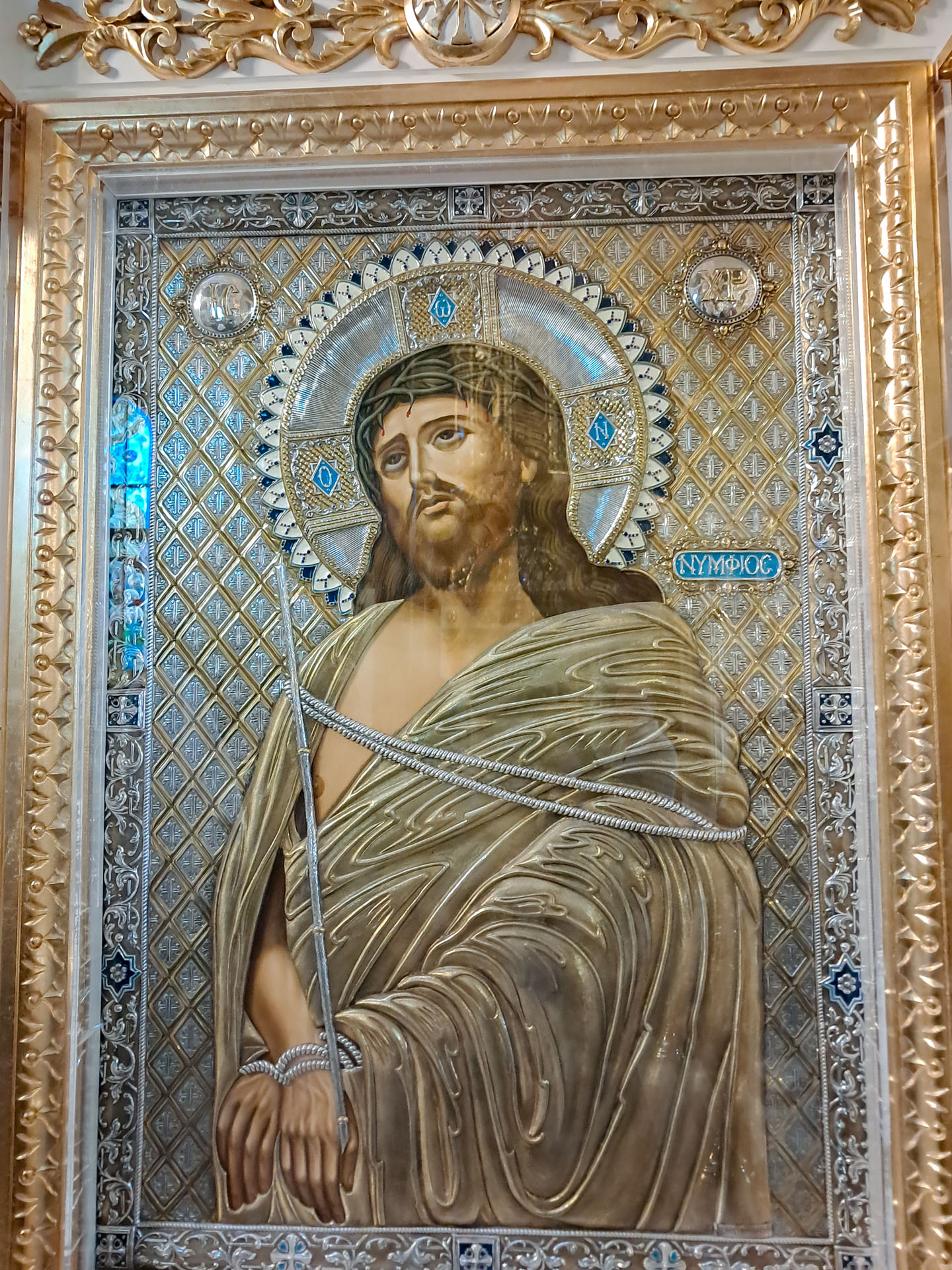
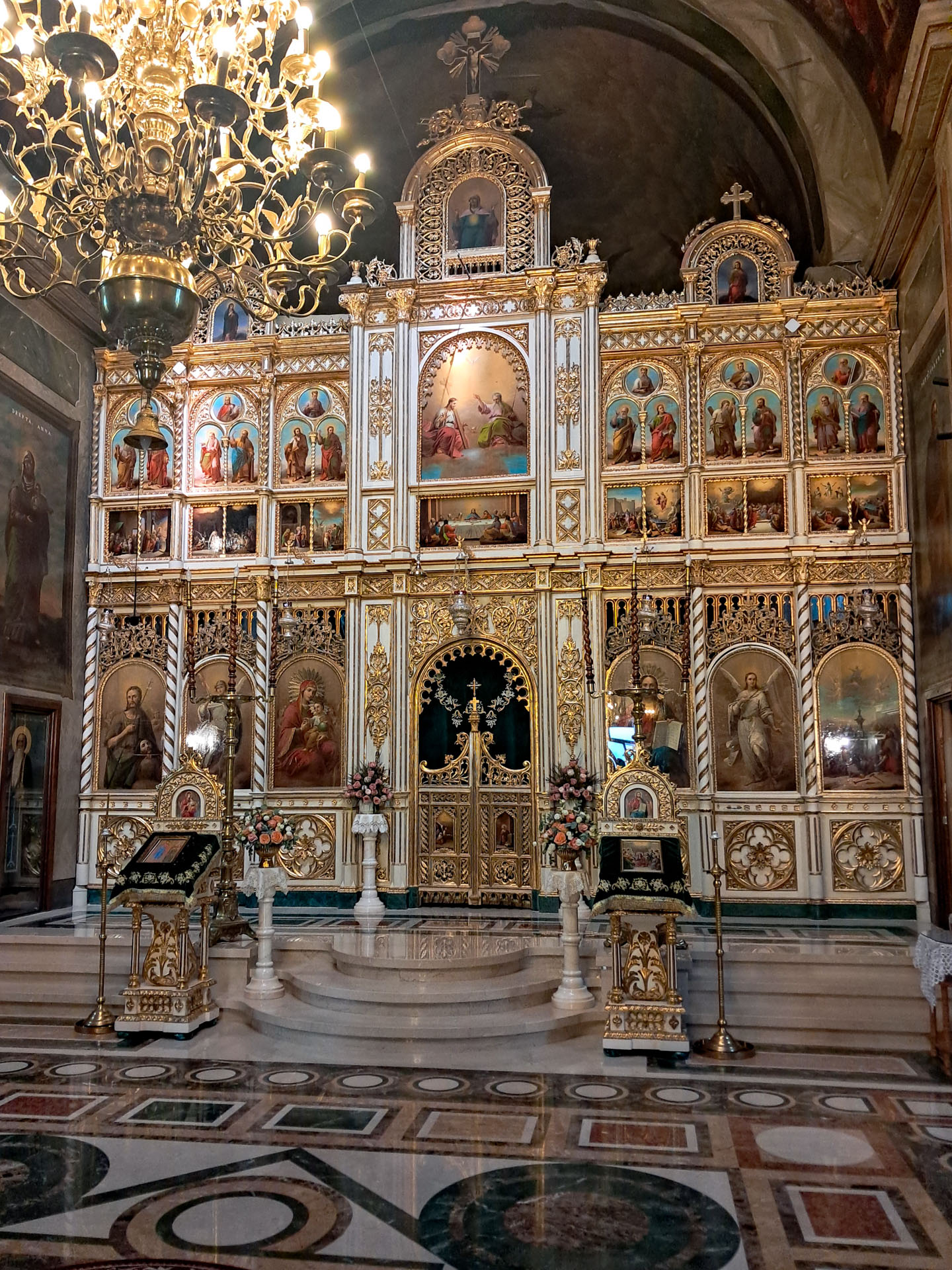
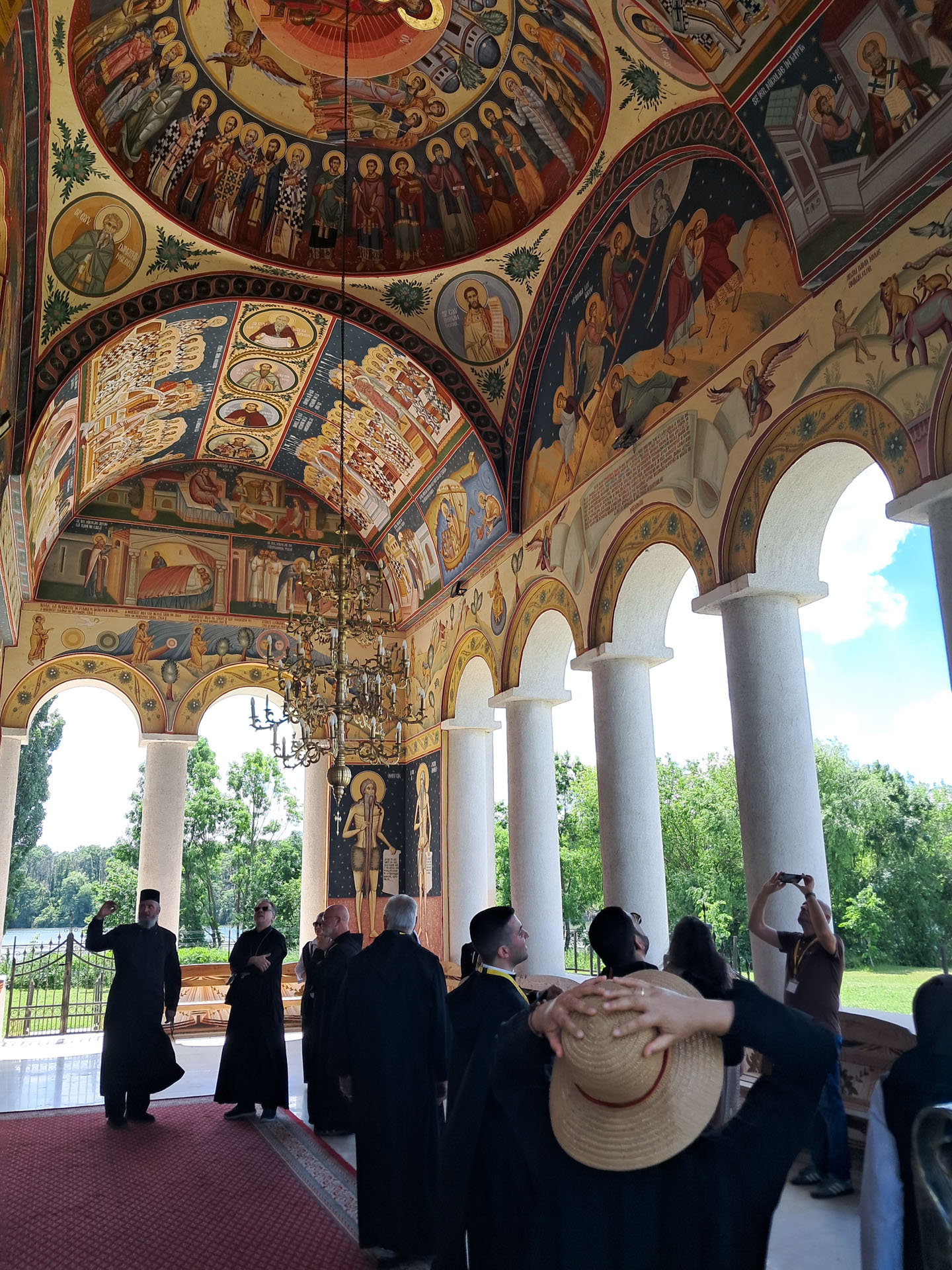
The study pilgrimage was led by Father Gheorghe Militaru and his wife Ruxandra Militaru. The group also included Fr. Ruberval Monteiro, who spoke to us about the richness of Romanian art and iconography.
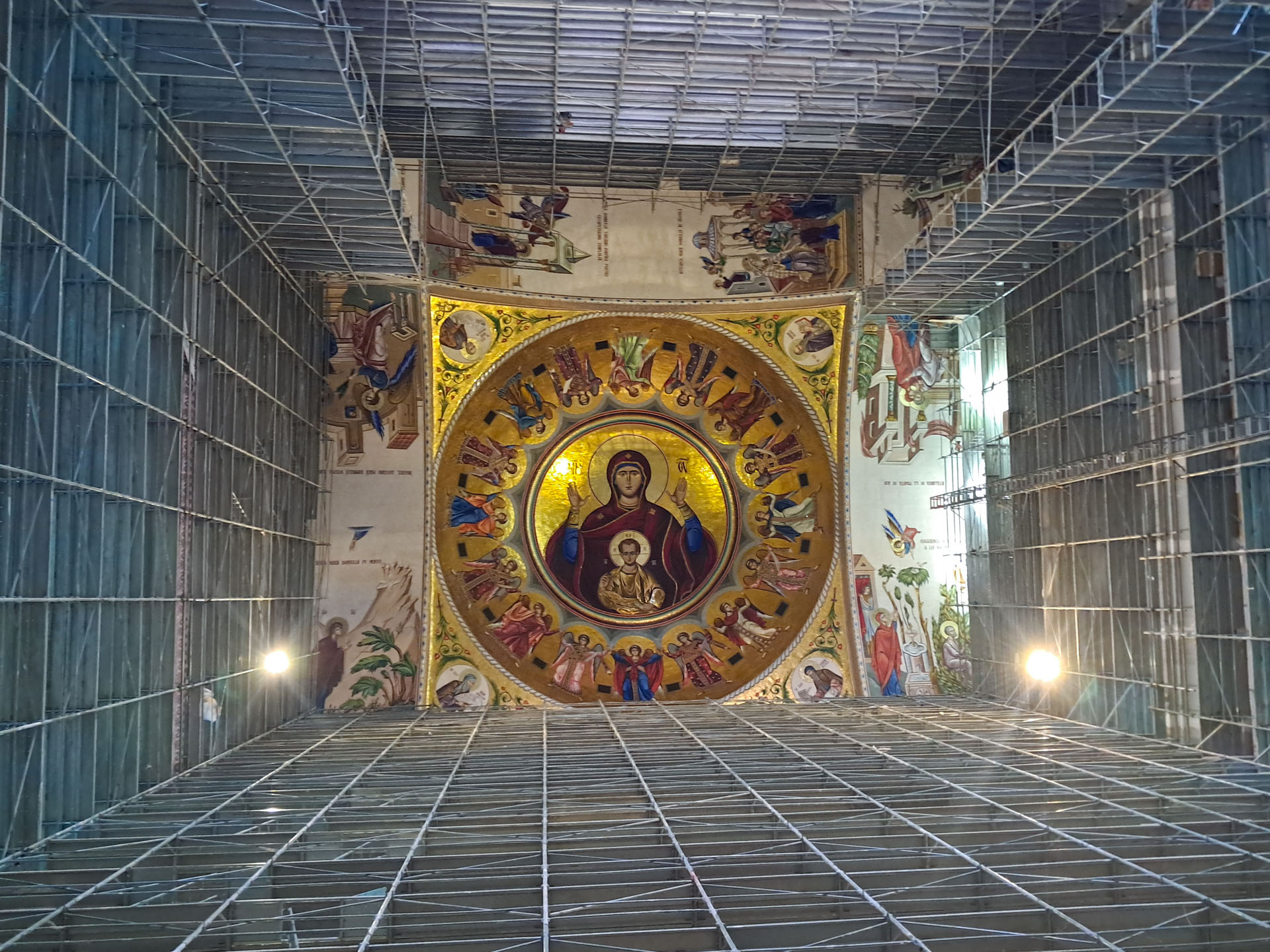
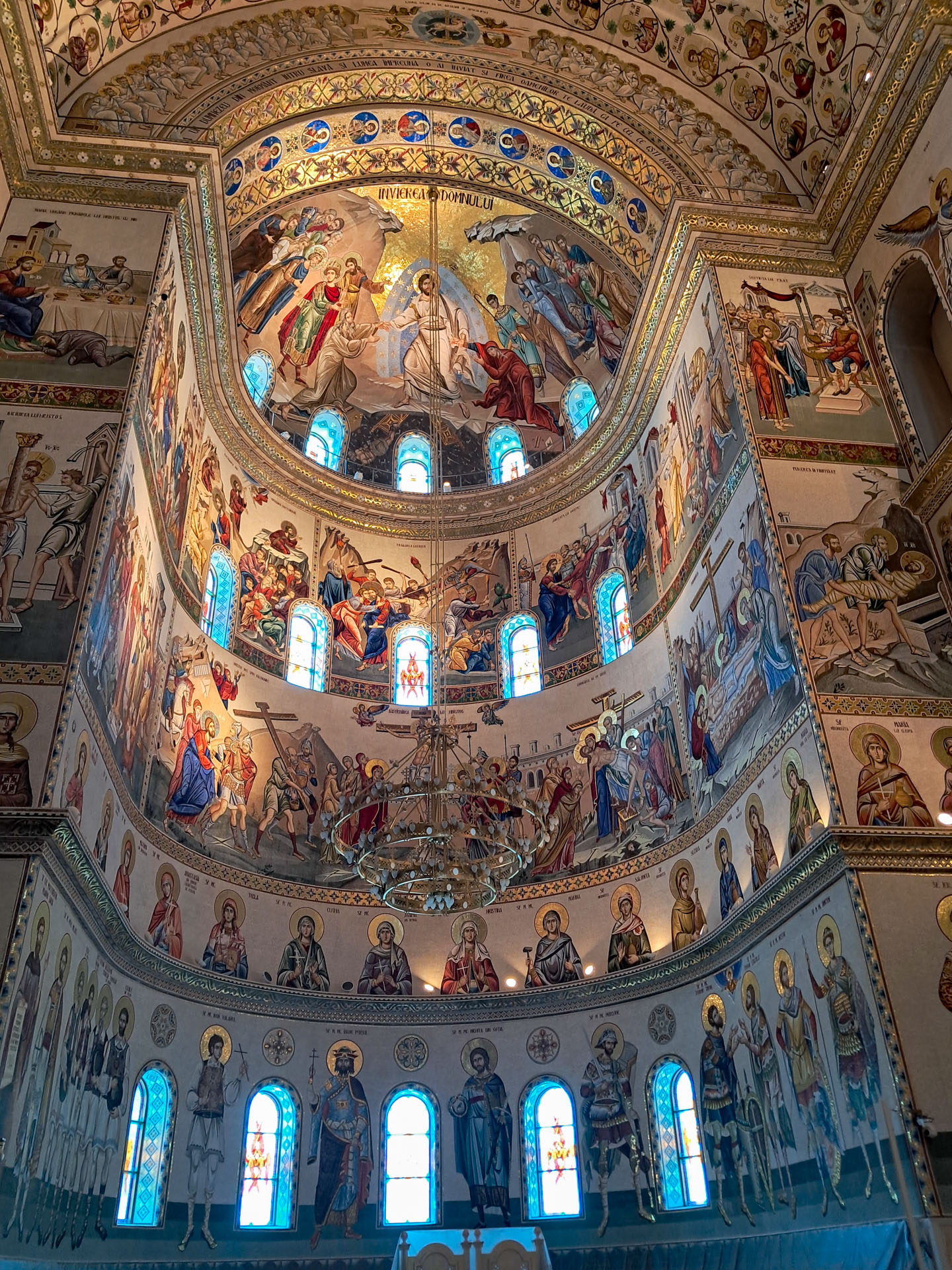
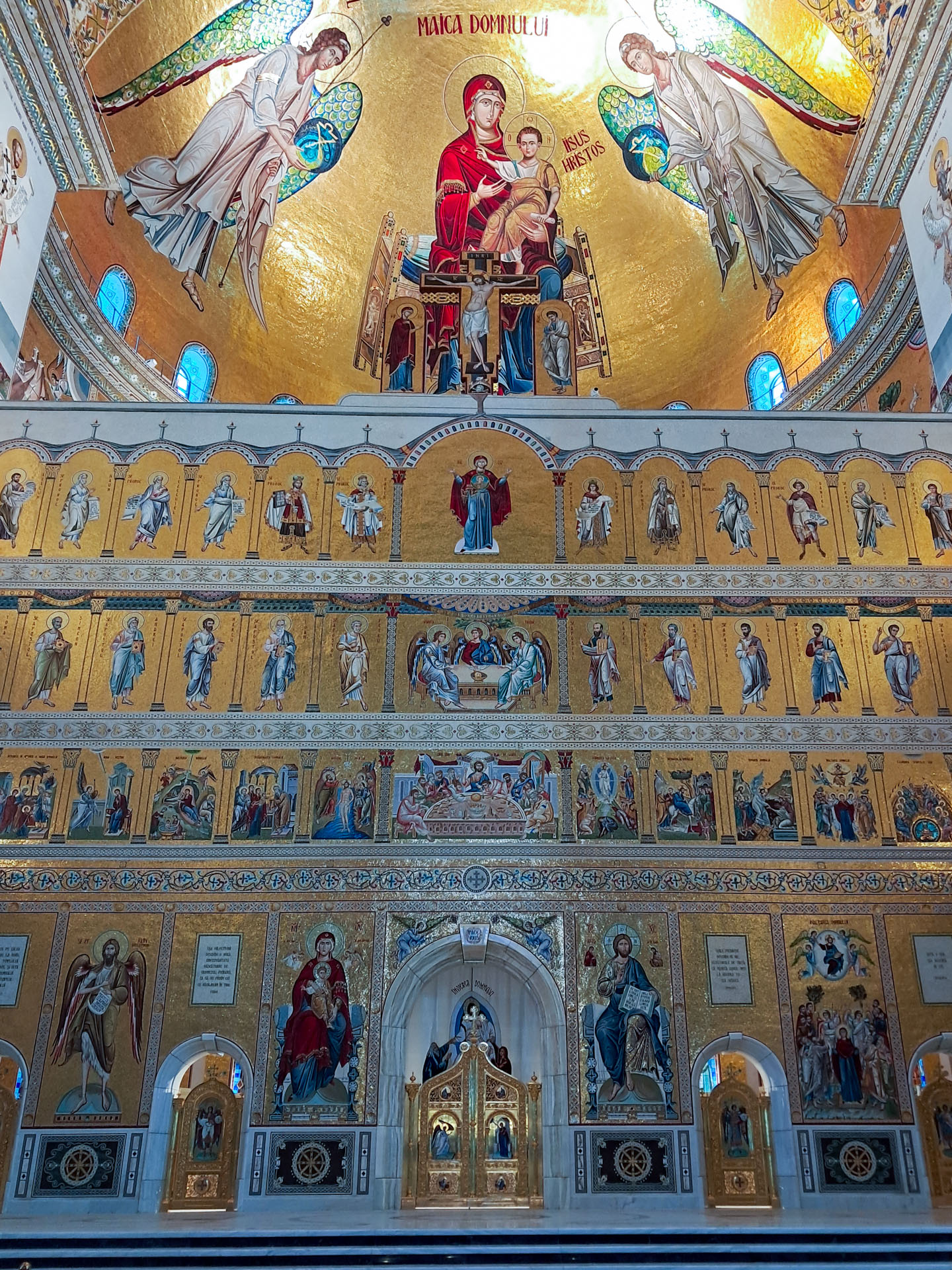
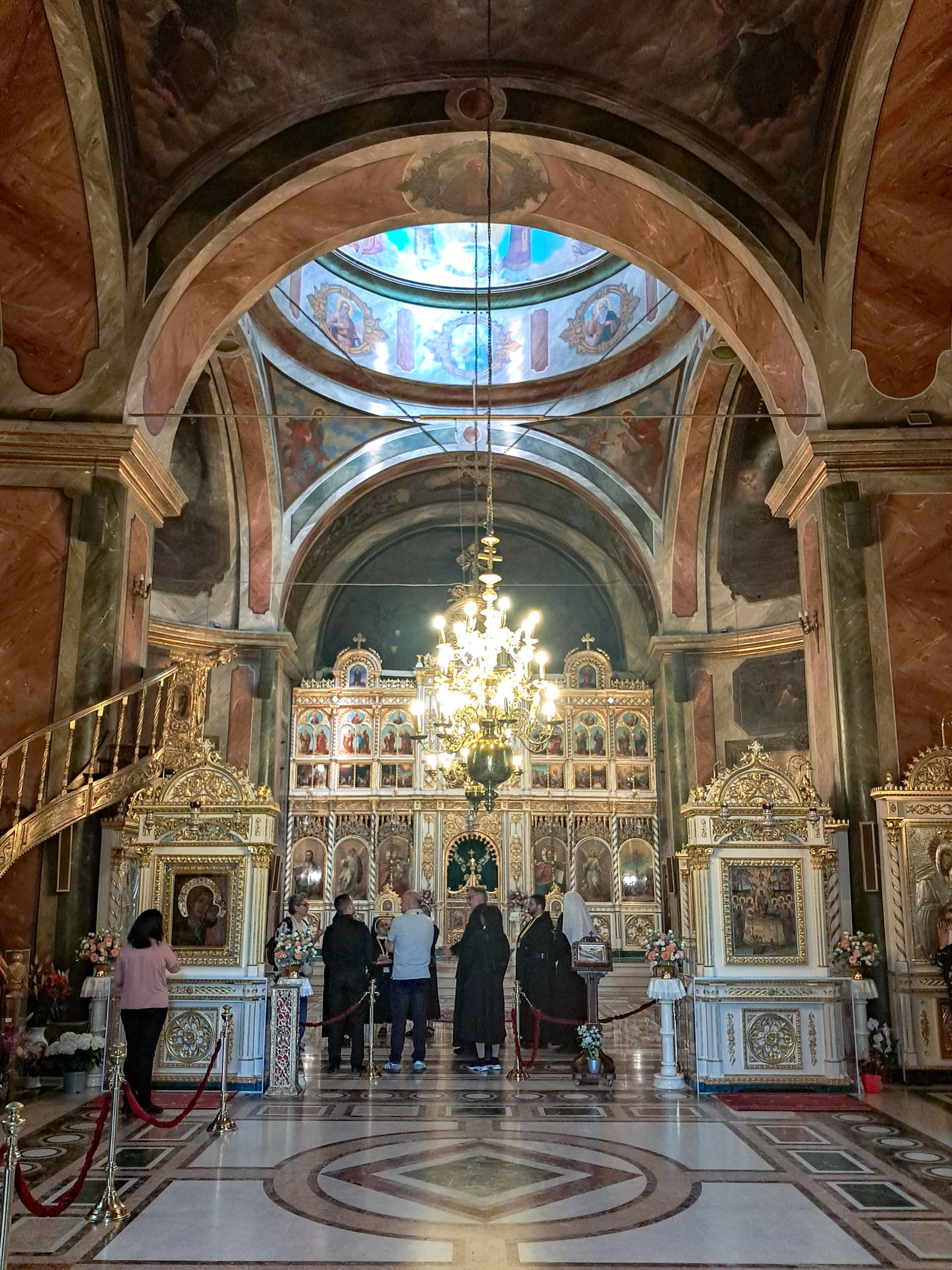
Upon our arrival in Bucharest, we were welcomed warmly by representatives of the Romanian Orthodox Church. Our visit to the Patriarchal Cathedral and the new People’s Salvation Cathedral introduced us immediately to the ecclesial dimension of Romanian faith. We felt not like outside observers but guests welcomed with sincere benevolence. The guides and ecclesiastical leaders who accompanied us presented not merely monuments and works of art but a living tradition deeply rooted in the history of the Romanian people.
Our arrival at Antim Monastery was particularly significant. The monks received us with simplicity and discretion, in keeping with the tradition of hospitality shared by East and West. While attending Vespers, we noted how the liturgy remains the beating heart of Orthodox monastic life. The extended melodies, the scent of incense, the veneration of icons and the quiet focus of the faithful introduced us to a dimension of prayer that many of us had only encountered through study.
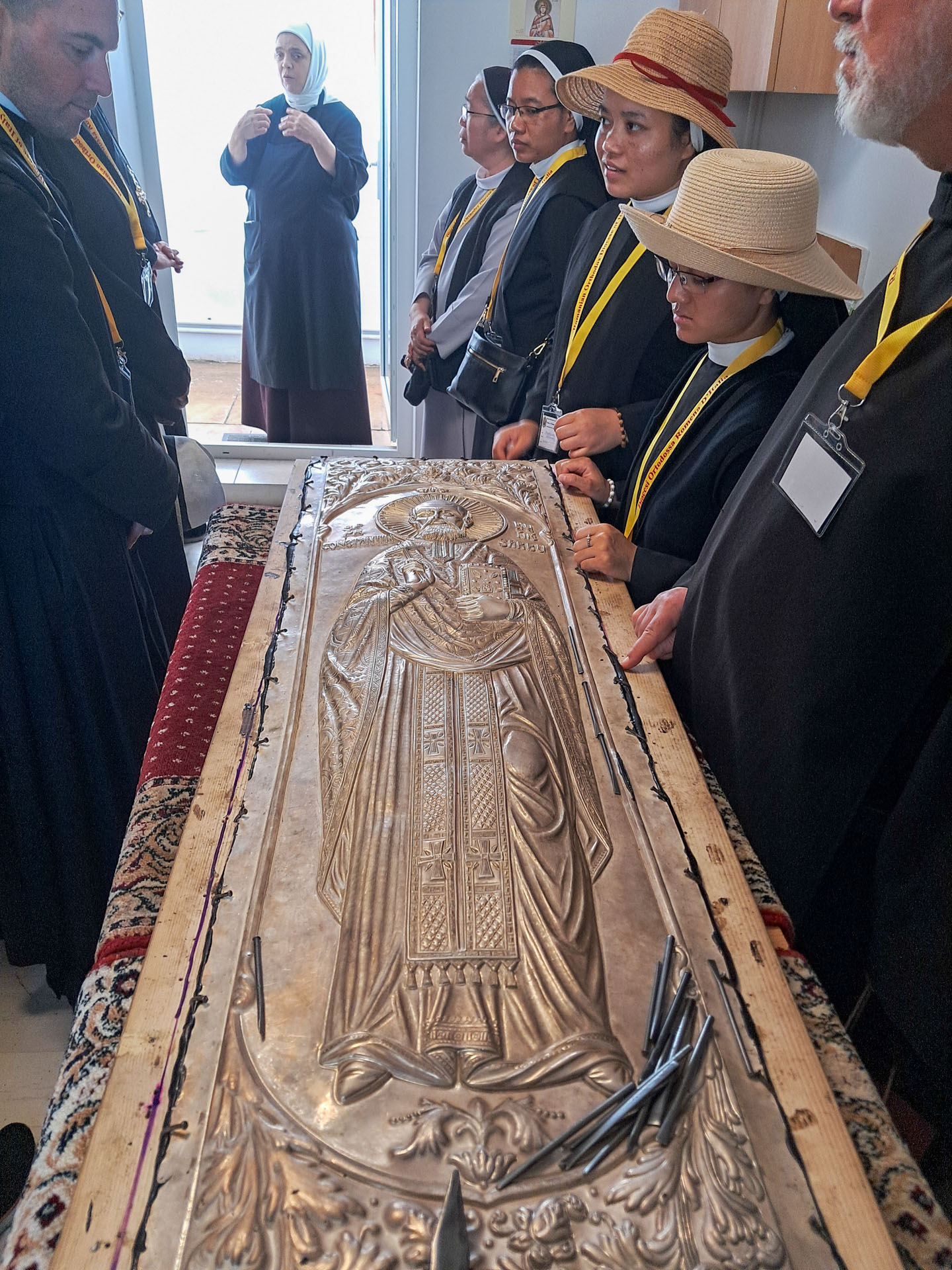
In the following days we visited the monasteries of Cernica and Pasărea. In both locations, we were welcomed generously by the Orthodox male and female monastic communities. The monks and nuns shared the history of their monasteries, the trials endured during the communist era and the spiritual rebirth of recent decades. Their testimonies provided a concrete perspective to what we often read in church history books.
A significant moment was the meeting with local ecclesiastical authorities and leaders of the Theological Seminary. Our fraternal conversations highlighted the numerous points of convergence between the Benedictine and Orthodox traditions: a love for the liturgy, the centrality of community life, obedience, Lectio Divina and the unceasing search for God.
Proceeding towards Wallachia and Transylvania, we visited some of the most celebrated monasteries in Romania: Curtea de Argeș, Dintr-un Lemn, Horezu, Bistrița and Govora. At each, we were welcomed with the traditional Christian greeting and the kindness that characterises Romanian monasticism. We recall in particular the visit to Horezu, where the harmony among architecture, iconography and liturgy appeared as a true synthesis of lived theology.
On Pentecost Sunday, we attended the Divine Liturgy at the Cathedral of Râmnicu Vâlcea. The welcome from the archbishop and local priests was notably warm. Despite confessional differences, we perceived a sincere ecclesial fraternity. A shared veneration for the Church Fathers, early monasticism and our spiritual tradition made us feel a strong sense of closeness.
Another memorable experience was our visit to Cozia Monastery, one of the spiritual cradles of Romania. The monks guided us through the centuries-old history of the monastery, explaining the frescoes, the relics and the significance of the contemplative life. Many of us recognised in that community the same desire to seek God that animates the Benedictine tradition.
In Sibiu, we had the joy of attending the Divine Liturgy once again in the grand Holy Trinity Cathedral. Here we were received by members of the local clergy who showed great interest in the Monastic Institute of Sant’Anselmo and the theological dialogue between East and West. The meeting took place in an atmosphere of genuine friendship and mutual esteem.
The journey through Sighișoara, Făgăraș and the Sâmbăta de Sus monastery allowed us to better understand contemporary Romanian spirituality. The figure of Saint Arsenie Boca, deeply venerated by the Romanian people, was presented to us with profound devotion by the monks. Once again, we were struck by the capacity of Orthodox monasticism to safeguard the spiritual memory of its people.
In the final days, we visited Brașov, Sinaia and the Ghighiu monastery. We were received everywhere with attentiveness and cordiality. At the Sinaia monastery in particular, we had a long dialogue with some of the monks, who spoke to us about their vocation, daily life and the pastoral challenges of the contemporary world.
At the end of the pilgrimage, as we travelled back to Bucharest for our return flight to Rome, we all shared the feeling of having received much more than we had anticipated. We had not merely visited monuments and monasteries; we had encountered people, communities and a living ecclesial tradition.
We carry with us the memory of the extraordinary hospitality we received, the fraternity experienced with the monks and authorities of the Romanian Orthodox Church, the beauty of the liturgical celebrations and the testimony of a faith that continues to shape the face of Romania.
For the students of the Monastic Institute of Sant’Anselmo, this pilgrimage was a true ecclesial and monastic experience: a school of communion, an encounter with the shared roots of the Christian tradition and an invitation to continue the journey of seeking God with renewed enthusiasm.
Elections, Appointments and Events | October-November 2026
Notes from the Aventine | August-October 2026
Pope Leo’s Benedictine Summer
CIB Approves Milestone Restructuring at Rome Meeting

A Glance into the Catalogus: Large Monasteries and Popular Names
Summer Formation at Sant’Anselmo: Four Programmes for 2027