
Notes from the Aventine | November 2026
The Abbot Primate reflects on the annual Anselmian changes, Hermann Hesse, and social media.
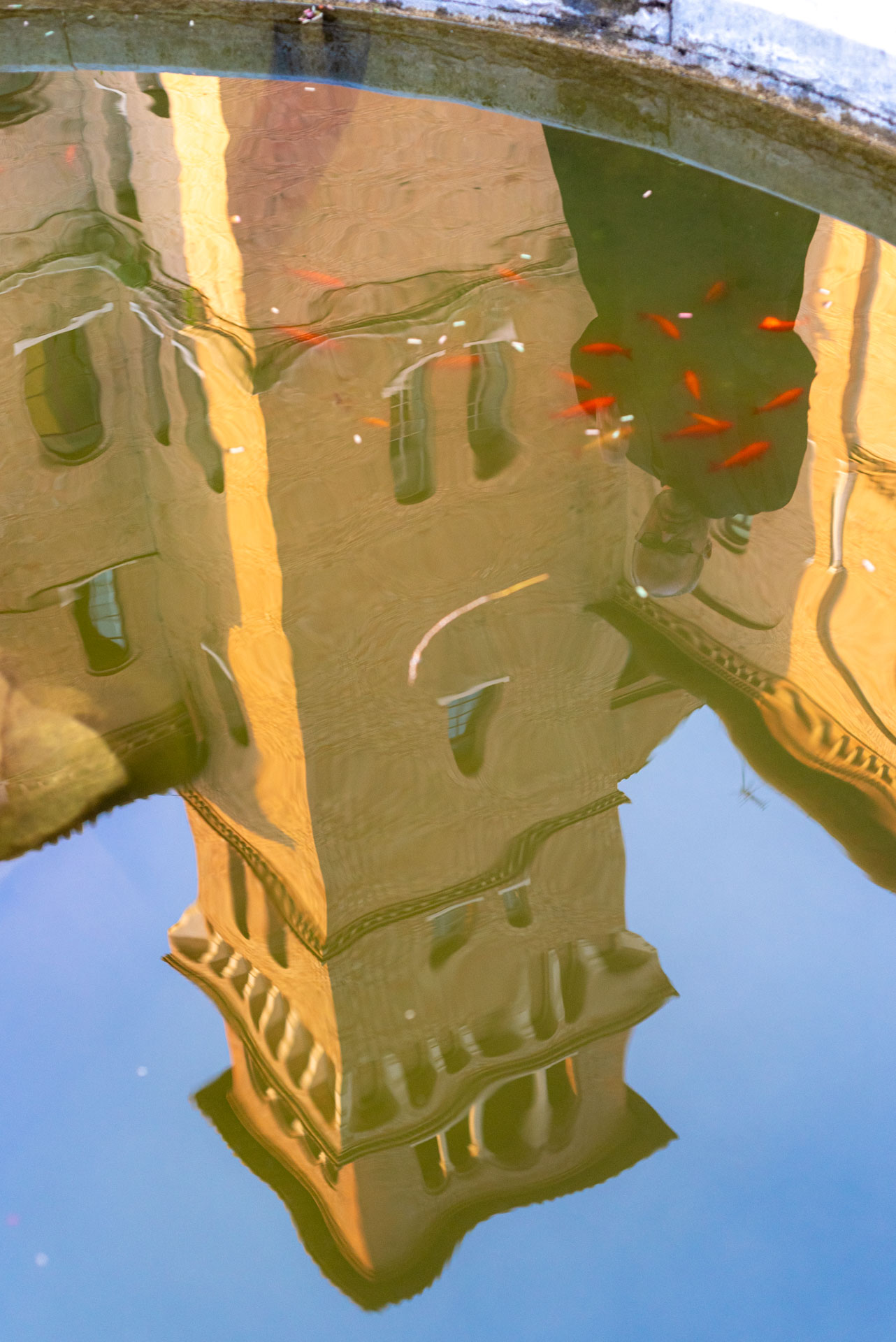
Reflection of the tower of Sant’Anselmo in the ornamental pond of the cloister
20 November 2026
Our monasteries change and renew themselves only very gradually, in the rhythm of new arrivals, deaths, and occasionally other vicissitudes of life. Sant’Anselmo is different: each year, about a quarter of our house community changes. October then becomes an adventure: the new college residents arrive and must quickly learn how we live here—how table service is carried out among us, what tasks there are in the house, how we pray together and celebrate the liturgy, what is possible in the house (a great deal) and what is not (quite a bit as well). And then there are exciting questions: What will the schola look like this year—or rather, what will it sound like? Do we have a few organists in the house, or not? Somehow it always works out, it seems to me. Capable new resident students fill the gaps that have arisen at the end of the semester, and more than one takes on tasks that his own monastery had not yet entrusted to him. These, too, are positive Anselmian transformations: in time, the confreres will return enriched to their home monasteries—more experienced and perhaps also a little more confident.
Recently, a journey took me through Lugano in Ticino. There I was reminded of Hermann Hesse, a German writer whom, in my generation, almost everyone still read—far beyond the German-speaking world.
He was certainly no Church Father—quite the contrary: he was a seeker shaped by pietistic Protestantism, with an inclination toward Eastern wisdom. It may be illuminating what he perceived in our monastic world. Not infrequently, people who look at us from the outside recognize something that we ourselves no longer see.
Hesse engaged with monasteries more than once, in Narcissus and Goldmund and above all in his last great novel, The Glass Bead Game. At first it is about an elite republic of scholars called Castalia. It is an intellectual world in which highly educated people devote their lives to the cultivation of knowledge, art, and great ideas, shielded from the needs and challenges of concrete human life. Castalia runs the risk of making its own intellectual culture an end in itself and, in doing so, losing its connection to history, to the world, and to a reality beyond itself. Hesse sets against this a Benedictine monastery that is deeply rooted in history and, through its reference to God, gives people a deeper meaning in life. His hero discovers a community that is capable of renewal again and again precisely because it does not have its foundation in its own culture and its own achievements, but in a reality greater than itself: in God.
I do not wish to make Hermann Hesse into a cheap apologist for our way of life. Yet he seems to me to have grasped, intuitively, something very Benedictine. Perhaps an encouragement toward greater reality—and also passion?
Recently I heard: “I would very much like to visit you in Sant’Anselmo, but you are never there.” How do you come to that conclusion? “I can see on social media that you are constantly on the move.”
Well, that is not entirely wrong. Of course I travel a great deal. I attend superiors’ meetings, general chapters, jubilees, and much more. Abbot Primate Rembert Weakland had already come to the realization in the 1960s that these journeys are part of the Abbot Primate’s responsibilities. Yet, in practice, I am still mostly—and very gladly—in Sant’Anselmo. But there is not so much to report about everyday life there, so Facebook and Instagram tend to be filled with visits and events elsewhere. For those who did not yet know: this is only a snapshot of life, not the whole of it.
A few days ago, the AIM annual meeting in Novalesa, in northern Italy, came to an end. One topic that emerged there was the visibility of our monasteries, including in social media. In general, we do not want Facebook stars in our ranks. But if our monasteries are to be experienced as “places of hope,” then they must also be noticed.
As part of our jubilee preparations, we have now announced a competition. We wish to support monasteries that already carry out committed public outreach with a financial award, in order to professionalize this work. Elsewhere in this issue of Nexus, our jubilee coordinator Adam Simon describes how the competition works.
These lines go out into the world for Christ the King. I wish all brothers and sisters throughout the world a good conclusion to the old church year and an Advent that prepares our hearts.
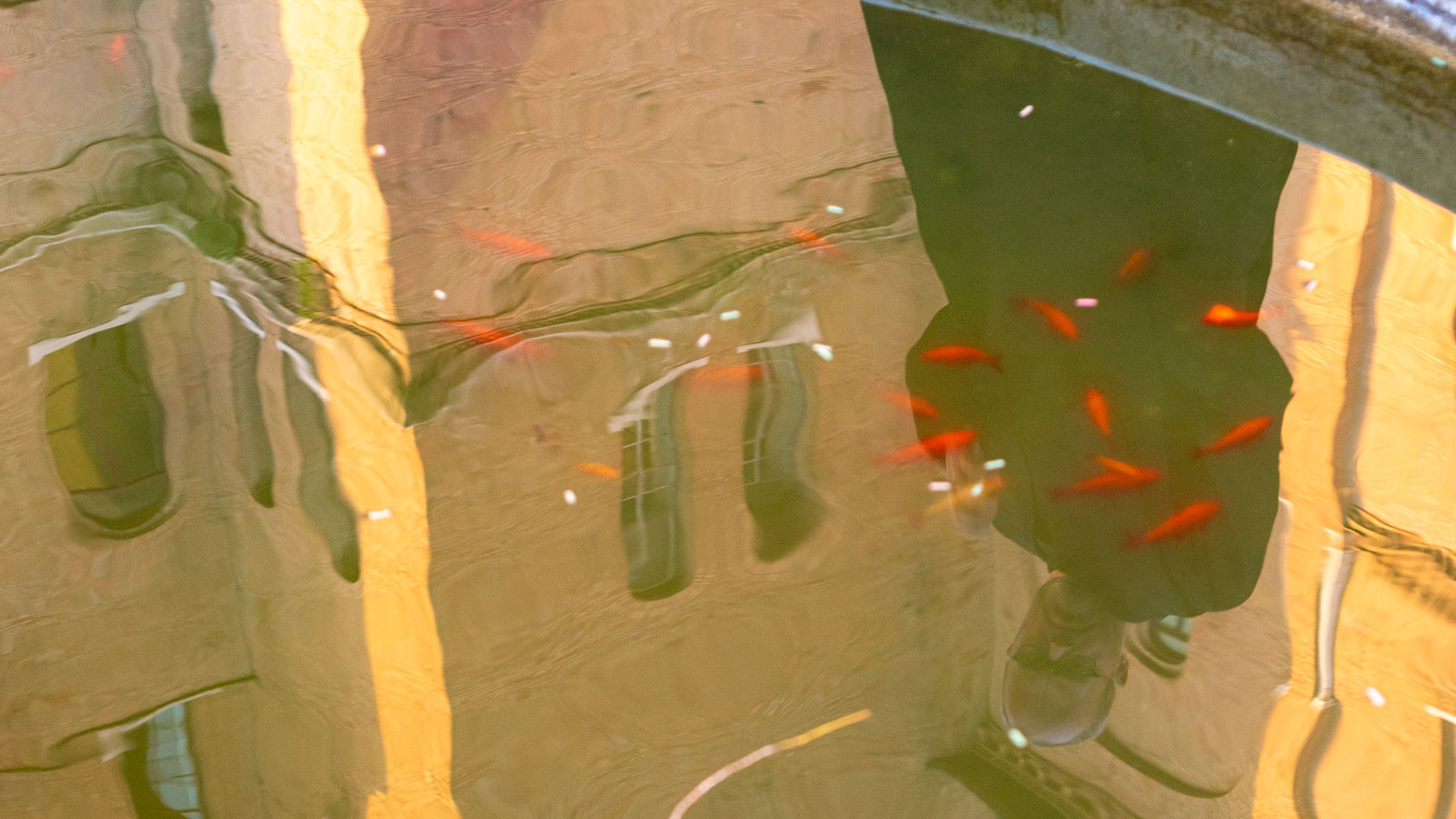
Notes from the Aventine | November 2026
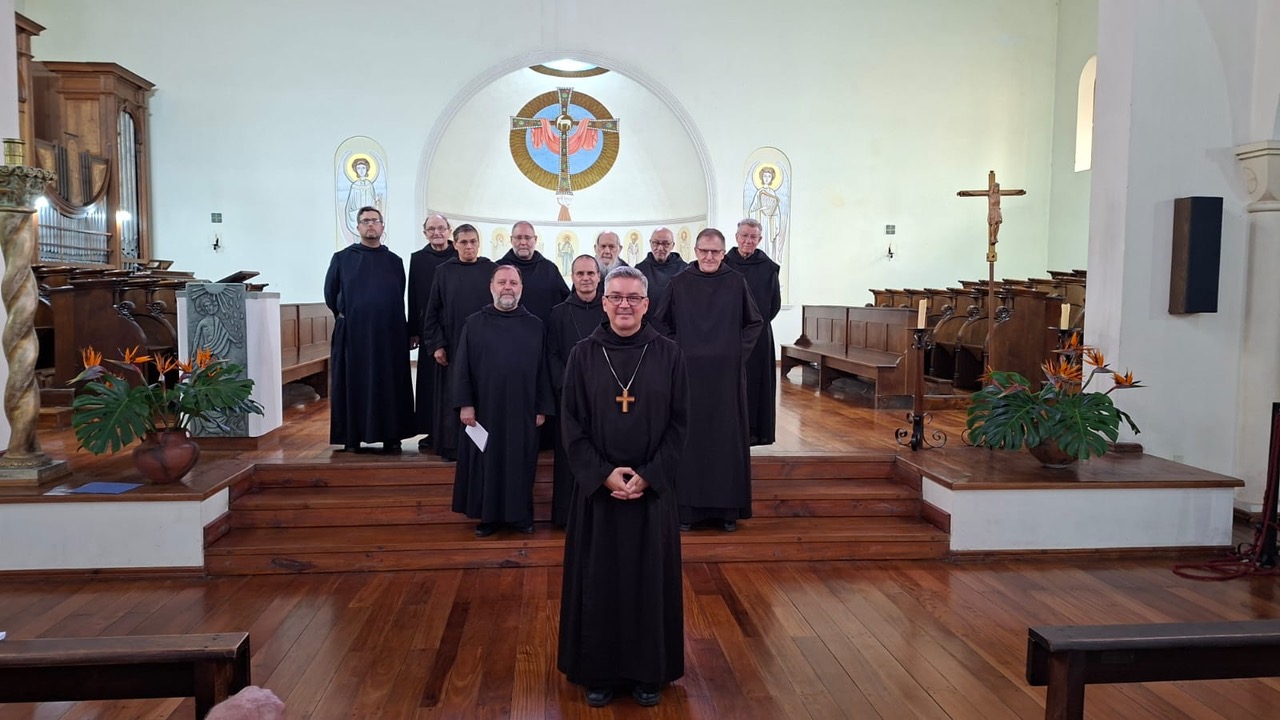
Elections, Appointments, and Events | November 2026
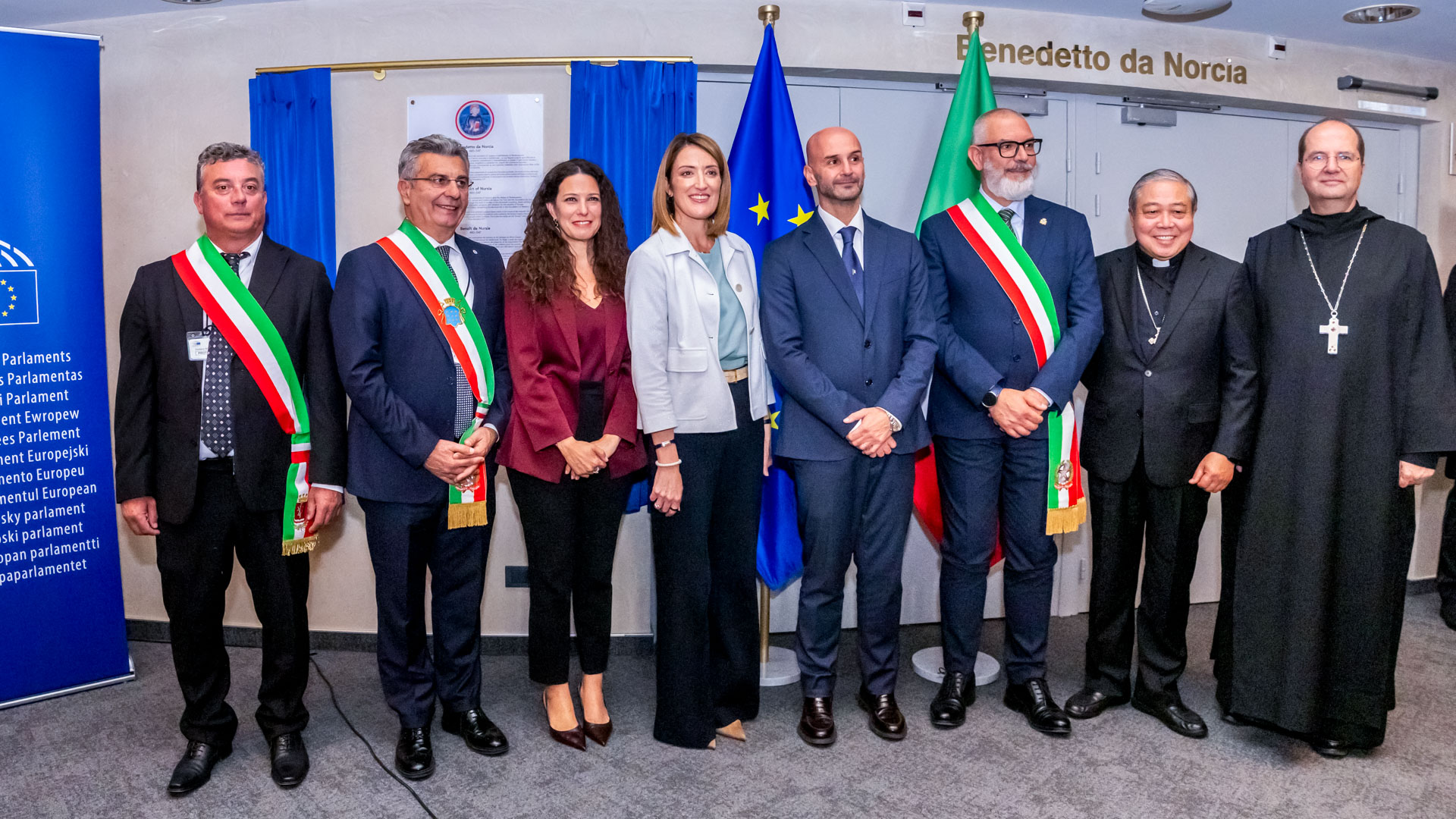
A “Revolutionary Act” in the Strasbourg Parliament

A Glance into the Catalogus: Of Youths and Men
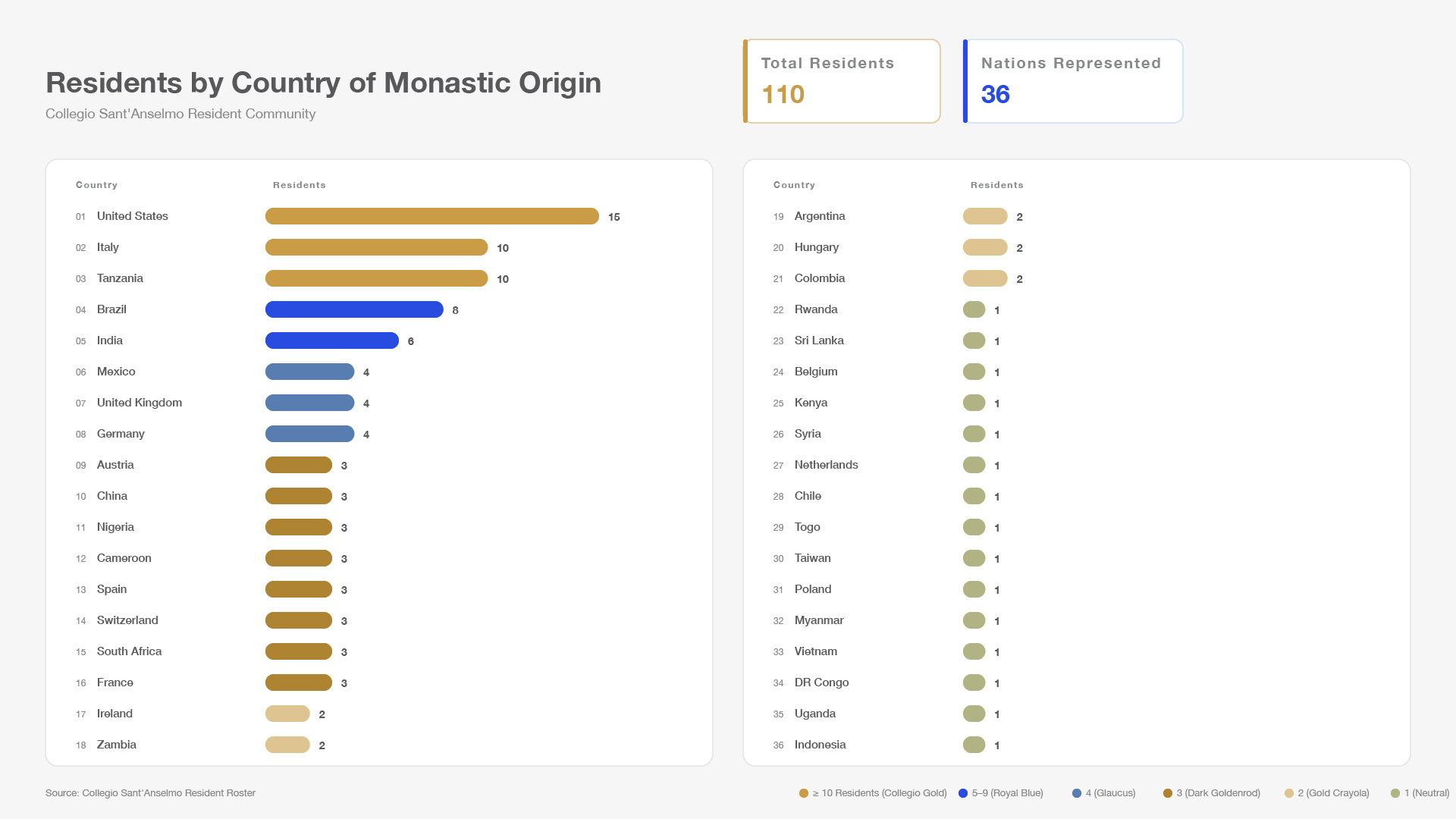
Communio on the Aventine: Inside the Numbers at Collegio Sant’Anselmo
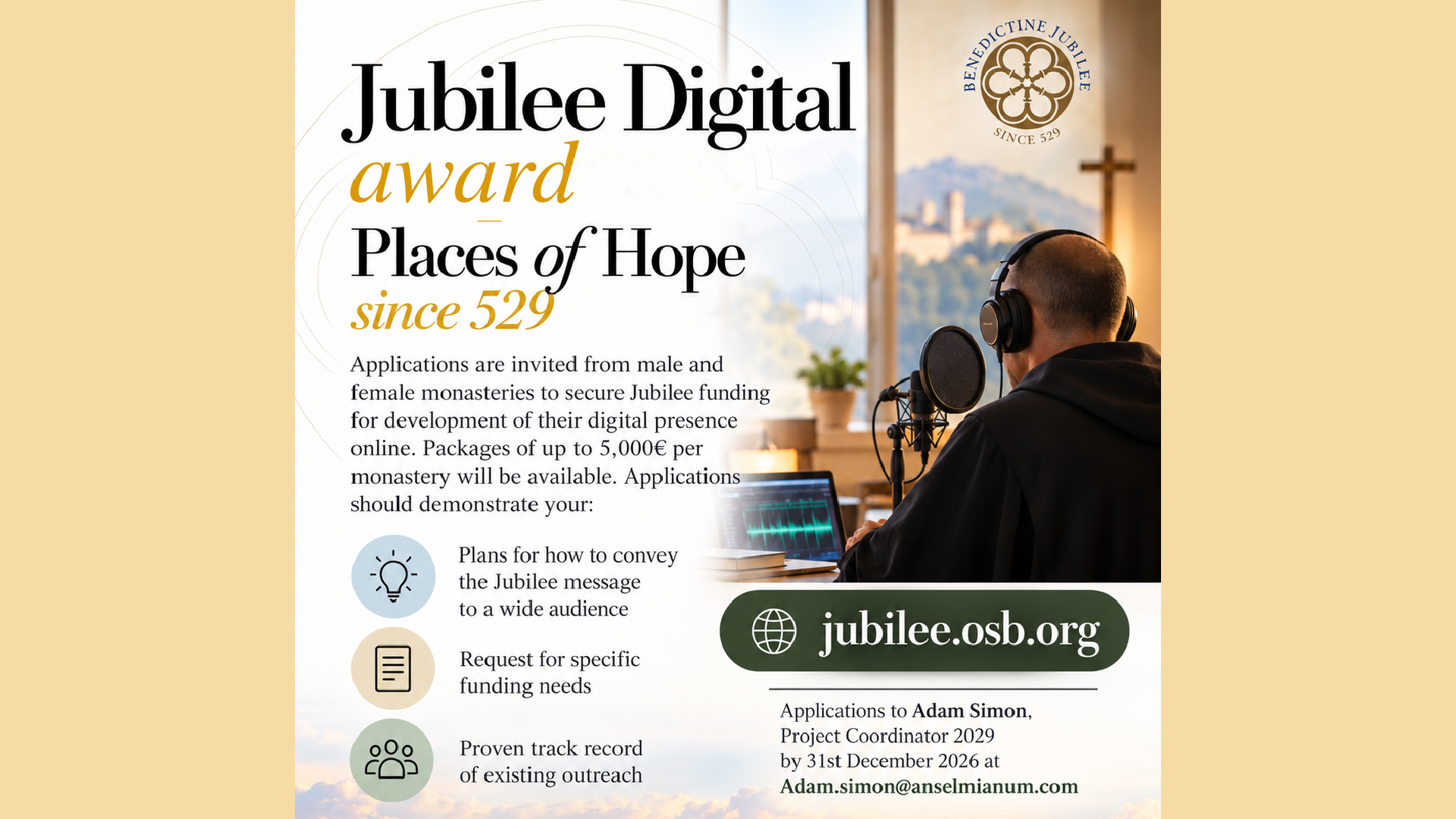
Toward the Jubilee : Global Initiatives and New Digital Support