
A “Revolutionary Act” in the Strasbourg Parliament
After long hesitation, the European Parliament names a meeting room after Saint Benedict.
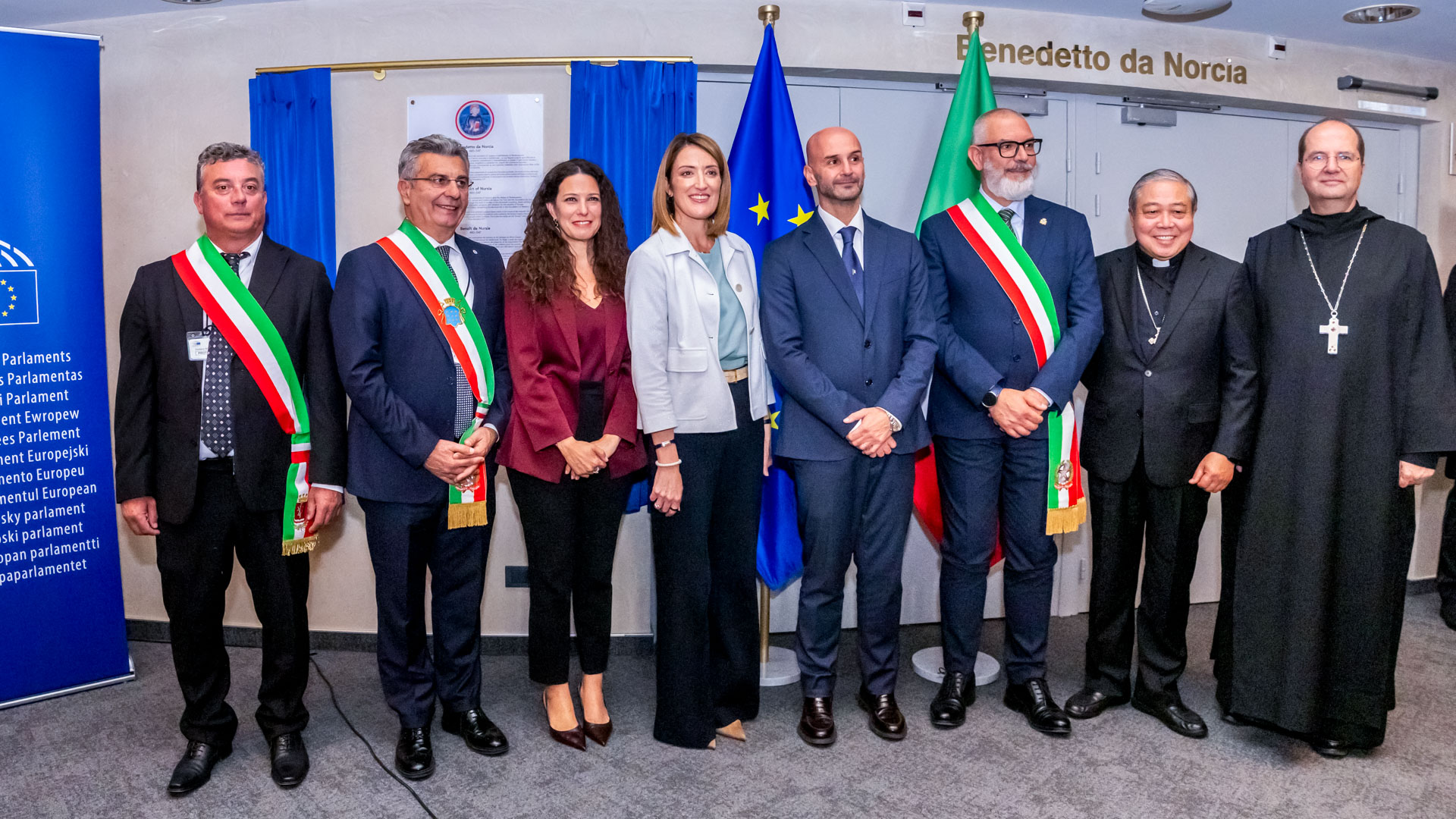
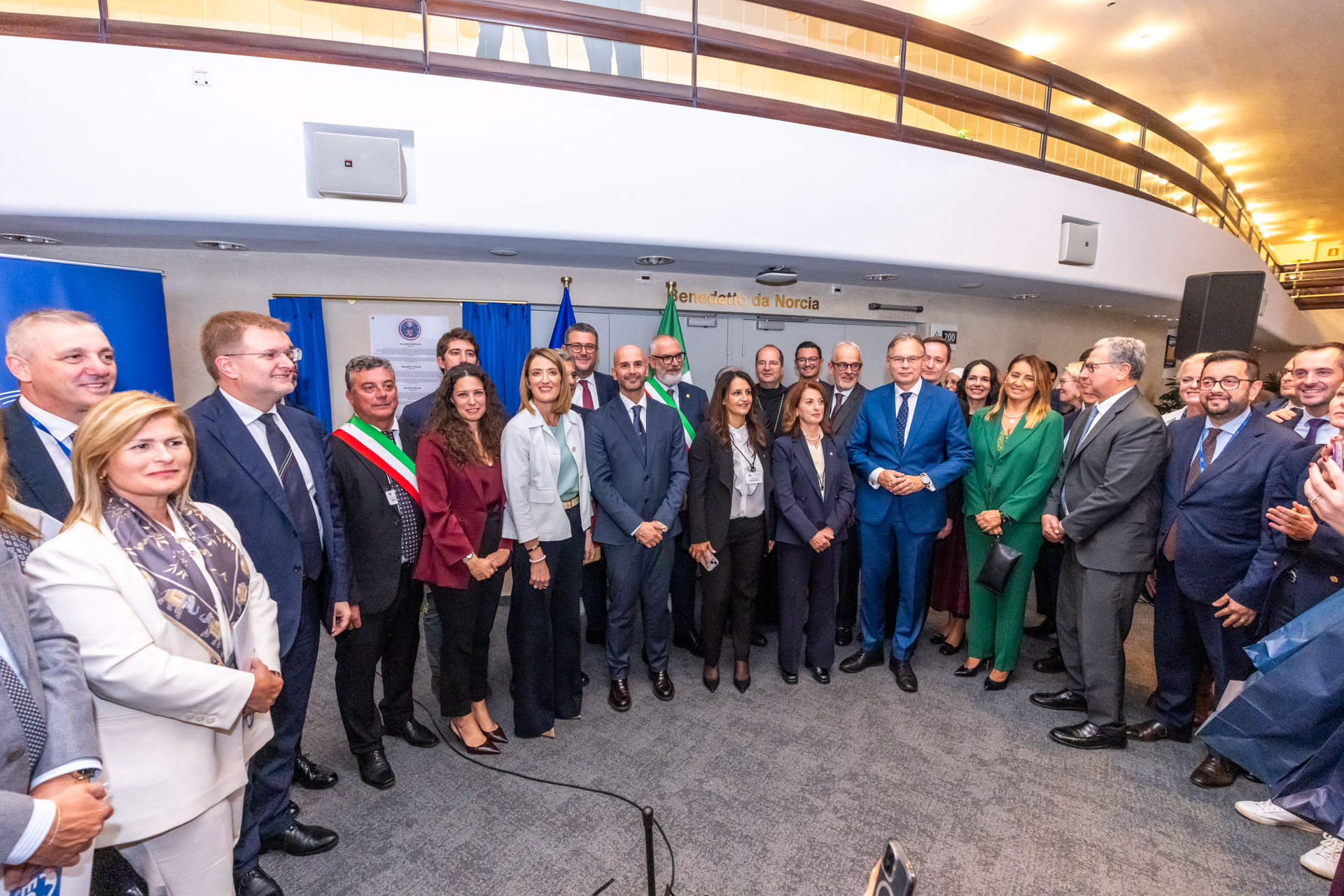
Naming ceremony of the Benedetto da Norcia meeting room by Daina LE LARDIC, © European Union 2026 - Source: EP
19 November 2026
While shop windows were still being smashed and town halls torched here and there in France, a very different revolutionary act took place in Strasbourg on 20 October. In the European Parliament, the meeting room of the “European Conservatives and Reformists” (ECR) parliamentary group was christened “Benedetto da Norcia.” The mayors of the three Benedictine sites—Norcia, Subiaco, and Cassino—were invited, along with the Apostolic Nuncio to the European Union. As a representative of the Order, I participated together with the Prioress of the nearby Rosheim Monastery.
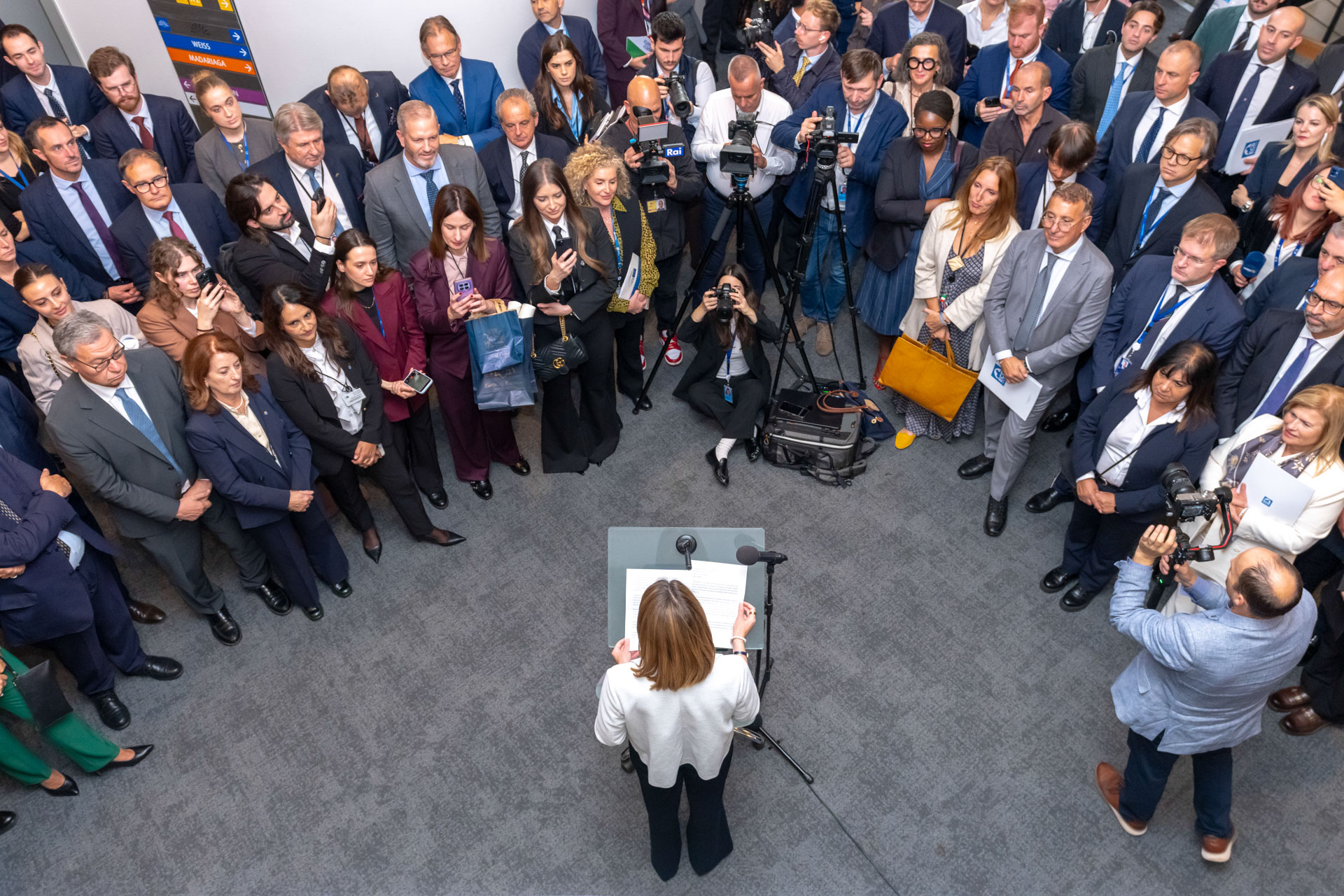
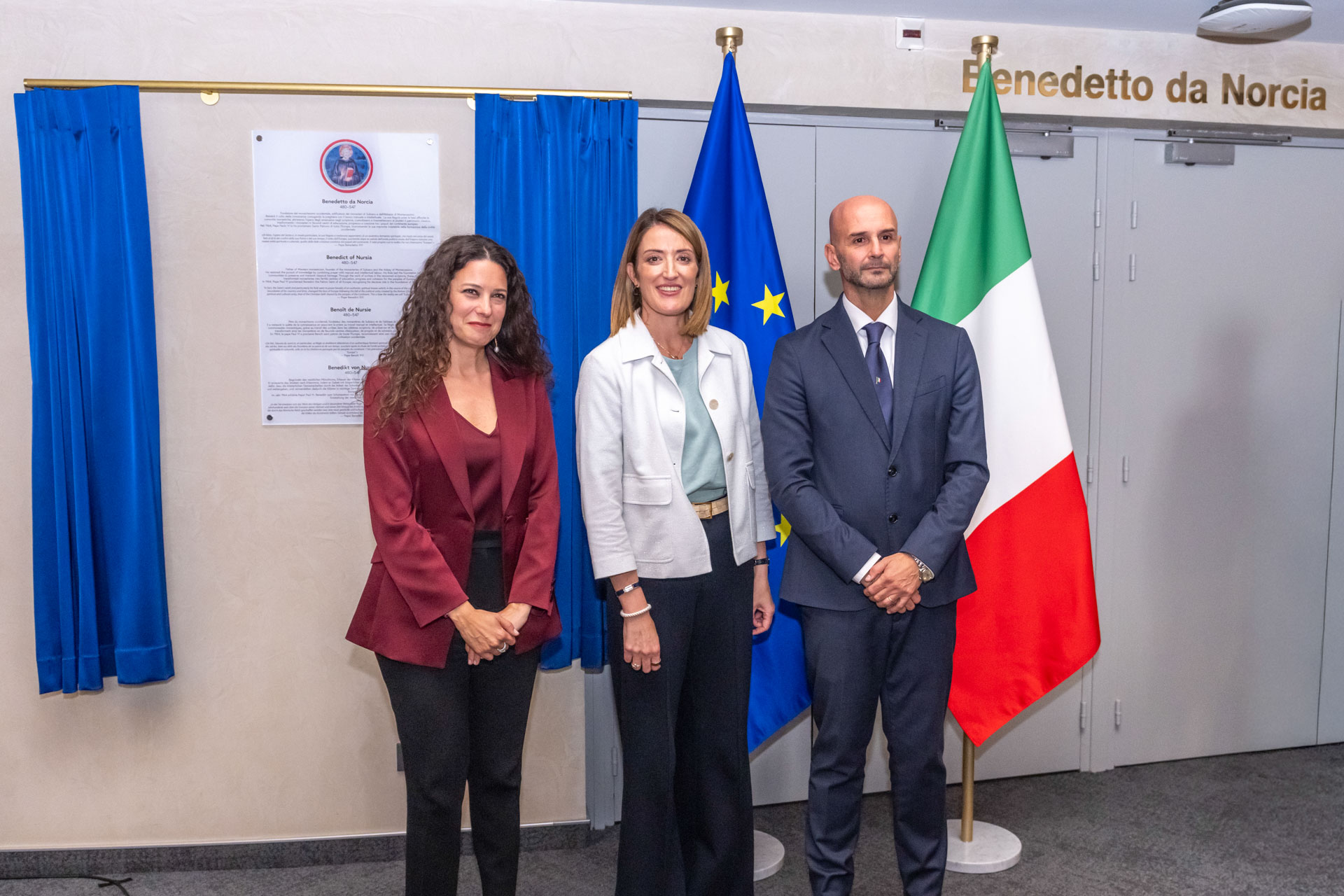
First, there was a ceremony in front of the room's entrance, above which the name of Benedict of Nursia now shines in large gold letters in Italian. Roberta Metsola, the President of the European Parliament, performed the dedication in the presence of members from various parliamentary groups. This was significant, as it made clear that this act was also approved by the Parliament's leadership and other groups. Here, it may be necessary to explain why this was labeled as revolutionary. What may seem almost a matter of course for many Europeans—namely, naming a room after the Patron of Europe—was unthinkable in the European Parliament for a long time. Although many rooms there are named after the so-called mothers and fathers of Europe, they are not named after a Catholic saint. Here, a bit of France's secular wind blows through the Strasbourg Parliament. The efforts to gain approval for this naming lasted two years, and the success was seen as a revolutionary breakthrough for the European institutions.
The fact that Pope Leo XIV had expressly honored the role of Saint Benedict and the Benedictines for Europe in Metz just three weeks earlier, without any contradiction, is perhaps a further indication that people in Europe are gradually learning to look at these historical connections without ideological blinkers. However, there is still a way to go: the room was only allowed to be named after Benedetto, not San Benedetto. One of the politicians present said this was the next goal. We shall see.
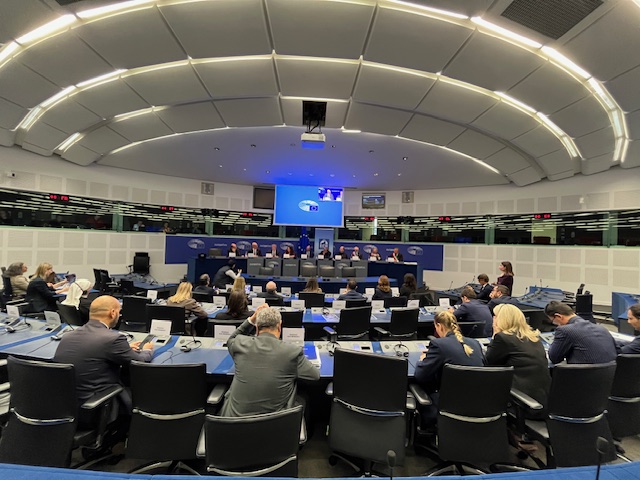
After the naming ceremony, there was a small symposium on the theme “Roots that Determine the Future: Saint Benedict and the Values that Shaped Europe.” Leading European politicians from the Fratelli d’Italia, who had also campaigned for the naming, took part: Parliament Vice-President Antonella Sberna, ECR Co-Chairman Nicola Procaccini, and Marco Squarta. As someone who does not follow the subtleties of the European institutions quite so closely, I was quite curious, because the ECR group sometimes represents positions that are not quite compatible with Catholic social teaching, for example on migration. But on this day, the Christian foundations of the West were brought to bear in a way for which one could only be grateful.
A particularly original but also difficult contribution was offered by Rod Dreher, who was connected via video from the USA. Rod Dreher is the author of the book “The Benedict Option: A Strategy for Christians in a Post-Christian Society,” which caused a stir a few years ago with its suggestions for a withdrawal from a culture that has allegedly become completely un-Christian. He used the current student unrest in France to paint a picture of a Europe in total decay. “Europe is in the greatest crisis since the fall of the Roman Empire,” he said. This seemed exaggerated, even if he otherwise had very beautiful things to say about Saint Benedict. It even seemed to me that this bold announcement from America strengthened a sense of European togetherness among the listeners gathered in Strasbourg in a way that Dreher had not intended.
The well-known Vatican journalist Andrea Gagliarducci then led a panel discussion in which I was able to recall the Benedictine experience of subsidiarity, which is one of the intellectual cornerstones of European constitutional thinking. That the Parliament has opened itself to these topics was certainly a right step, making it possible to look at the complicated history of the emergence of European identity with greater truthfulness.
As a monk, one does not feel quite at home in the buildings of the European institutions, but since 20 October, a little more so.
-
A “Revolutionary Act” in the Strasbourg Parliament
A Glance into the Catalogus: Of Youths and Men
Communio on the Aventine: Inside the Numbers at Collegio Sant’Anselmo

Toward the Jubilee : Global Initiatives and New Digital Support
CIB Establishes International Office in Rome
Formed in the Cloister, Called into Breadth: The Legacy of Br Radbod Commandeur OSB