
Liturgy Marked by Diversity — and War : A Report from Kuwait
At the request of Bishop Aldo Berardi, Fr. Stefan Geiger OSB and Fr. Benoit Alloggia OSB traveled to Kuwait to lead a clergy formation course. Due to the sudden outbreak of war, they are currently unable to leave.
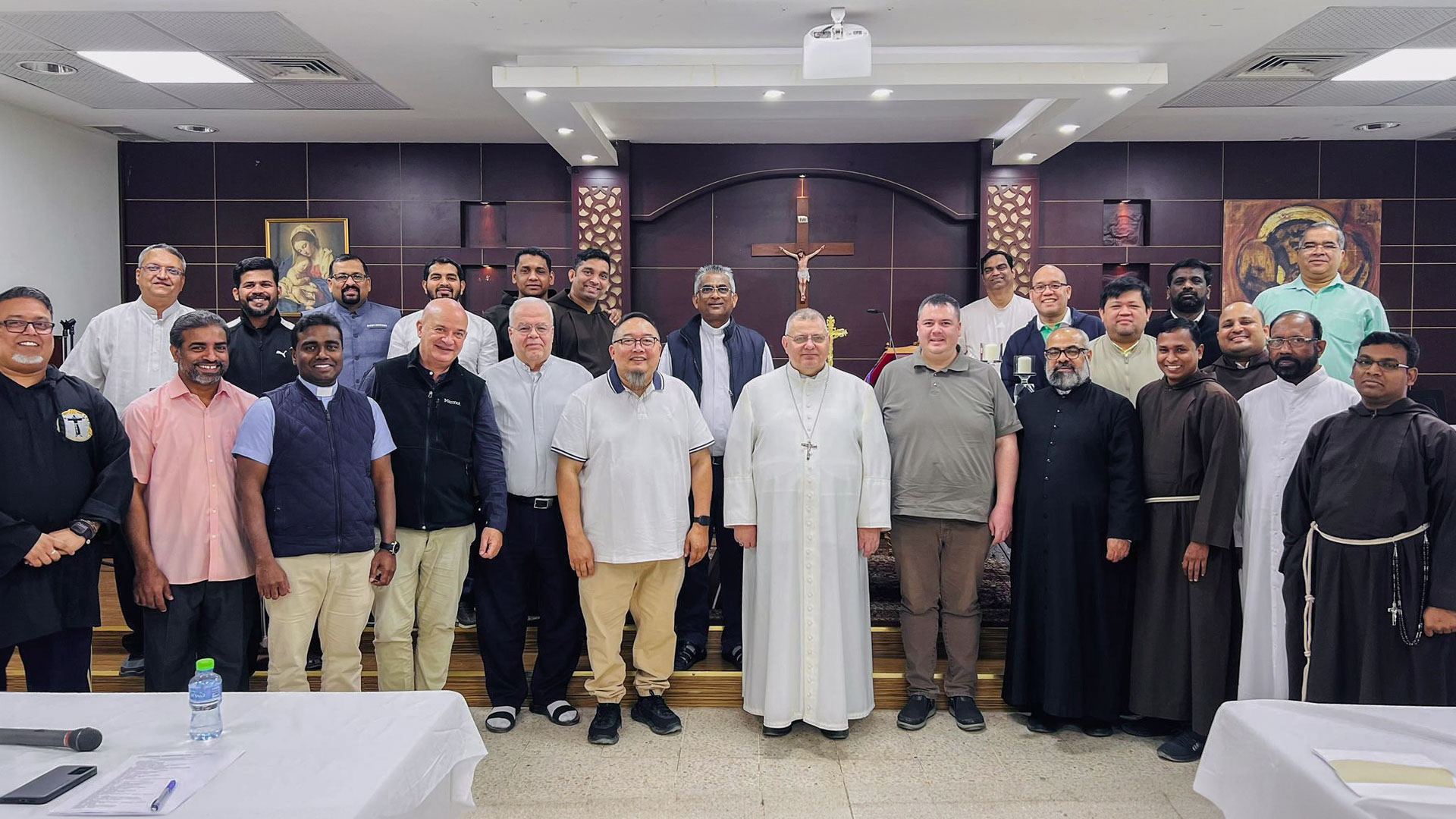
Photos courtesy of Stefan Geiger
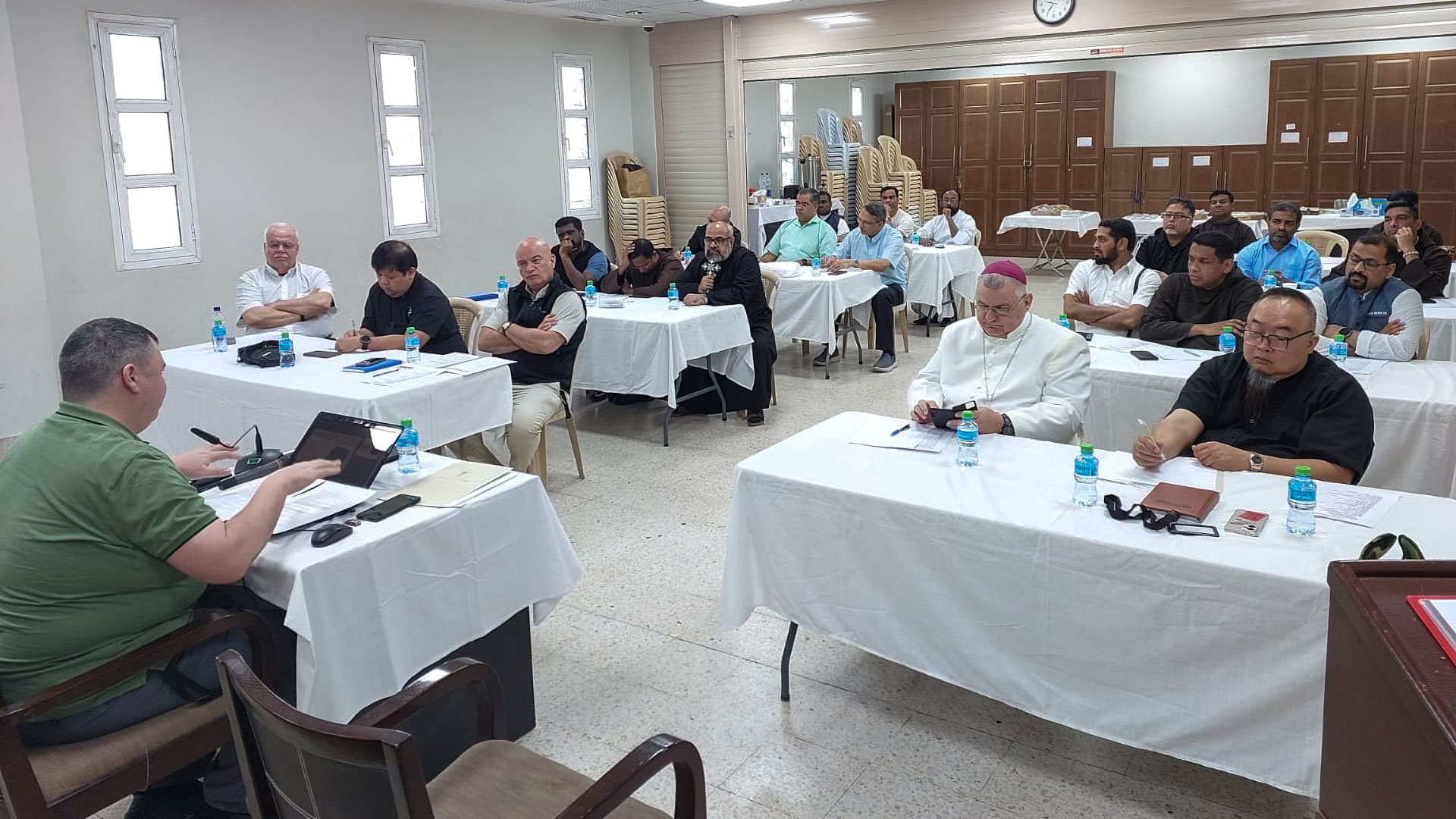
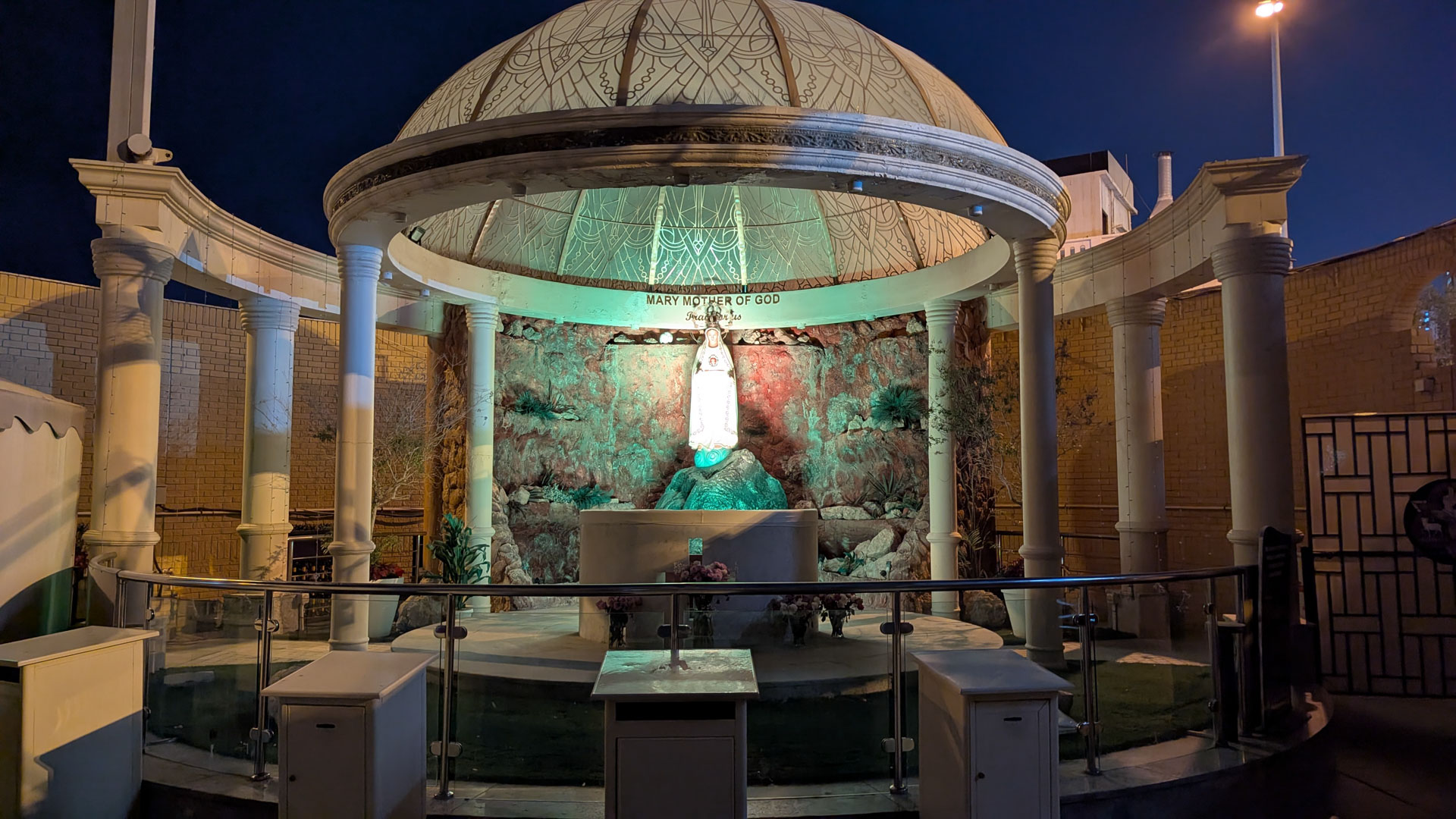
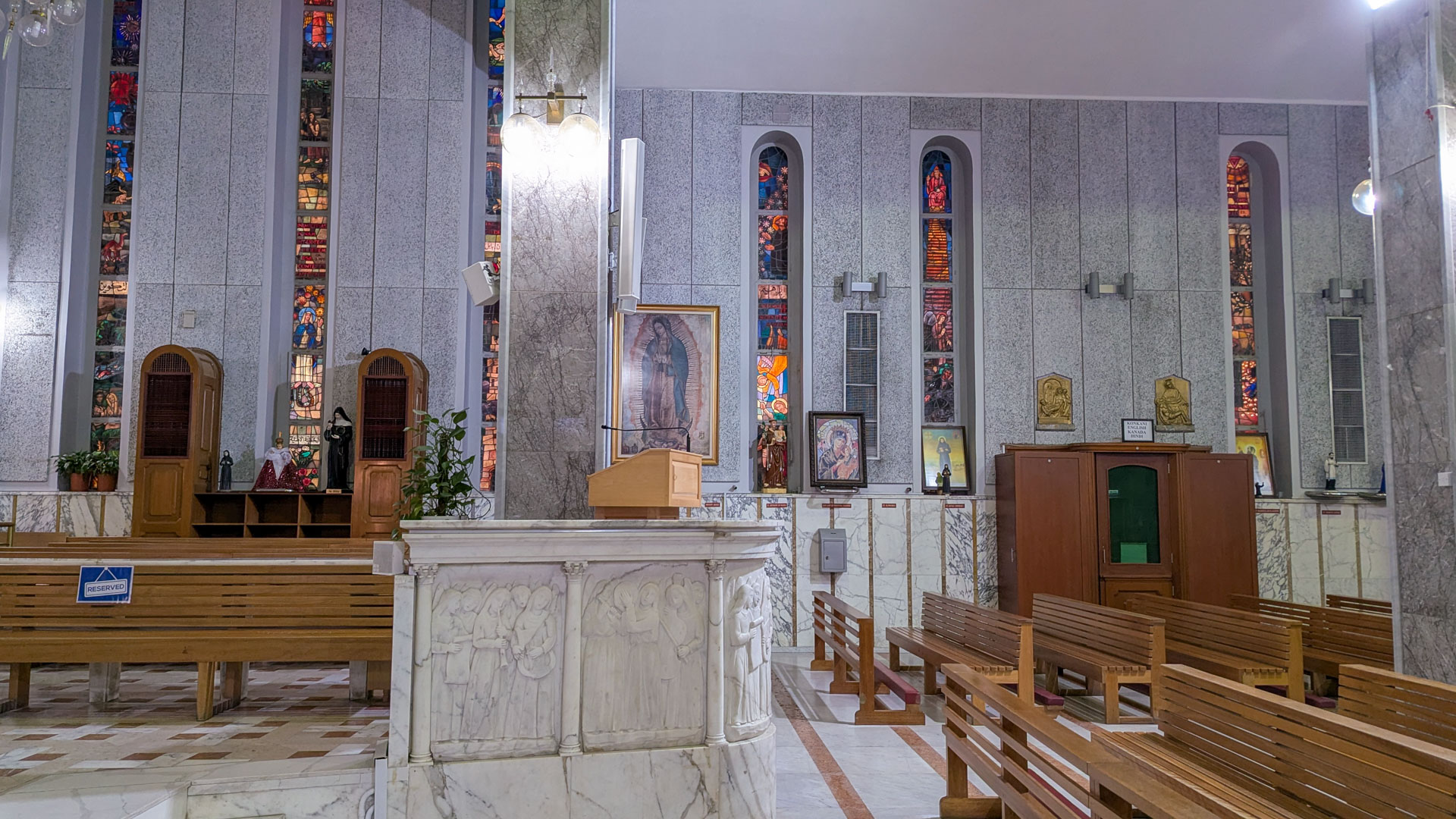
7 March 2026
Fr. Stefan Geiger OSB
Preside
Pontifical Institute of Liturgy
Sant'Anselmo Ateneo
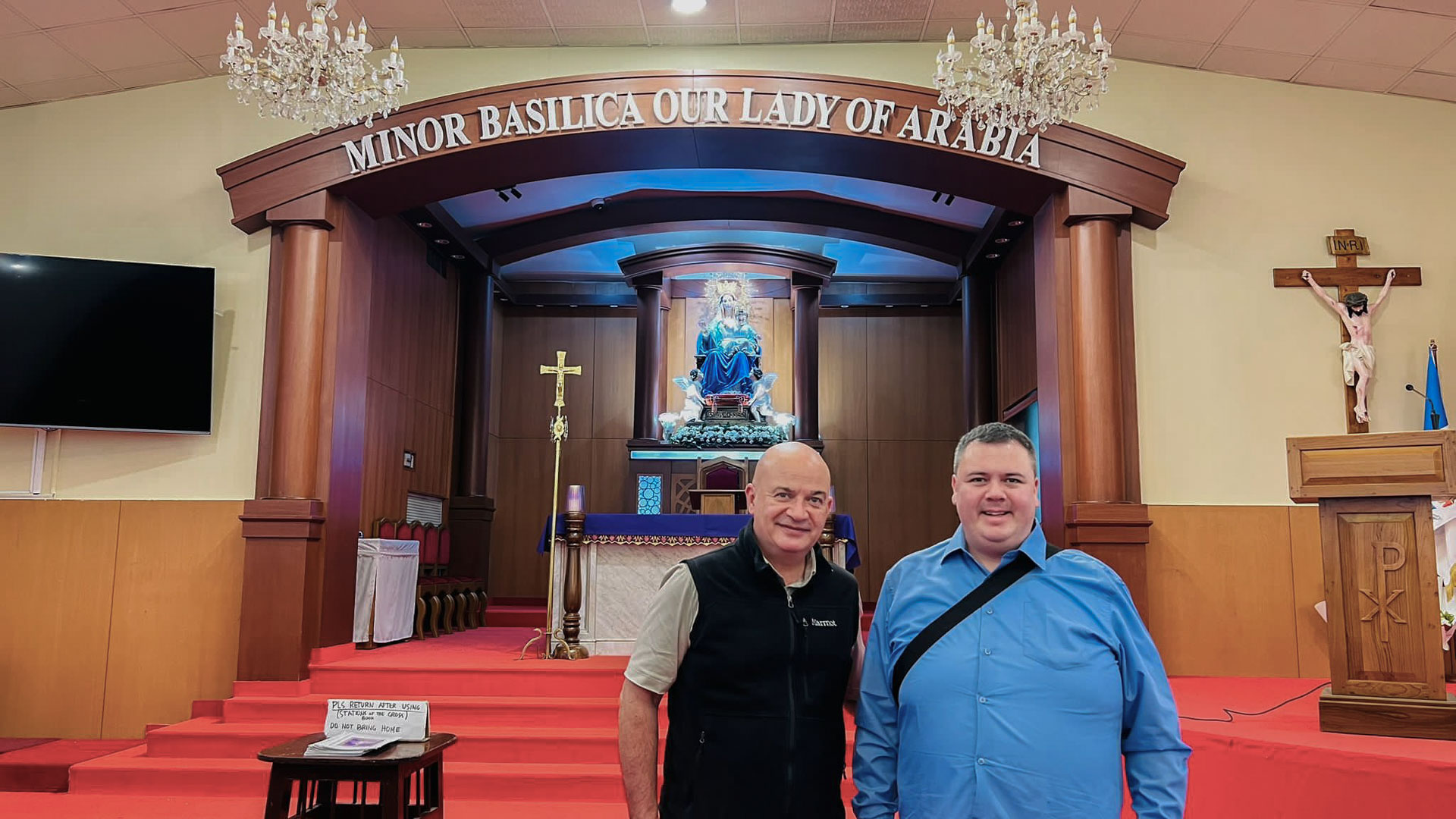
Some time ago, Bishop Aldo Berardi, Apostolic Vicar of Northern Arabia, requested a continuing education course for his clergy from the Pontifical Institute of Liturgy. Now we have arrived—and for the time being, we cannot leave. Together with our Guestmaster, Fr. Benoit Alloggia OSB, I traveled to Kuwait for this course; an additional three days in Bahrain were planned. However, as we sat on the plane on Saturday, taxiing toward the runway, the first attacks began. Since then, the airspace has remained closed.
The Apostolic Vicariate of Northern Arabia (Vicariatus Apostolicus Arabiae Septentrionalis) encompasses the Arab states of Kuwait, Bahrain, Qatar, and Saudi Arabia. According to its own data, it cares for an estimated 2.2 million Catholics—almost exclusively expatriates from all over the world. Approximately 80% of the faithful belong to the Latin Rite, while the Eastern Churches are also particularly visible, especially through their liturgies: Syro-Malabar, Maronite, Chaldean, and other Eastern traditions. In Saudi Arabia, any public practice of faith is prohibited; neither churches nor parishes exist there.
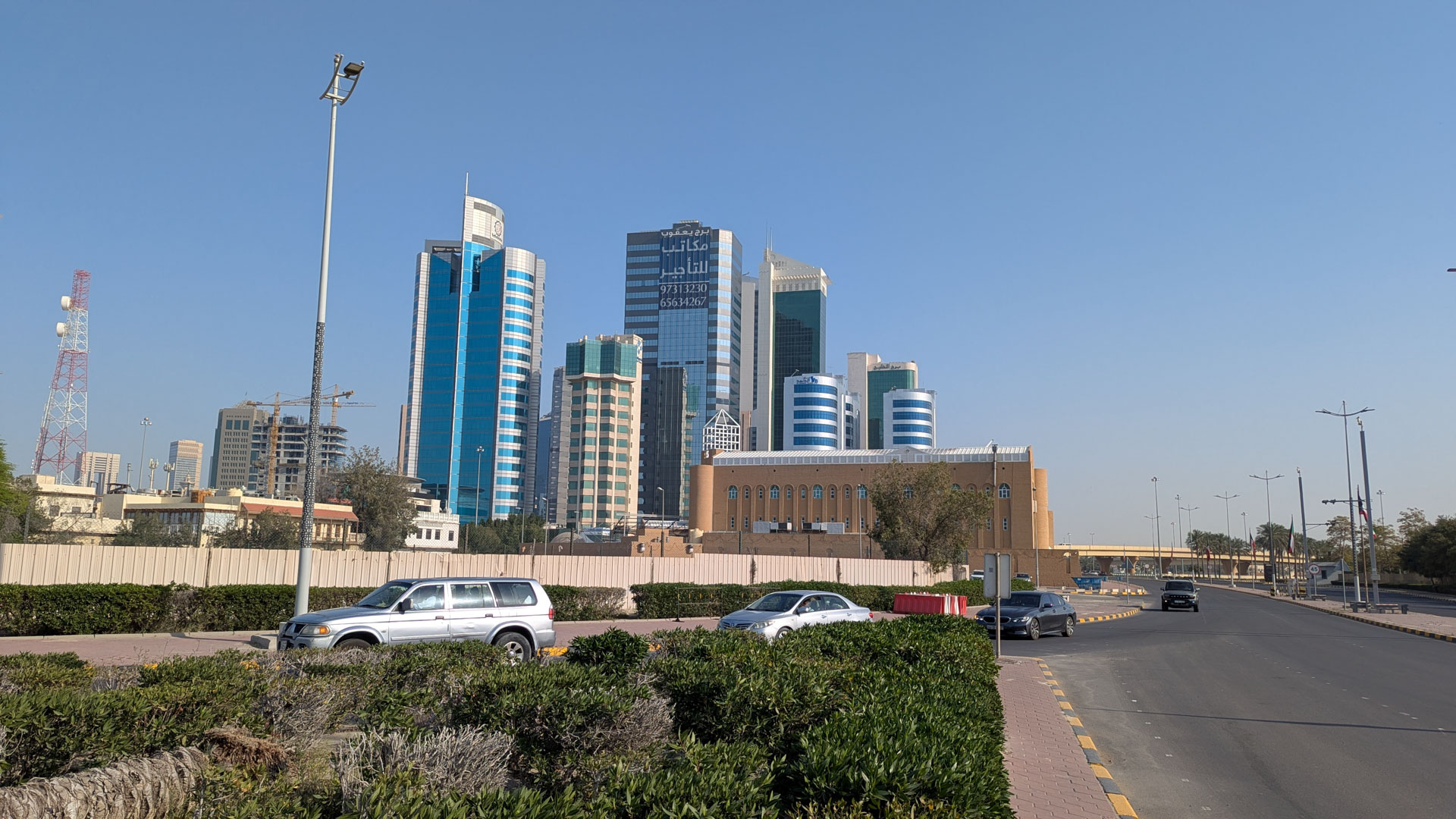
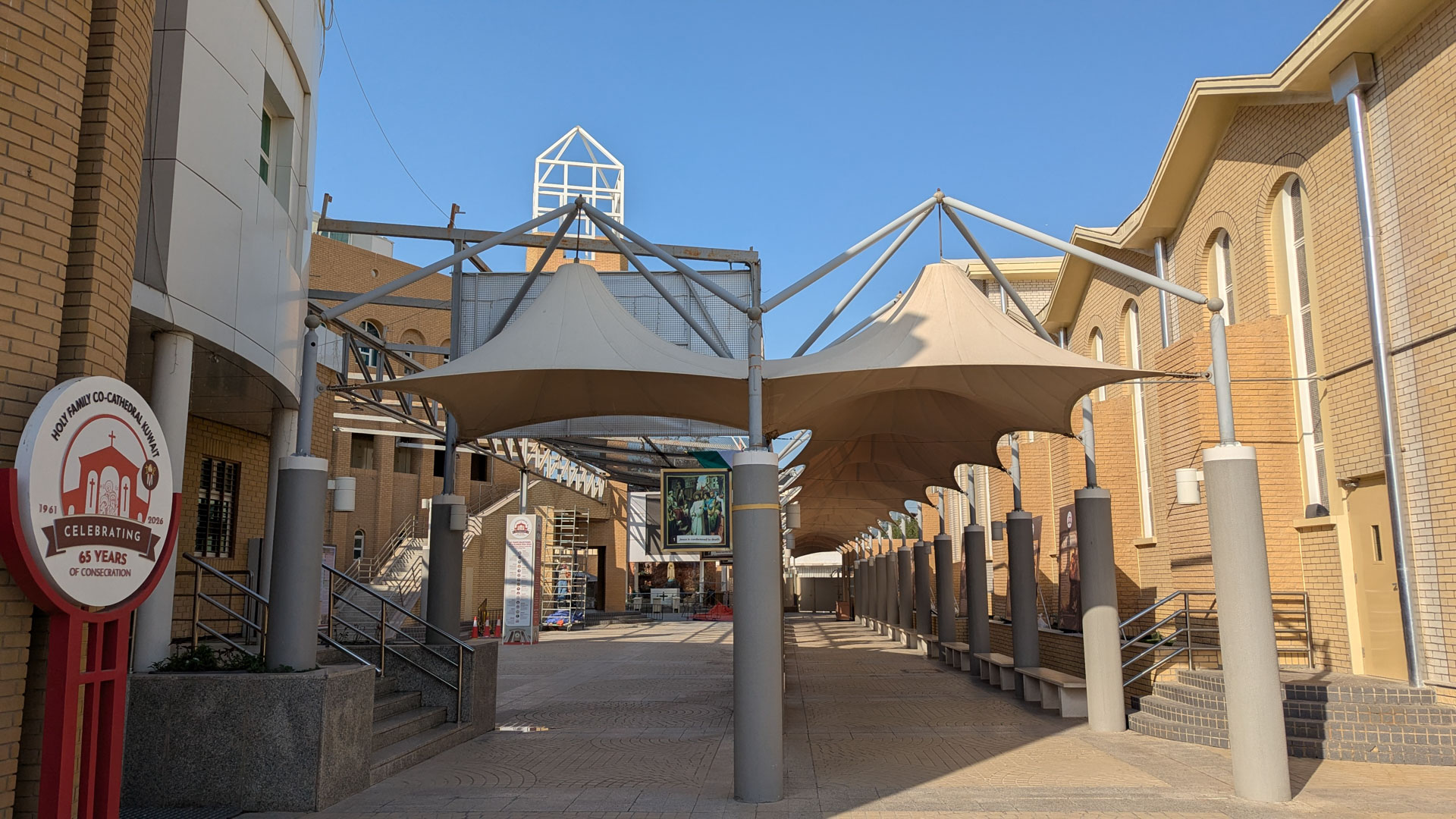
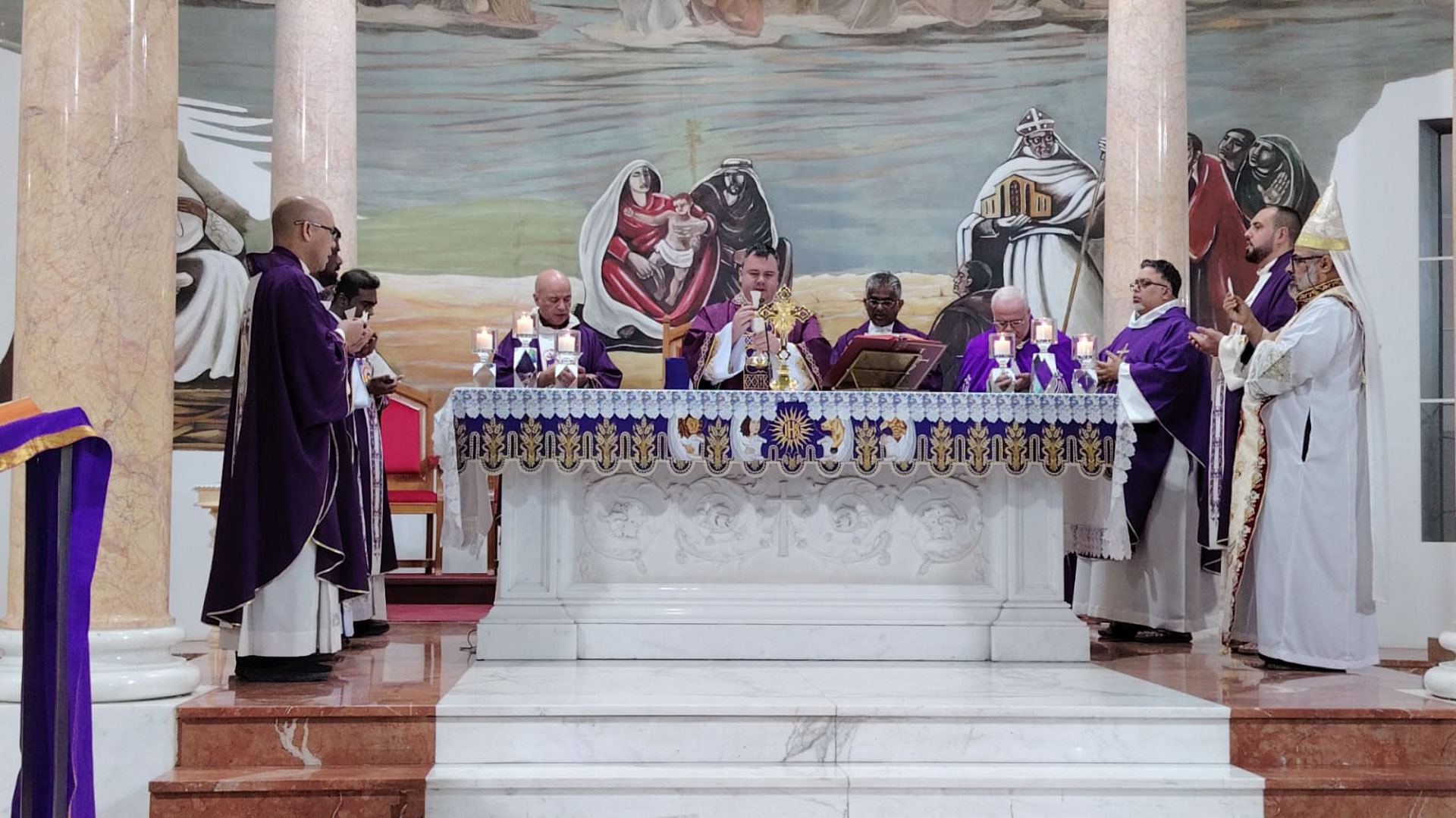
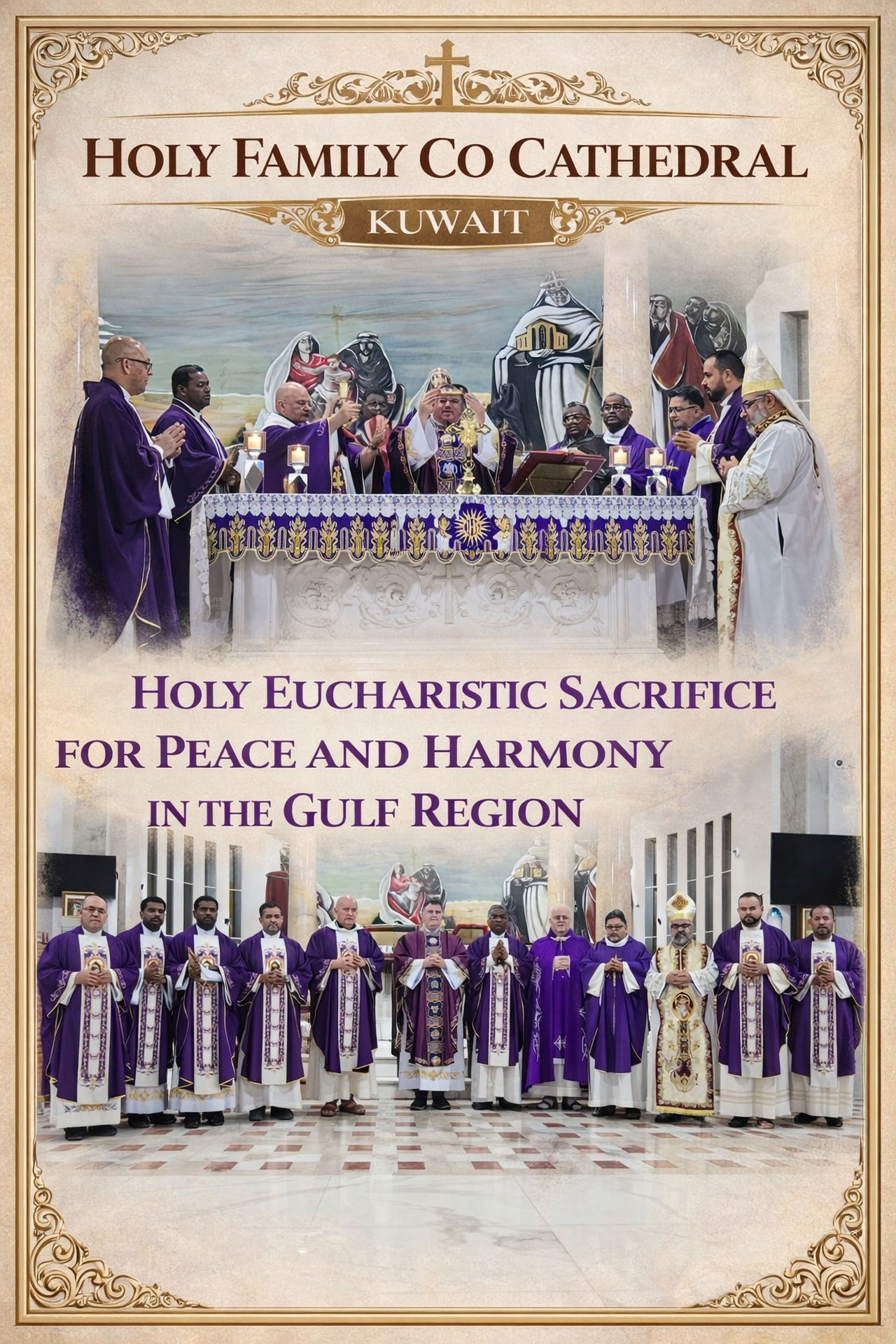
The entire Gulf region has been drawn into a conflict that is not its own. Missile alerts have now become part of daily life; the military defense functions well and efficiently. Yet the atmosphere is characterized less by war rhetoric than by a latent, quiet anxiety: How long will this last? How far will it spread? And yet—the Church is alive. This is perhaps the most moving impression of these days. We have been warmly received at Holy Family Co-Cathedral Parish in Kuwait City; we lack for nothing.
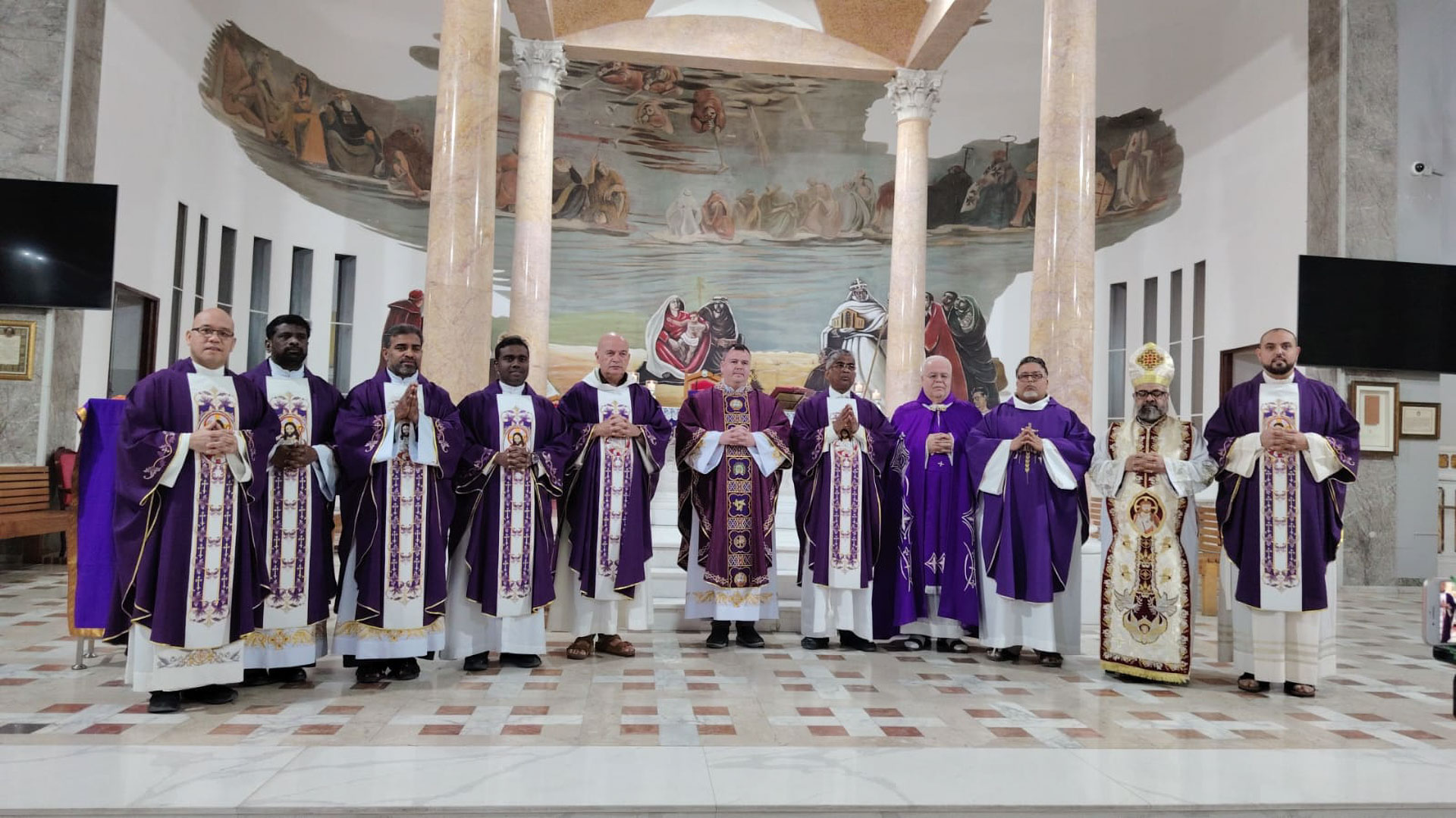
The course itself was theologically dense and vibrant. At its heart was a question that is anything but academic here: How do you celebrate the Liturgy with a community that has grown together from so many cultures and rites? How do you celebrate the Liturgy in a context that is not your own? The faithful are migrant workers from India, the Philippines, Egypt, and Lebanon—people who often live here only temporarily and yet form a remarkably vivid community. The clergy, predominantly missionary priests from India and the Philippines, represent various rites and know what is at stake: for these people, rite and piety are not merely pious habits, but a sense of home. The Filipinos bring their various forms of popular piety; the Indians remove their shoes before offering their prayers at the Lourdes Grotto in the Co-Cathedral’s atrium. To preserve these forms from the homeland while simultaneously integrating them into a common celebration is the true liturgical-pastoral task to which Bishop Berardi and his clergy devote themselves with great earnestness.
That this is not a matter of course is shown particularly clearly by the situation in these days. In light of the conflict, public gatherings were prohibited, though after a few days, the church was permitted to remain open for personal prayer. The Masses this weekend—with Friday being the Islamic holiday and thus the day for the Sunday Liturgy—are taking place via livestream. We, too, are involved in pastoral activities, whether in celebrating Mass or hearing confessions. I was particularly impressed by the work of the Salesians in a district of Kuwait City where mostly expats are housed. They operate a parish there that has not been officially authorized but is tolerated. On the Friday before the attack, we were able to experience a normal morning, where usually between 800 and 1,000 children arrive first for catechism classes. These are held in many classrooms, divided by age groups from elementary students to youth preparing for the Sacrament of Confirmation. A large number of catechists dedicate themselves with commitment and competence to the transmission of the faith. The conclusion is the communal Eucharistic celebration—a feast of faith where it becomes visible that the presence of God strengthens and creates identity. It is a colorful, lively bustle that overwhelms at first glance, but a closer look reveals one thing: that faith here is more than folklore. It sustains. It creates community, precisely where you are a stranger.
As Benedictines, we often speak of hospitality—it belongs to the foundation stones of Benedictine spirituality, as expressed in The Rule of Saint Benedict. Here in Kuwait, we are truly experiencing it, and perhaps it is precisely here that it becomes clear why hospitality was so important to Saint Benedict, serving as the essence of Christian existence. Benedict calls us to receive Christ in every guest—and thus the presence of God becomes a concrete reality among us. From the community of priests in the Co-Cathedral parish who took us in, to the Christians we encounter in these days: people who are themselves in an uncertain situation and yet give what they have. In Kuwait, I am experiencing how a church of strangers—ecclesia peregrinans in the literal sense—lives exactly this spirit: rooted in prayer, hospitable, and remarkably full of hope.
Reflections on Beuronese Art in the Conception Abbey Basilica
In Memoriam: Father Joan M. Recasens i Puig OSB
Planning the Future of CIB: Statutes, Symposia, and the Joy of Shared Life
BCC Meeting Addresses Complex Realities for the Church in China, Seeks Paths of Unity
-
Liturgy Marked by Diversity — and War : A Report from Kuwait

A Sign of Hope: San José de las Lajas Amidst Cuba’s Total Energy Crisis