
A Sign of Hope: San José de las Lajas Amidst Cuba’s Total Energy Crisis
As Cuba faces a historic energy crisis following the loss of Venezuelan fuel, the monks of San José de las Lajas remain a steadfast sign of hope, providing food and spiritual solace despite a looming collapse.
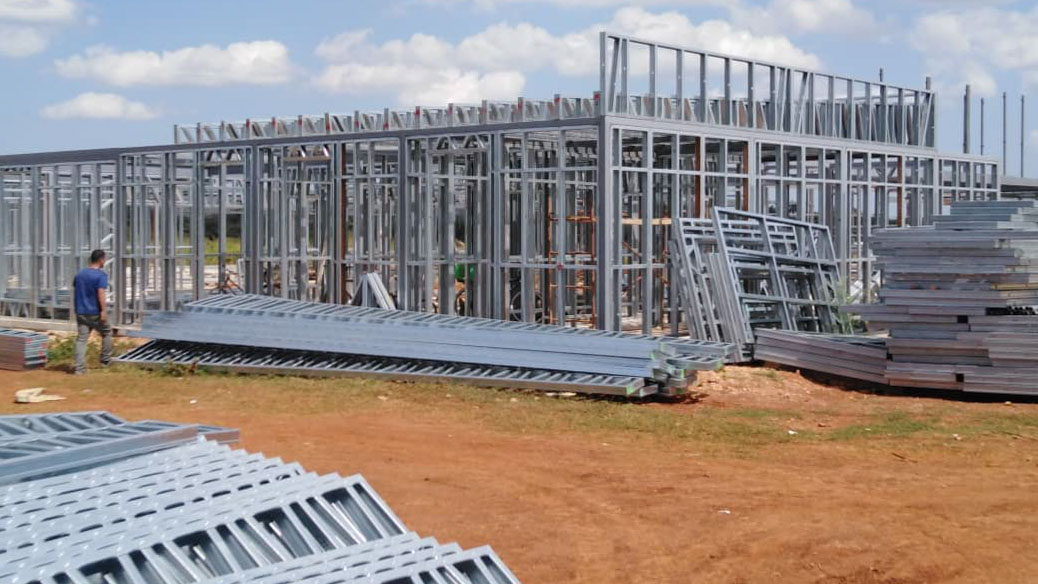
Photos courtesy of Fr. Javier Aparicio Suárez, Fr. Basil Barasa and Íñigo Moreno


27 February 2026
Abbot Javier Aparicio Suárez OSB
Abbot President
Congregation of Sankt Ottilien
News of Cuba has been flooding the newspapers for weeks. Following the capture of President Nicolás Maduro in Venezuela, U.S. President Donald Trump announced that “the next country to fall will be the Cuban regime”.
There is no doubt that life for Cubans has become even more difficult since then, if that is possible... But if they fall, it will not be “from very high”, as the situation in recent years has deteriorated to levels never seen before, not even during the so-called “special period”, when, due to the collapse of the Soviet Union in 1991, aid decreased dramatically, and, of course, the serious consequences that such a prolonged embargo is having on the population.
It is therefore not surprising that Cuba has had to face the largest exodus in its history in recent years, with figures exceeding one million citizens, mainly young people, since 2021.
The daily life of Cubans can be summed up as endless queues waiting to obtain the most basic foodstuffs at exorbitant prices, or healthcare that increasingly lacks the most essential items, or workers who, if they can, travel to their jobs by bicycle or on foot for hours and hours, in the absence of public transport.
In the midst of this situation, our community, San José de las Lajas, has become famous because, in the words of a provincial superior, “you are building a monastery, that is, you intend to continue, to remain here; and because you produce and offer basic food for the population”.
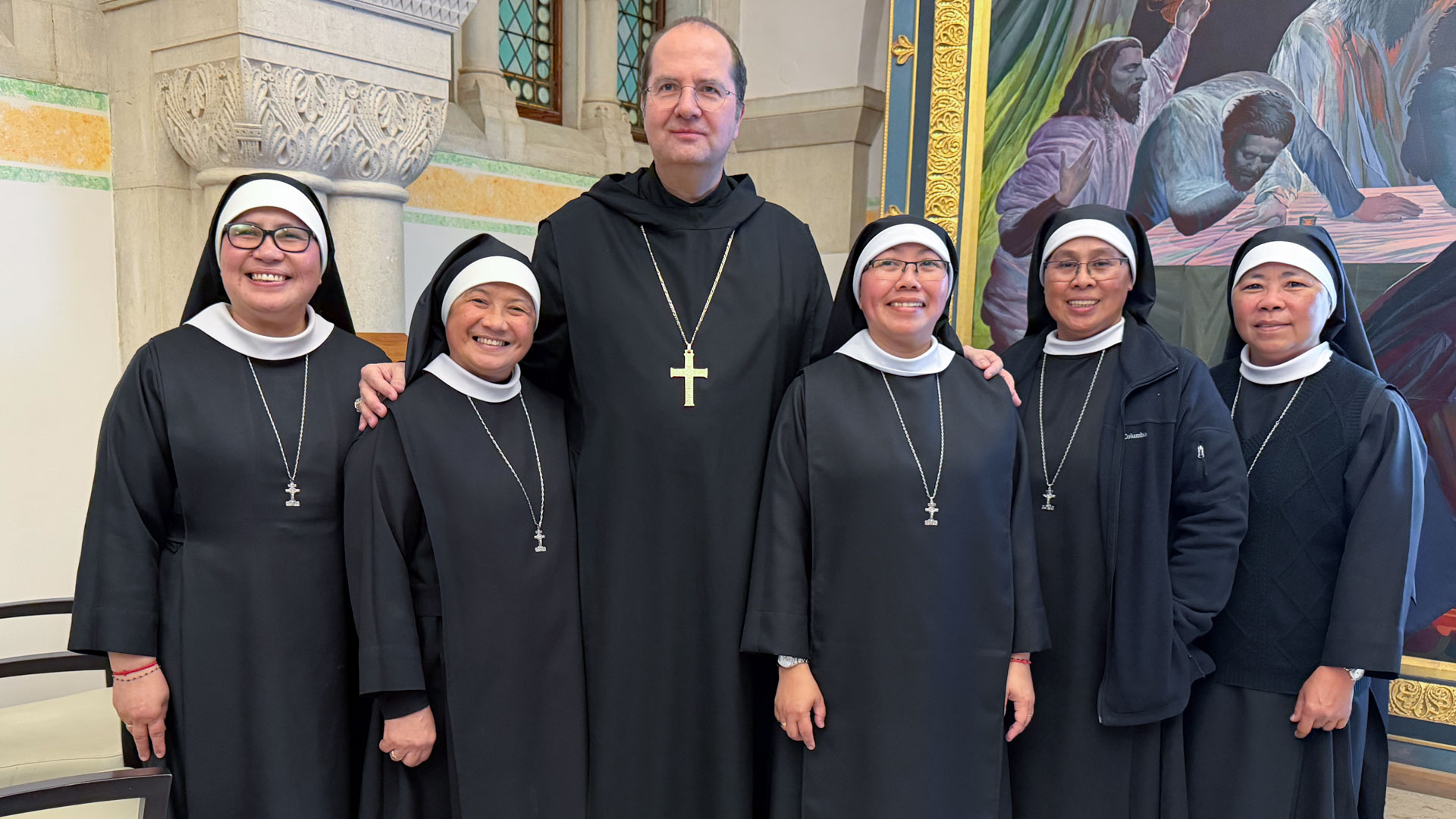
From the house of the Otillien Congregation, we try to accompany the community as much as possible. Congregation Secretary Fr. Basil Barasa OSB, from the Abbey of Tigoni in Kenya, had the opportunity to share Christmas with them and experience first-hand — before President Trump's announcement of a tougher embargo — the daily life of the community.
I intend to visit the community in about three weeks' time to accompany them for a few days in view of the situation facing the country, and to follow closely the progress of the construction.
Curiously, in recent months, the pace of construction had made great progress, but these have now slowed due to the absolute lack of fuel and, therefore, electricity.
I am now sharing a text I received yesterday, Tuesday, 10 February, from San José de las Lajas Prior Fr. Aaron Jang, originally from Waegwan Abbey, South Korea, in which he describes the current situation under which they are living:
"Cuba has been suffering from an energy crisis for several years due to a lack of fuel. However, the government was able to prevent the collapse of the energy system thanks to the help of the government of former President Maduro of Venezuela. But after the U.S. military operation in Caracas on 3 January, Cuba lost its largest fuel supplier.
The effects were almost immediate. Public transport and schools were suspended. Hospital and health services were reduced. Fuel sales were limited to 20 litres, with people having to wait several days to purchase it. In addition, the Cuban government warned international airlines that it was running out of aviation fuel. As a result, some flights were cancelled and schedules changed.
The greatest concern is the near future. Studies estimated that, without new oil shipments, Cuba would be in a serious crisis by March. Although some countries promised aid, the U.S. president threatened trade tariffs on all countries that supplied oil to Cuba.
In the case of our community, both construction and farm work are limited.
Currently, builders come on bicycles and work by hand without machinery. Last month, three containers of materials arrived in Cuba from Spain, but due to fuel shortages, they have not been able to transport them to the monastery.
On the farm, we use a tractor when absolutely necessary. The rice planting season is coming soon. But if this critical situation continues, we will have to leave many areas unplanted.
In fact, the most important thing is not the construction or the farm, but the life of the community. We need to prepare in some way in case of total collapse. For example, how are we going to solve the problem of drinking water? Hopefully, it will not come to the worst. We invite you to remember Cuba in your prayers. May the Lord help the Cuban people and lead them to hope.”
The text needs no further comment, and words probably cannot describe the deeper reality of a people who do not understand geopolitics or international conflicts, but who trust in a more dignified future.
Fatigue is taking its toll on the people of Cuba; the crisis is no longer an occasional issue; uncertainty about the immediate future is deepening the wound that has been open for so long. Money transfers from friends and family continue to arrive from abroad, providing a minimal amount of help to survive in the midst of despair.
And in the midst of despair, solidarity and the continued ability to help one another have also made their presence felt. In this context, religious communities — those that have not yet left — continue to play an important role, offering not only companionship and consolation, but also real support, as far as possible, both human and spiritual.
It is Cuba and the Cuban people who must decide their future. In the coming years, Cuba will need to rebuild itself, both humanly and materially; a reconstruction that will restore dignity to its people, morally, socially and spiritually. That future will require everyone's help.
On this arduous journey, our community is a sign of perseverance, of struggle, of generous work and of commitment to those who need it most.
Today, Ash Wednesday, begins a time of conversion. But it is also a time for hope, when a new heaven and a new earth will be revealed in the midst of our fragility.
BCC Meeting Addresses Complex Realities for the Church in China, Seeks Paths of Unity
Liturgy Marked by Diversity — and War : A Report from Kuwait
-
A Sign of Hope: San José de las Lajas Amidst Cuba’s Total Energy Crisis
Events, Elections and Appointments | January-February 2026
Notes from the Aventine | January-February 2026

The Interruption of Beauty: The Liturgical Art of Br. Emmaus O’Herlihy OSB