
Friendship and Mission: A Meeting of the Board of Monastic Interreligious Dialogue
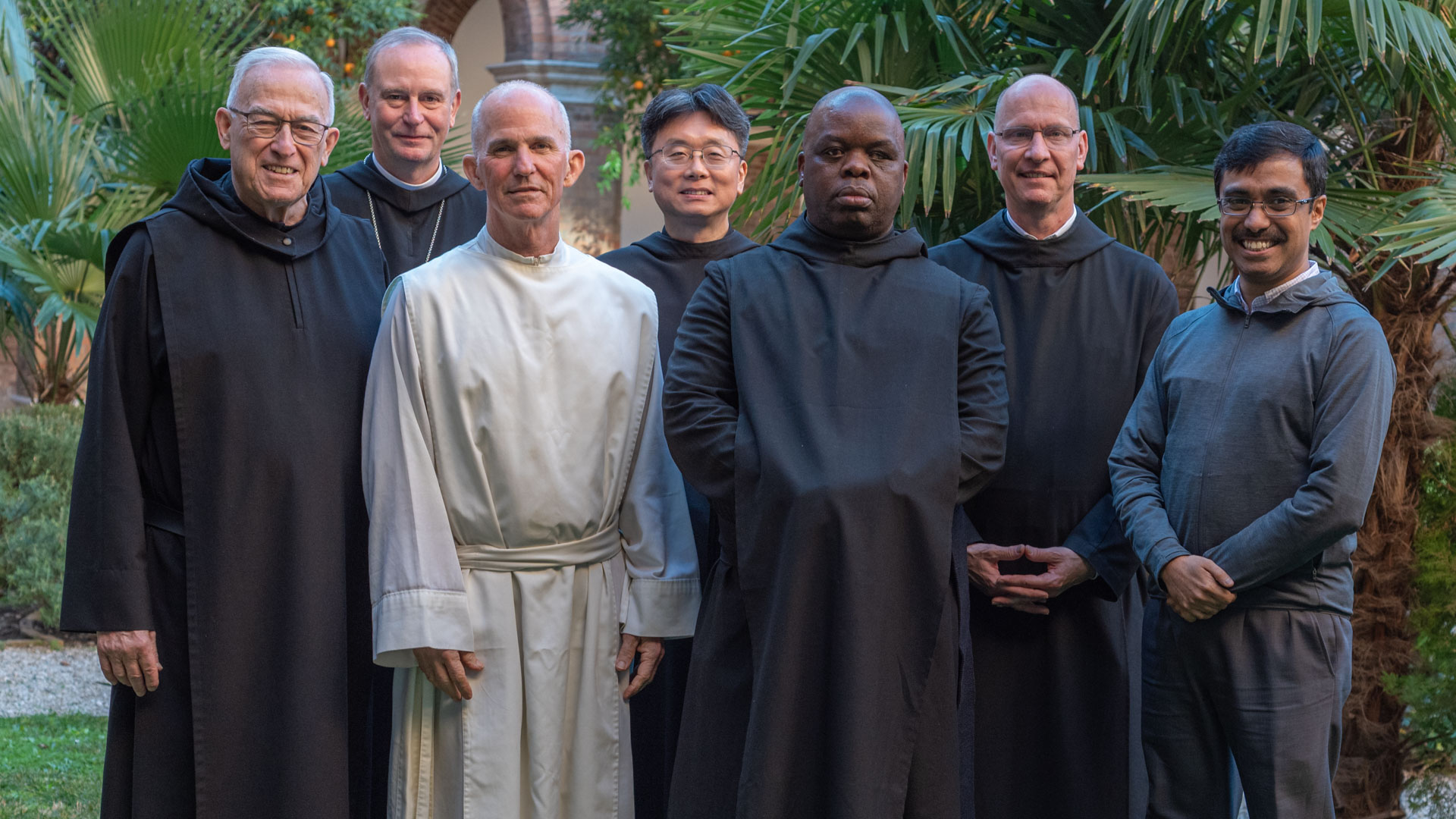
The DIMMID Board met in Rome from 9-12 January for an in-person session. Discussions with Aaron Maniam (Oxford) covered AI, global developments and community building, concluding with a visit to the Dicastery for Interreligious Dialogue.
29 January 2026
There have been few in-person meetings of the Board of Directors of DIMMID (Monastic Interreligious Dialogue) throughout our history, the last one being in the Netherlands in 2019. We do meet four times a year online, as is required of us by our corporate charter, but from the beginning of my term I had really wanted to gather as many of us as possible at Sant’Anselmo for an in-person meeting. My goal for such a gathering was at least two-fold. First of all, simply to meet each other face-to-face for some mutual encouragement and enrichment, in an almost retreat-like setting, away from everyone’s normal affairs. But an ulterior motive was to draw the attention of the student body at Sant’Anselmo to the existence and work of Monastic Interreligious Dialogue, perhaps to stimulate some interest among some of the younger monastics.
I have learned that bringing together an international group is a daunting enterprise, for financial reasons and scheduling conflicts as well as dealing with visa restrictions. In the end though, we were able to get seven of us to Rome, which is about half of the board, the weekend of 9-12 January, from as far-flung places as Korea and South Africa (Frs. Anselmo Park and Victor Chavungo), as well as my predecessor Fr. William Skudlarek from Minnesota, USA. Abbots Cosmas Hoffman from Germany and Bernard Lorent, former abbot of Maredsous in Belgium and current president of AIM, were also there, as well as Fr. Markus Muff from Switzerland, who serves the Benedictine Confederation as the Director of Development for Sant’Anselmo and has agreed to be the treasurer for DIMMID as well.
I have a dear friend and collaborator named Aaron Maniam from Singapore, who is now a professor at the Blavatnik School of Government at Oxford University and a Senior Fellow for Advanced AI at a Brussels-based think tank called the Centre for Future Generations. He and I did a lot of interfaith work together some years back in Singapore, and after visiting me yearly at my home monastery in Big Sur, California, he has the notoriety of being the first Muslim Camaldolese Benedictine oblate. (I received his oblation at a mosque in Singapore!) He also serves on my own interfaith advisory board for DIMMID. I invited him to come and lead us in some discussions since one of his specialties is in group work and future planning.
The first evening we did a simple round table of introductions, and it was very moving to hear everyone’s story and background in interreligious dialogue. The next morning I gave a presentation, what I refer to as my “stump speech” that I have been offering around the world to various groups, mostly monastic ones such as Benedictine regional meetings. I use it to introduce folks to DIMMID, our history and our work, as well as my own vision for who we are and what we have to offer the world right now. It is entitled “Our Role and Response” and I am always glad to present it, especially so for this group, to give them some sense of my own aspirations for our ministry within the Benedictine Confederation and in the world.
Then we turned it over to Aaron for the rest of Saturday and a session on Sunday. I wanted someone from outside of our circle to unite us not only in our common Benedictine heritage, but with a view of the global village. Having also worked as a civil servant in the upper ranks of the government of Singapore and still traveling around the world as a presenter doing very much what he did for us, Aaron has an impressive global view. He titled his presentation “Developments in the World and their connections to Monastic Life,” with one of his first sub-topics serving as a pretty good subtitle: “From 3D to multi-D world.” His presentation included discussion about diversity and demography, AI and technology, and “multi-directional responsibilities,” for instance. Then on Sunday, after a beautiful celebration with the community of Sant’Anselmo, Aaron led us in a profound discussion about “Building Belovedness and a Beloved Community,” inspired by the fact that we were meeting on the Solemnity of the Baptism of the Lord. And of course, he also led us through some practical steps such as the typical SWOT exercise––identifying our Strengths, Weaknesses, Opportunities, and Threats.
One element that stuck out for me in terms of strengths is how much specialized knowledge there is between us who have dedicated time and energy to delving into other traditions––not just surface facts and outward appearances, but deep immersion into spiritual experience. Among other themes that were raised and stayed with me were friendship and hospitality, Fr. William especially came back to this several times; and interreligious work as missionary efforts. (Though if we begin with friendship and hospitality, it may change what it means to be a missionary in our day and age!) We all recognized the issue of aging communities, which leads to fewer monks and nuns being available for extracurricular activity; and also a more cautious and conservative attitude that has evolved over the last two decades that makes some of our younger brothers and sisters extra hesitant if not outright suspicious of interreligious dialogue, in spite of the fact that it is sanctioned, called for and supported by the Church.
We did have two more light-hearted moments. Sunday night Fr. Markus treated us to a wonderful sumptuous Roman meal at a local trattoria. And Monday morning we had a visit to the Dicastery for Interreligious Dialogue just down the street from St. Peter’s Basilica, where we were warmly welcomed by Monsignor Indunil Kankanamalage, who is its secretary and has been a good friend of DIMMID for many years, and Cardinal George Koovakad, the new prefect for the Dicastery who is quickly becoming a good friend and partner as well. After we recounted some of the contents of our discussions to them, His Eminence expressed his desire to find some way for their office and us to collaborate more. They then treated us to a lovely spread of coffee and delicacies from Sri Lanka, Monsignor Indunil’s homeland. It was a very warm friendly visit, and I was glad for the two groups to meet each other. (Serendipitously, Aaron and Msgr. Indunil had actually met once before at a conference in Singapore.)
I came away from our gathering with a renewed sense of mission. No matter what numbers or lack of which thereof, and even in spite of feeling a certain absence of support at times, I know that this is very important work we are doing, not only for the Church but for the world torn by “the wounds of sin and division” that Christ comes to heal. And we certainly have a great support in Pope Leo XIV who seems to bring up interreligious dialogue often in these early days of his pontificate.
I am very grateful to my board members who traveled such distances to spend some days together, and to the community of Sant’Anselmo for being so very welcoming, especially the guest master Fr. Benoit who went out of his way to accommodate our every need. In everything may God be glorified through Jesus Christ, and by God’s grace may we be ever more a sign of unity and an instrument of peace.
-
Friendship and Mission: A Meeting of the Board of Monastic Interreligious Dialogue
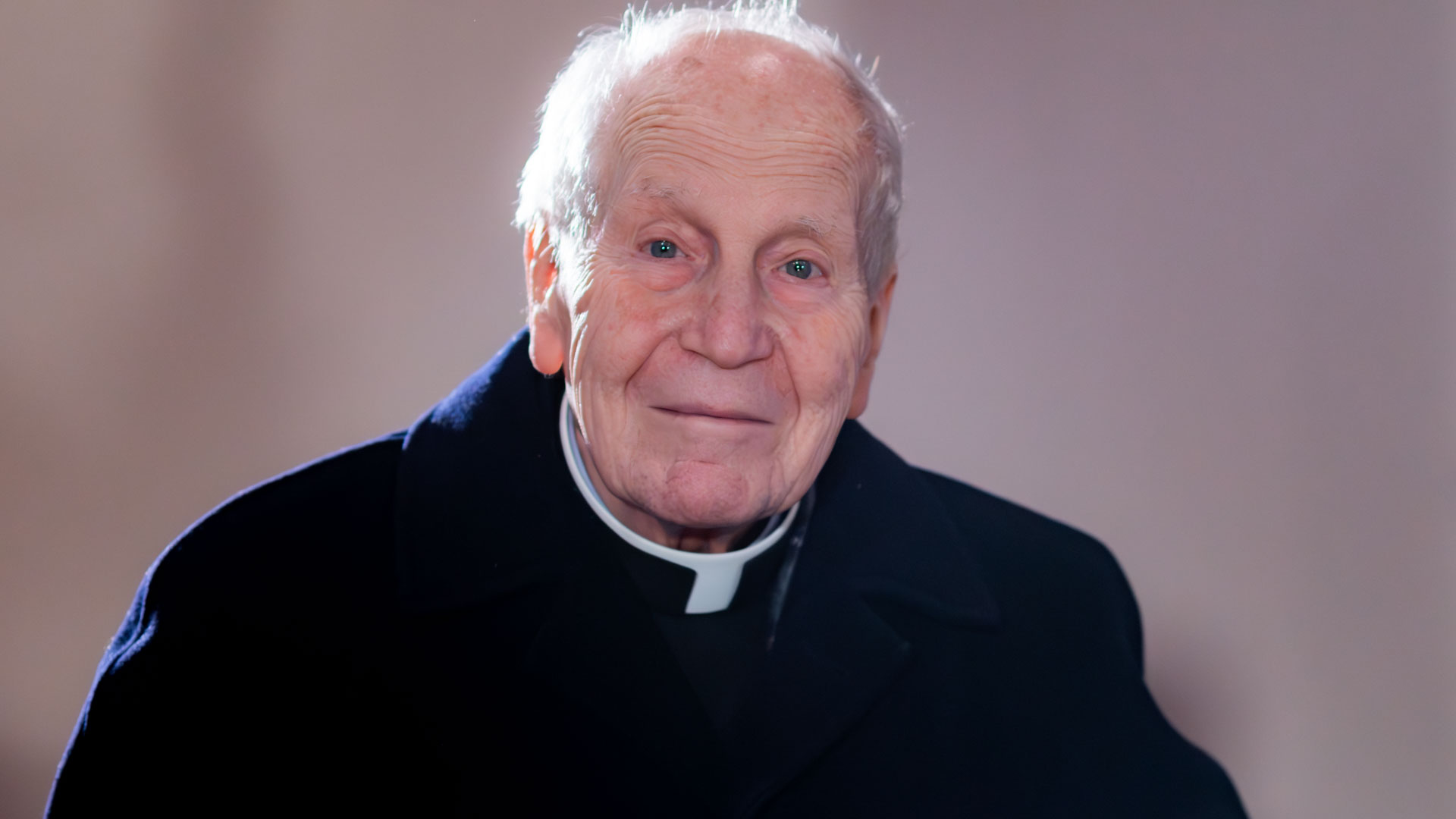
In Memoriam: Monsignor Crispino Valenziano (1932–2026)
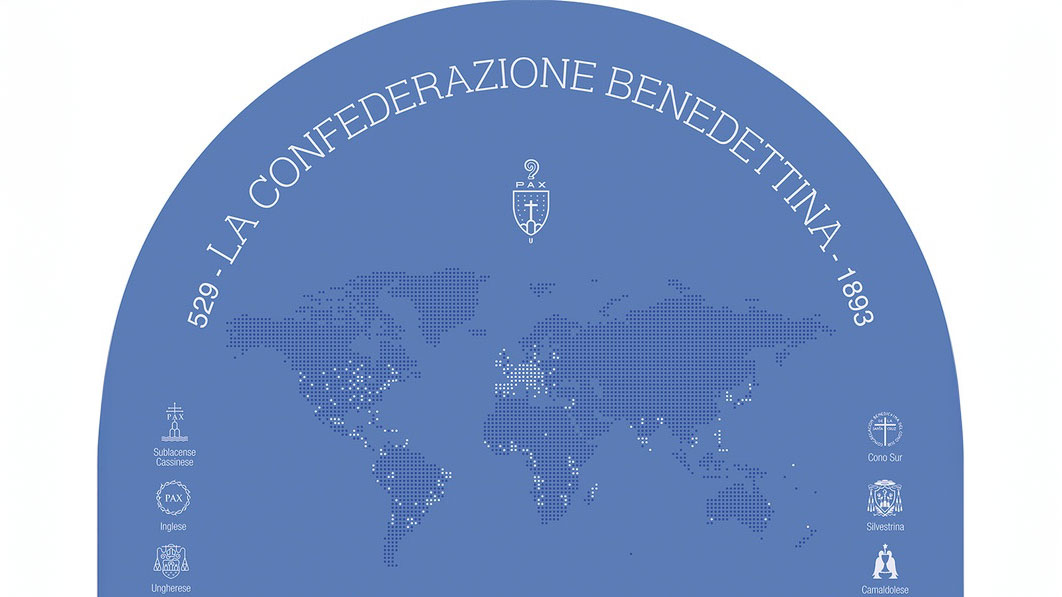
Notes from the Aventine | November–December
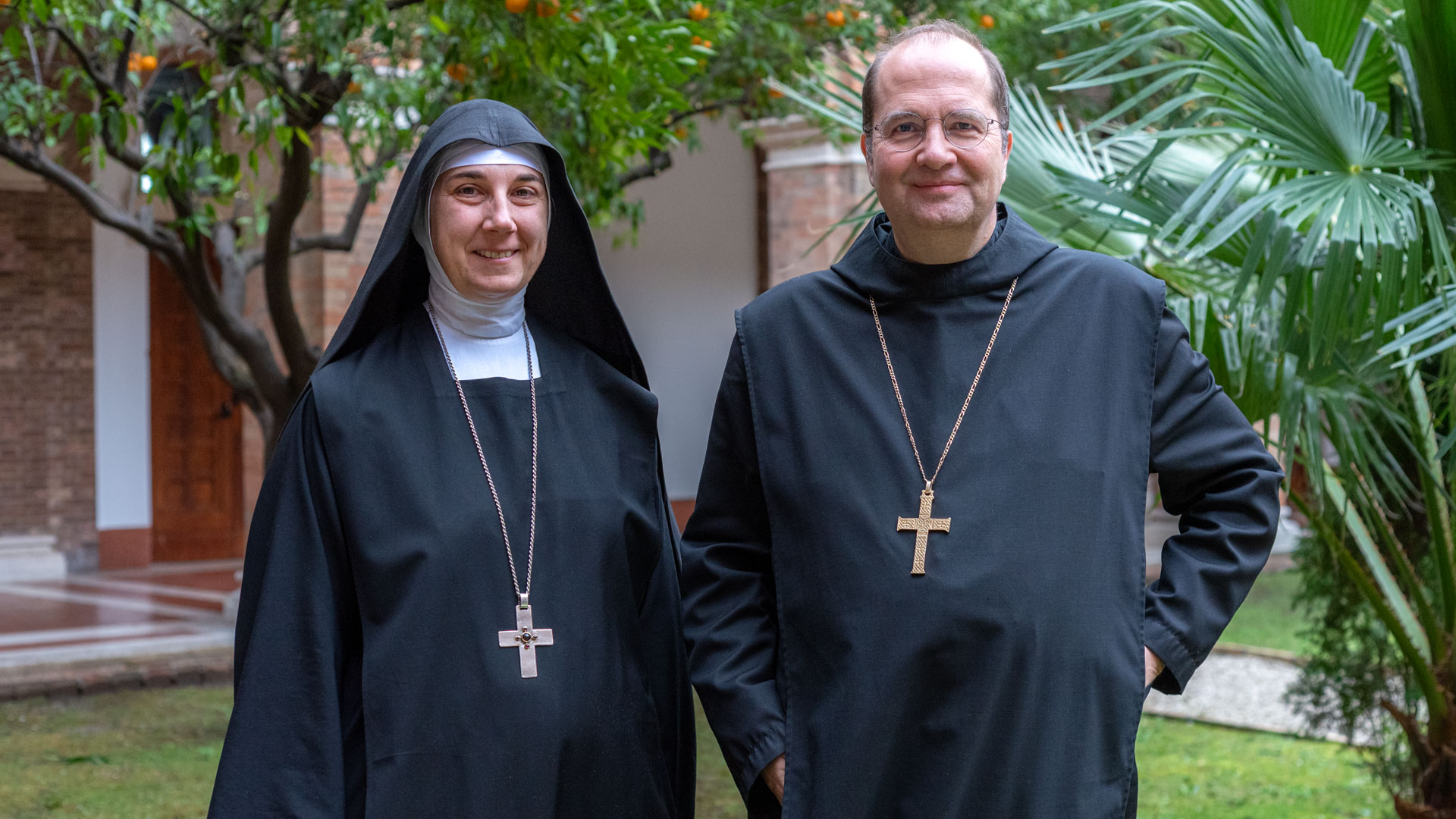
Events, Elections and Appointments | November-December
An Epiphany Frontispiece from The Saint John’s Bible
Catalogus of the Benedictine Confederation Enters Review Phase