
An Epiphany Frontispiece from The Saint John’s Bible
For the feast of the Epiphany, the editors of the NEXUS Bulletin feature John Frontispiece, The Word Made Flesh, a frontispiece from The Saint John’s Bible, a landmark Benedictine project rooted at Saint John’s Abbey.
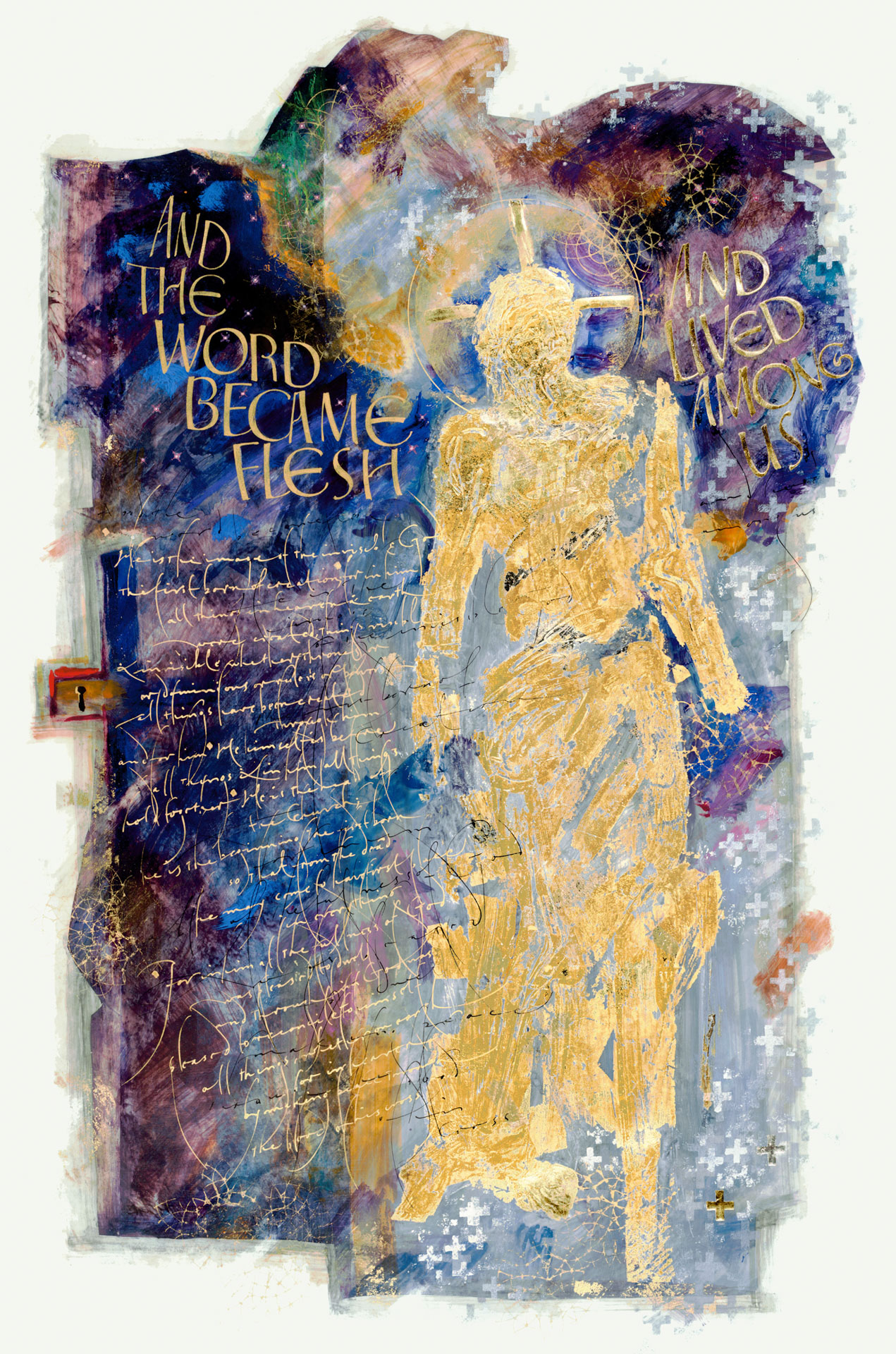
John Frontispiece, The Word Made Flesh, Donald Jackson, ©2002 The Saint John’s Bible, Saint John’s University, Collegeville, Minnesota, USA. Used with permission. All rights reserved.
5 January 2026
For the celebration of the Epiphany, the editors of the NEXUS Bulletin are pleased to feature John Frontispiece, The Word Made Flesh, a frontispiece from The Saint John’s Bible. The illumination offers a measured, contemporary meditation on the Prologue of the Gospel of John, fitting for a feast that turns on manifestation and meaning rather than spectacle.
The Saint John’s Bible is a modern, hand-written and illuminated Bible commissioned in 1998 by Saint John’s Abbey in Collegeville, Minnesota, USA. Conceived at the close of the 20th century and completed in 2011, the project brought together calligraphers, artists and theologians to produce seven volumes written and illuminated by hand, the first such commission of its scale since the invention of the printing press.
From the outset, the Abbey’s involvement shaped both method and purpose. Rooted in Benedictine life, the project unfolded within a community attentive to Scripture, liturgy and the rhythms of study and prayer. Saint John’s Abbey provided not only patronage but also a theological and cultural framework in which text and image could develop in dialogue.
John Frontispiece, The Word Made Flesh belongs to this wider vision. Its visual language draws on ancient sources while employing contemporary materials and forms, inviting sustained reading rather than quick interpretation. The frontispiece exemplifies the project’s insistence that Scripture be encountered as a living text, read with the eyes as well as the mind.
Looking beyond the original manuscripts and published editions, engagement with The Saint John’s Bible now extends into carefully developed digital resources. Alongside the project’s official website, which offers high-resolution page views, exhibition information and access to Heritage Edition reproductions and related publications, a virtual tour created by library staff at the Fremantle Campus of the University of Notre Dame Australia provides an especially thoughtful point of entry. Using discreet interactive icons, the tour reveals details embedded within selected illuminations, inviting viewers to linger over compositional choices, visual motifs and theological resonances. Together, these resources reflect an ongoing commitment to making the work accessible for study, teaching and contemplation, while sustaining the project’s future through responsible dissemination.

Monk of Saint Meinrad Archabbey appointed Bishop of Belleville
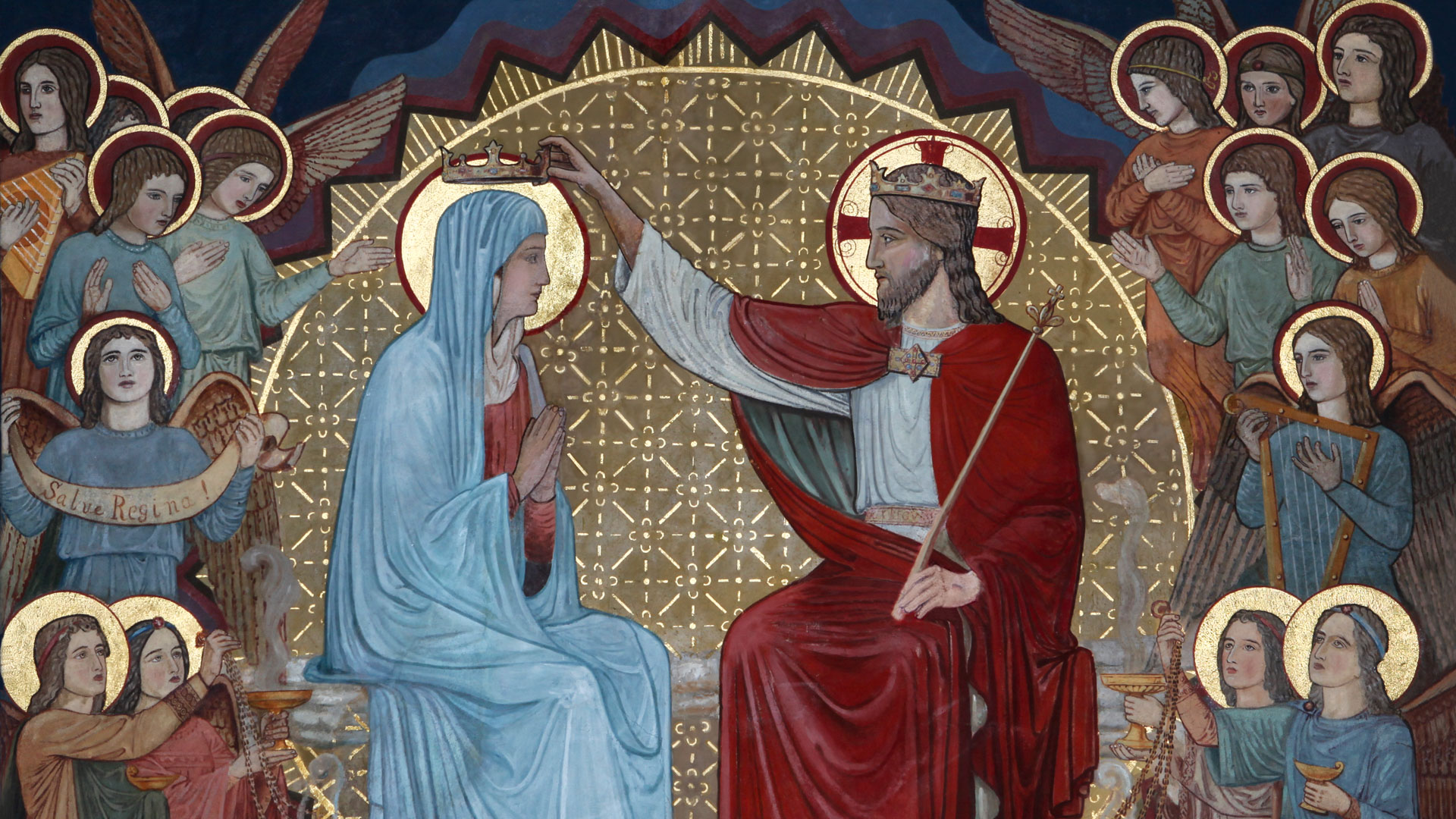
Reflections on Beuronese Art in the Conception Abbey Basilica
In Memoriam: Father Joan M. Recasens i Puig OSB
Planning the Future of CIB: Statutes, Symposia, and the Joy of Shared Life
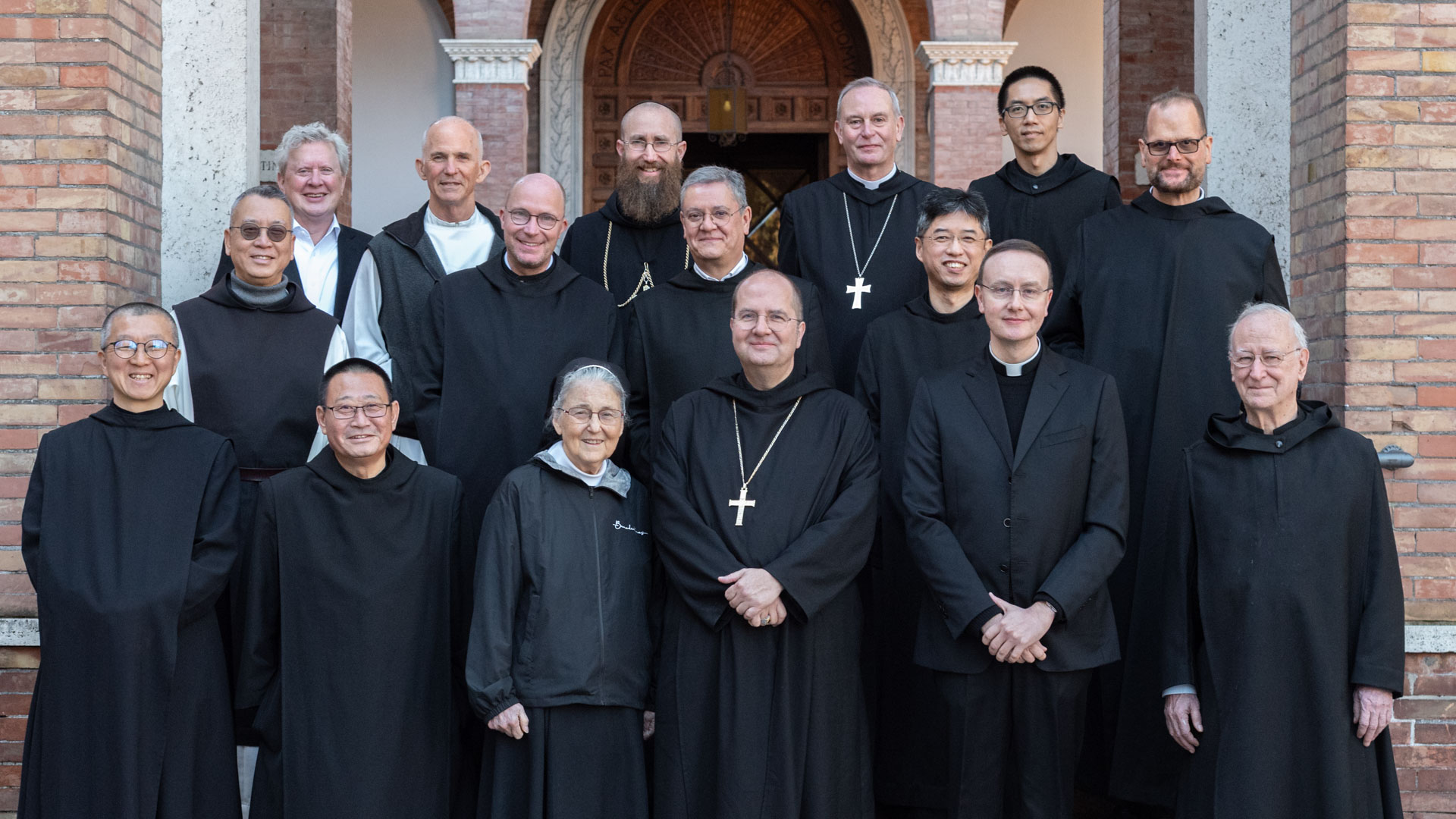
BCC Meeting Addresses Complex Realities for the Church in China, Seeks Paths of Unity
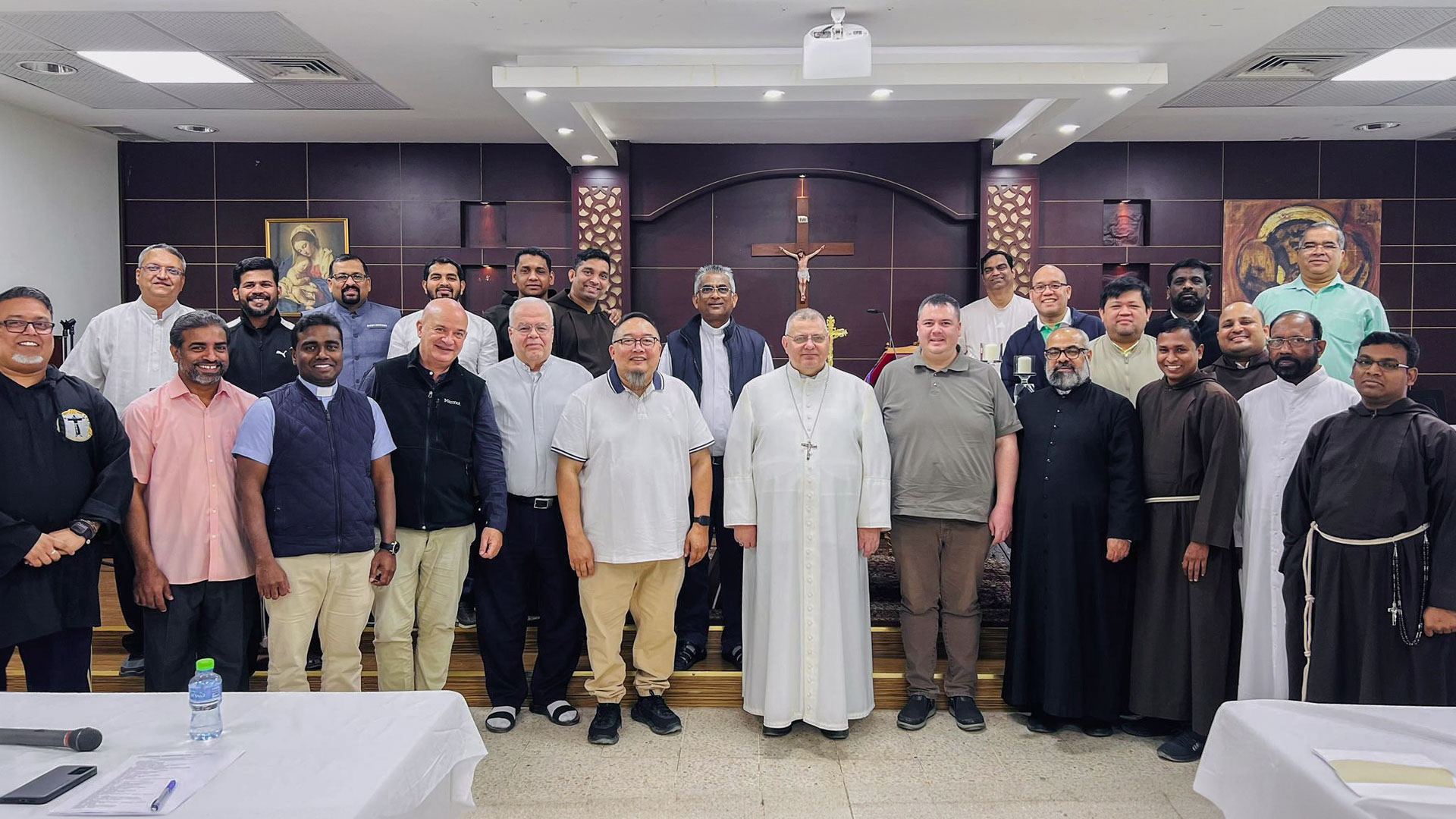
Liturgy Marked by Diversity — and War : A Report from Kuwait