
A Perfect Beginning for the Preparations for the 2029 Jubilee
Benedictines worldwide are preparing for the 2029 Jubilee marking 1,500 years since the foundation of Montecassino. Inspired by Pope Leo XIV, Adam Simon, Coordinator of the 2029 Project, unfolds the Jubilee as a journey through places of hope: Benedictine monasteries.
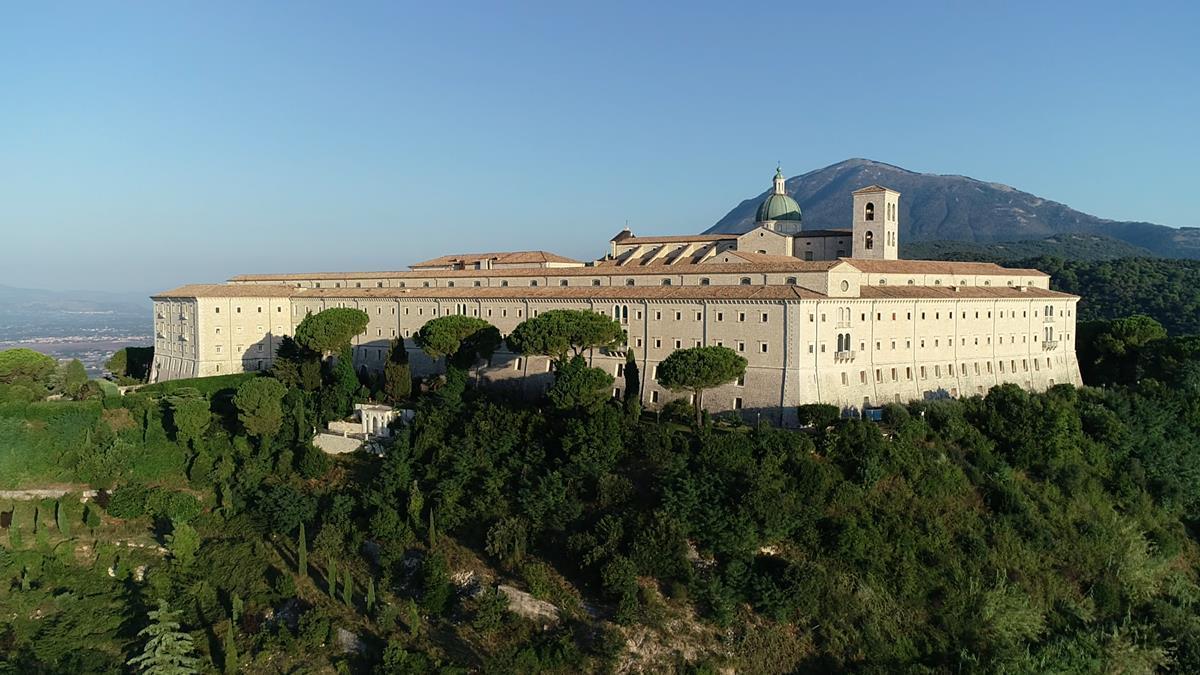
Photo courtesy of the Abbey of Montecassino.
4 January 2026
Adam Simon
Coordinator of the 2029 Project
adam.simon@anselmianum.com
In September 2024, hundreds of abbots gathered in Rome for the Quadrennial Congress of Abbots and agreed to celebrate, in 2029, the 1500th anniversary of the foundation of Montecassino as a Jubilee of Benedictine life. Preparations for this Jubilee began under the guidance of the Abbot Primate, with the aspiration of uniting Benedictines throughout the world in a Jubilee of remembrance, reflection and renewed orientation towards the future.
The visit of Pope Leo XIV to Sant’Anselmo, on the occasion of the anniversary of its dedication, was an important moment of gratitude, retracing 125 years of history. It was also an event that invited us to look ahead. We are eager to draw inspiration from the words of Pope Leo XIV in order to celebrate the future Jubilee in a more meaningful and fruitful way.
Towards the Benedictine Jubilee of 2029
The organisation of the Jubilee is only at its beginning, but its goal is clear. It is a process of transformation, not a single event to be celebrated in 2029.
The theme chosen for the Jubilee is “Places of Hope since 529”. A monastery is always a place; it is never an abstract idea. Monasteries are so diverse because they are deeply rooted in the lands and cultures in which they arise. They are places where hope is lived and offered.
In his homily at Sant’Anselmo, Pope Leo XIV seemed already aware of this theme, offering us a language that supports it beautifully. He described the monastery as a place of encounter:
The Dedication is the solemn moment in the history of a sacred building, when it is consecrated to be a place of encounter between space and time, between the finite and the infinite, between humanity and God: an open door to eternity.
We hope that the Jubilee will awaken enthusiasm, capture people’s imagination and strengthen a sense of pride in our monasteries. Looking both to the past and to the future, we seek to bring to light the enduring value of the Rule of Saint Benedict and its continuing relevance.
The Words of Pope Leo XIV as a Source of Inspiration
In his words of thanks to Pope Leo XIV, Abbot Jeremias asked him to accompany the Jubilee journey:
We wish to explore how this tradition of Saint Benedict and Saint Scholastica can become meaningful for a world that once again finds itself on the brink of transformation and upheaval. We hope and pray that the successor of Peter will accompany our reflection, our discernment and our action – for those of us who live in monasteries, but also for the Church and the whole world.
The new Pontiff clearly values the contribution of the Benedictines. From his words, we can discern four strands of encouragement that support our vision of the Jubilee.
1. The Jubilee is dedicated to evangelisation
Before his election as Pope, Father Robert Prevost, then Prior General, was interviewed in 2012 after participating in the Synod on Evangelisation. He emphasised the importance of religious life in evangelisation:
The importance of religious life throughout the history of the Church must be appreciated and cannot be underestimated… especially if we look at the first evangelisation, which established the local Church in various regions. From there emerged what we know today.
For Pope Leo XIV, religious life has always been central to the Church’s missionary commitment. Our Jubilee, therefore, must also be a time of renewed missionary energy, in which our “places of hope” once again become centres of evangelisation.
2. Monasteries as agents of transformation
In his first apostolic exhortation, Dilexi te, Pope Leo XIV devotes a substantial section to the role of the Benedictines, offering rich inspiration for the Jubilee’s preparation. He defines the Rule of Saint Benedict as “the backbone of European monastic spirituality”. Monastic life is a “school of charity”, in which manual labour shapes the heart for service and prepares it to welcome Christ in the person of the poor and the stranger.
In this exhortation, he presents the monastic tradition as “a concrete path for transforming society”. Monasteries, these tangible “places of hope”, are called to be leaven for a new civilisation, where the dignity of every person is honoured and the Gospel works in a quiet yet powerful way.
3. The Jubilee as an opportunity for renewal
Amid chaos and uncertainty, many people today seek renewal and a deeper spiritual life. Rarely has faith been so necessary or so relevant. Pope Leo XIV spoke explicitly of renewal in his address to the clergy of Rome on 19 September 2025:
Through the synodal process, the Spirit has awakened the hope of an ecclesial renewal capable of revitalising communities, so that they may grow in evangelical style, in closeness to God and in a presence of service and witness in the world.
The Jubilee thus becomes a privileged moment to welcome and respond to this call to renewal – within our monasteries, our oblate and lay communities and all those who look to Benedictine life for guidance and strength.
4. Christ at the centre of the Jubilee vision
Our vision of the Jubilee is rooted in Christ and guided by the Rule. In his words at Sant’Anselmo, Pope Leo XIV clearly placed Christ at the centre of the Church’s mission:
This celebration reminds us that… we too can respond to the call of our vocation only by placing Christ at the centre of our existence and our mission, beginning with that act of faith which leads us to recognise him as the Saviour and translating it into prayer, study and the commitment of a holy life.
All the themes of our Jubilee – Awakening, Listening, Growing, Flourishing – are ultimately invitations to place Christ more firmly at the centre of our lives and communities, in very concrete places and circumstances.
The Jubilee Programme: four years, four places of hope
Each year in the period leading up to the Jubilee will have a theme and will be centred on a monastery, a place of hope where the Rule has taken root in a particular context.
2026 – Norcia: “Awaken”
The birthplace of Saint Benedict invites us to begin the journey in the company of the saint, his twin sister Saint Scholastica and their family. It is an invitation to memory and gratitude.
2027 – Rome: “Listen”
At the heart of the Church, Saint Benedict listens: to the Word of God, the teaching of the Church and the cries and hopes of the world. It is a time of conversion, courage and adventure.
2028 – Subiaco: “Grow”
In the solitude and beauty of Subiaco, we reflect on growth in spiritual life and in community, formed in the school of service to the Lord. It is a time of struggle in which Saint Benedict embraces change.
2029 – Montecassino: “Flourish”
At Montecassino, the centre of our celebration, we contemplate the call to flourish in holiness and service, offering our monasteries as enduring places of hope for the Church and the world.
Like all Jubilees, we begin with gratitude. But there is also a sense of penance: what has the Benedictine family done with the heritage of Saint Benedict? As Pope Leo XIV said in his address at Sant’Anselmo on 11 November, quoting a phrase from the Address at Sant’Anselmo by Pope Saint John Paul II (1 June 1986):
Sant’Anselmo reminds us that knowledge of the divine mysteries is not so much the fruit of human genius as it is a gift that God gives to the humble and the faithful.
The spirit of the Jubilee is therefore founded on embracing humility as the starting point for renewal.
From this foundation, we wish to invite the world to the hope, wisdom and stability of Benedictine life. We also wish to open new frontiers, echoing the words of Pope Leo XIV on 11 November:
Monasticism has been a ‘frontier’ reality, which has led courageous men and women to establish centres of prayer, work and charity in the most remote and challenging places.
Planning a Jubilee for the 21st Century
We are planning events to celebrate the Jubilee and encouraging the creation of cultural works such as books, music, art and video. We warmly invite readers of this article to suggest ways of celebrating the Jubilee by writing to the 2029 Steering Group: adam.simon@anselmianum.com.
This will be the first digital Jubilee for the Benedictines, a major difference from earlier celebrations such as the Jubilees of Saint Benedict’s birth in 1880 and 1980. We will create a dedicated website and a global digital hub where monasteries can share resources. We are deeply aware of the rich cultural diversity of Benedictines worldwide and wish to reflect this online. In an order typically focused locally on its communities of origin, we aim to create a long-term legacy of global connection.
We also wish to reach a wider audience: monks and nuns; oblates and lay people; young people and students; families; the Church at large; and seekers of truth. We wish to renew our ecumenical charism in service to the Church, as Abbot Jeremias stated on 11 November:
Many of our monasteries have been committed to ecumenical dialogue, with particular attention to the Eastern Churches… even today we are ready to continue along this path.
We wish to stimulate interest in Benedictine life and vocation, drawing people closer to monasteries and valuing them as enduring places of hope throughout the world. We hope this will lead to more visitors, deeper engagement and, God willing, new vocations. We want this Jubilee to be a gift to the whole world, as Abbot Jeremias affirmed at Sant’Anselmo on 11 November:
Saint Benedict inspired and regulated a way of life that transformed this continent, as Pope Paul VI acknowledged when he proclaimed him principal patron of Europe. The Benedictine heritage does not belong only to us monks and nuns: it is a gift for the whole Church and for the entire world.
Our prayer for the Jubilee is for the renewal and transformation of Benedictines throughout the world, so that our monasteries may truly be “places of hope” for all who encounter them. We are grateful to Pope Leo XIV for being with us at the beginning of this journey and we draw inspiration from his words and his presence.

Monk of Saint Meinrad Archabbey appointed Bishop of Belleville
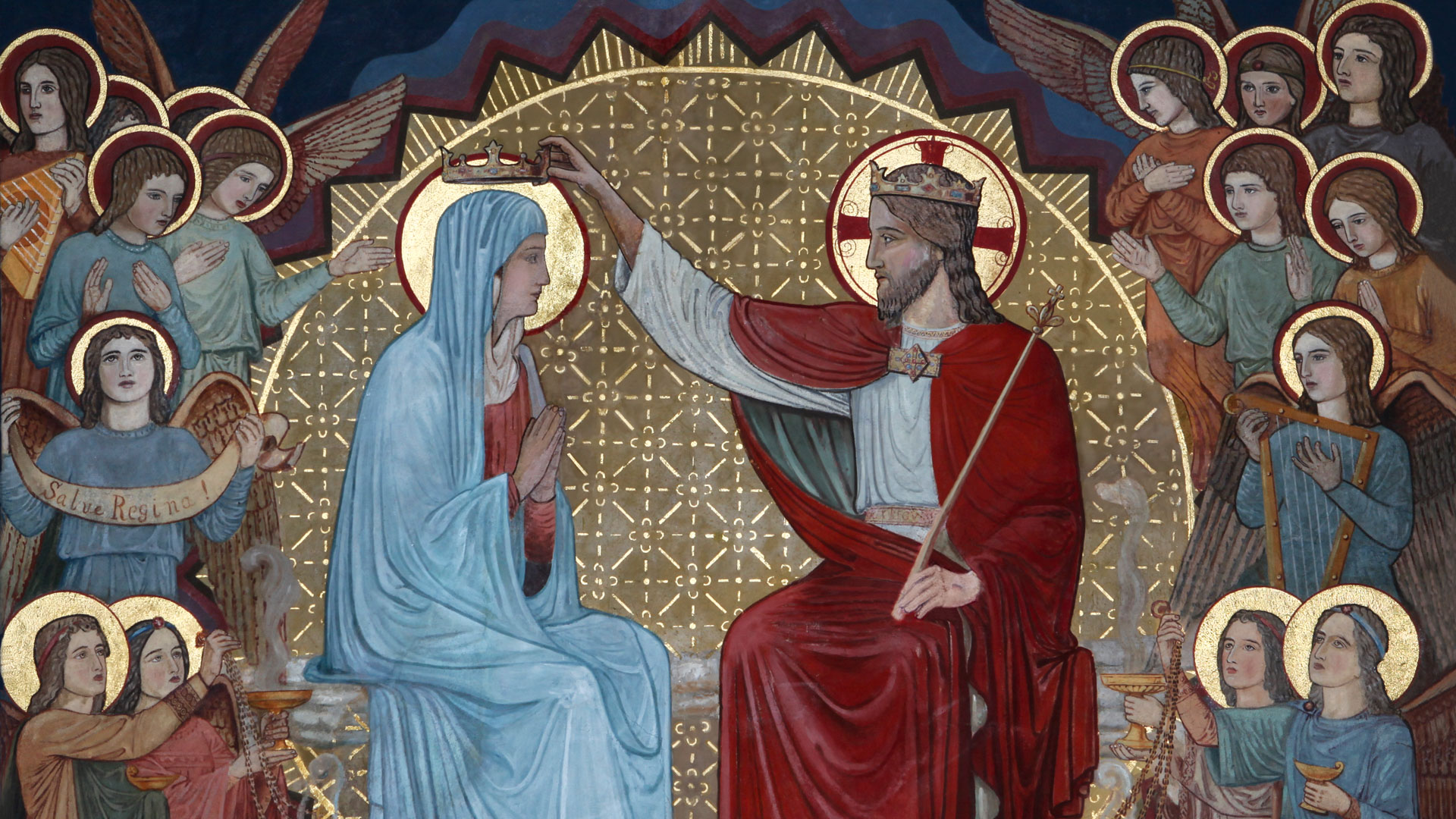
Reflections on Beuronese Art in the Conception Abbey Basilica
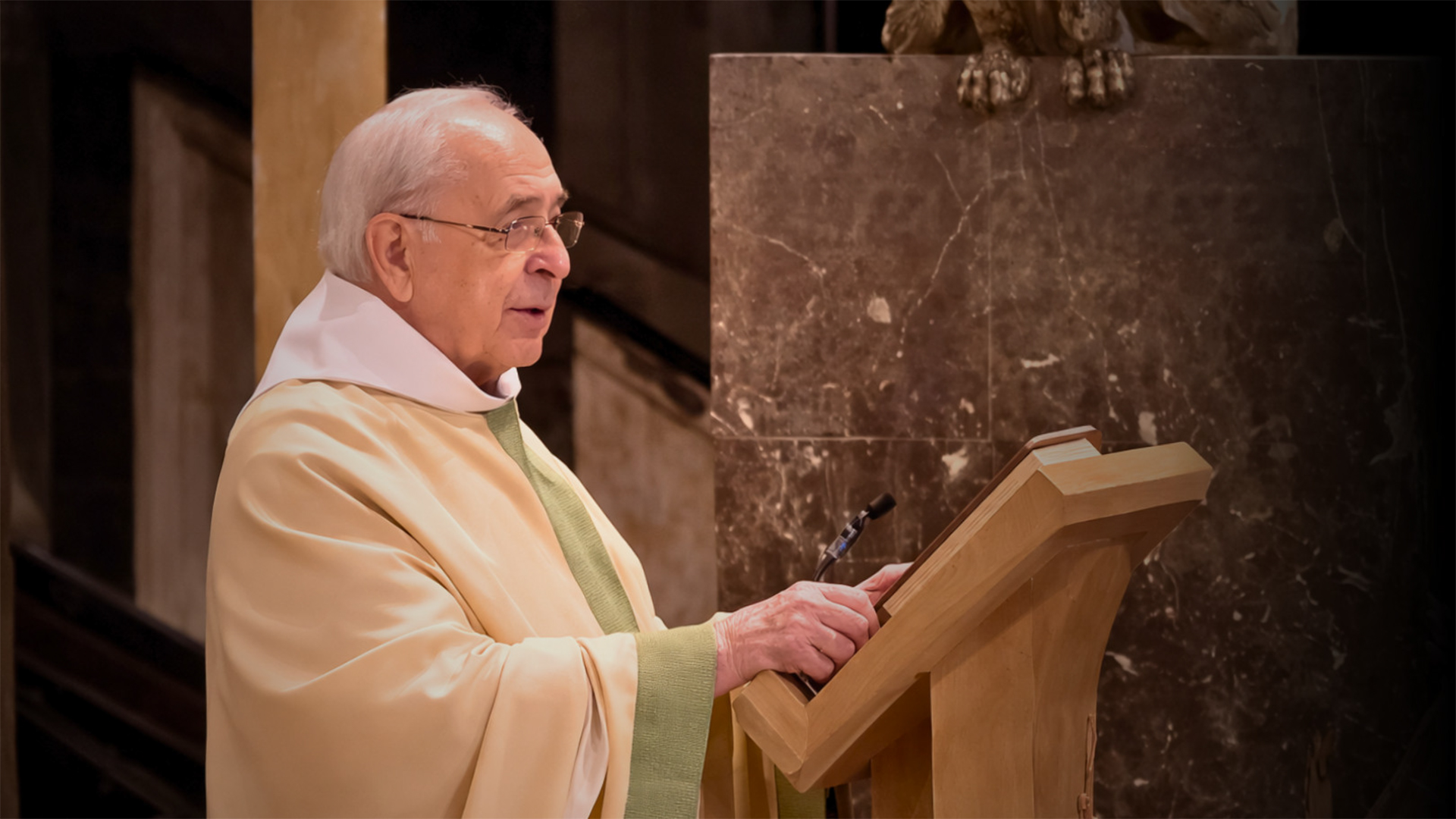
In Memoriam: Father Joan M. Recasens i Puig OSB
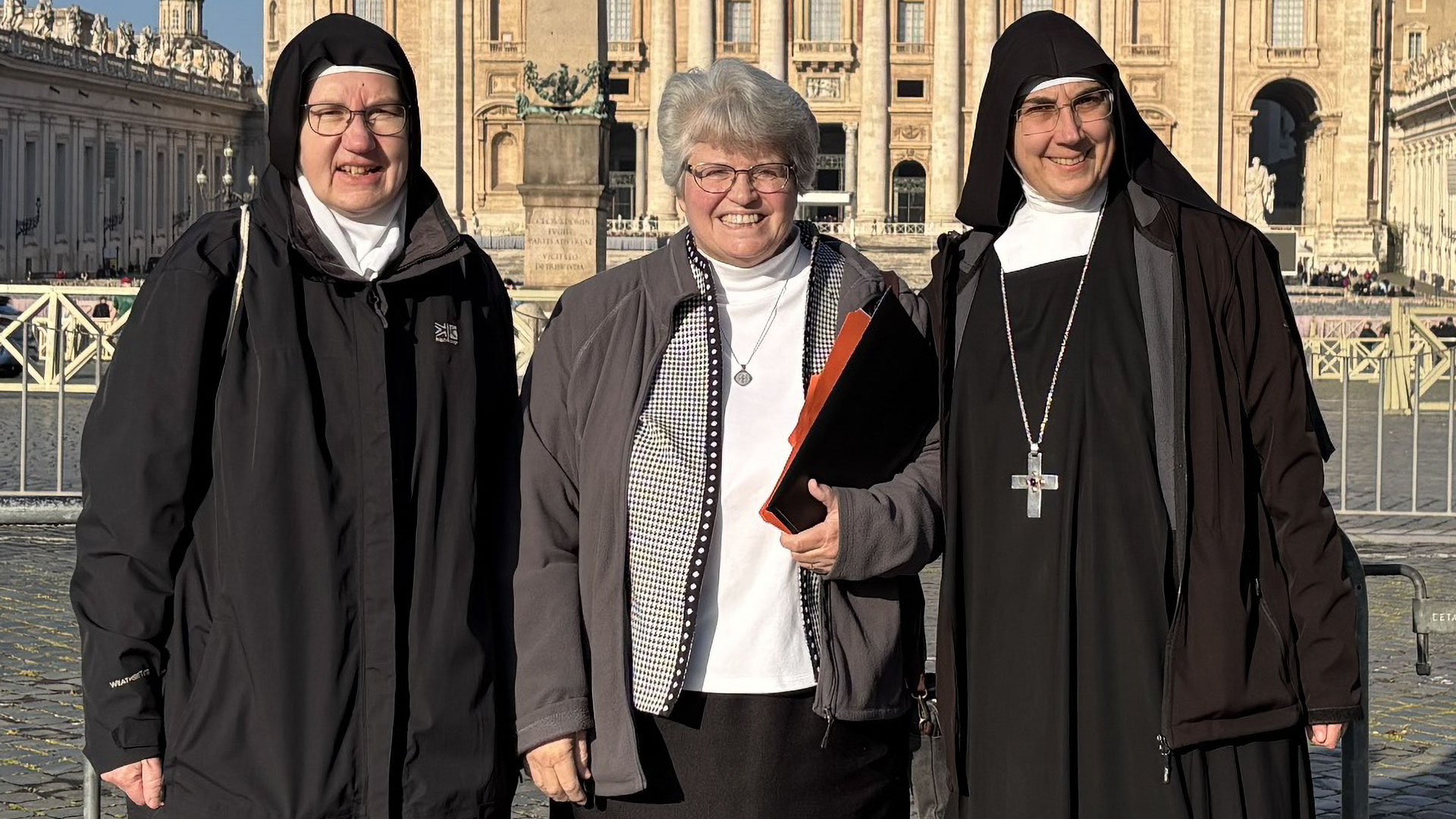
Planning the Future of CIB: Statutes, Symposia, and the Joy of Shared Life
BCC Meeting Addresses Complex Realities for the Church in China, Seeks Paths of Unity
Liturgy Marked by Diversity — and War : A Report from Kuwait