
In Search of God, from Jerusalem to the Streets of the World
At Sant'Anselmo, the abbot of Dormition Abbey reinterpreted interreligious dialogue in light of the Rule of Saint Benedict: in Jerusalem, the decisive line lies not only between religions, but within them, between those who wish to possess God and those who seek him.
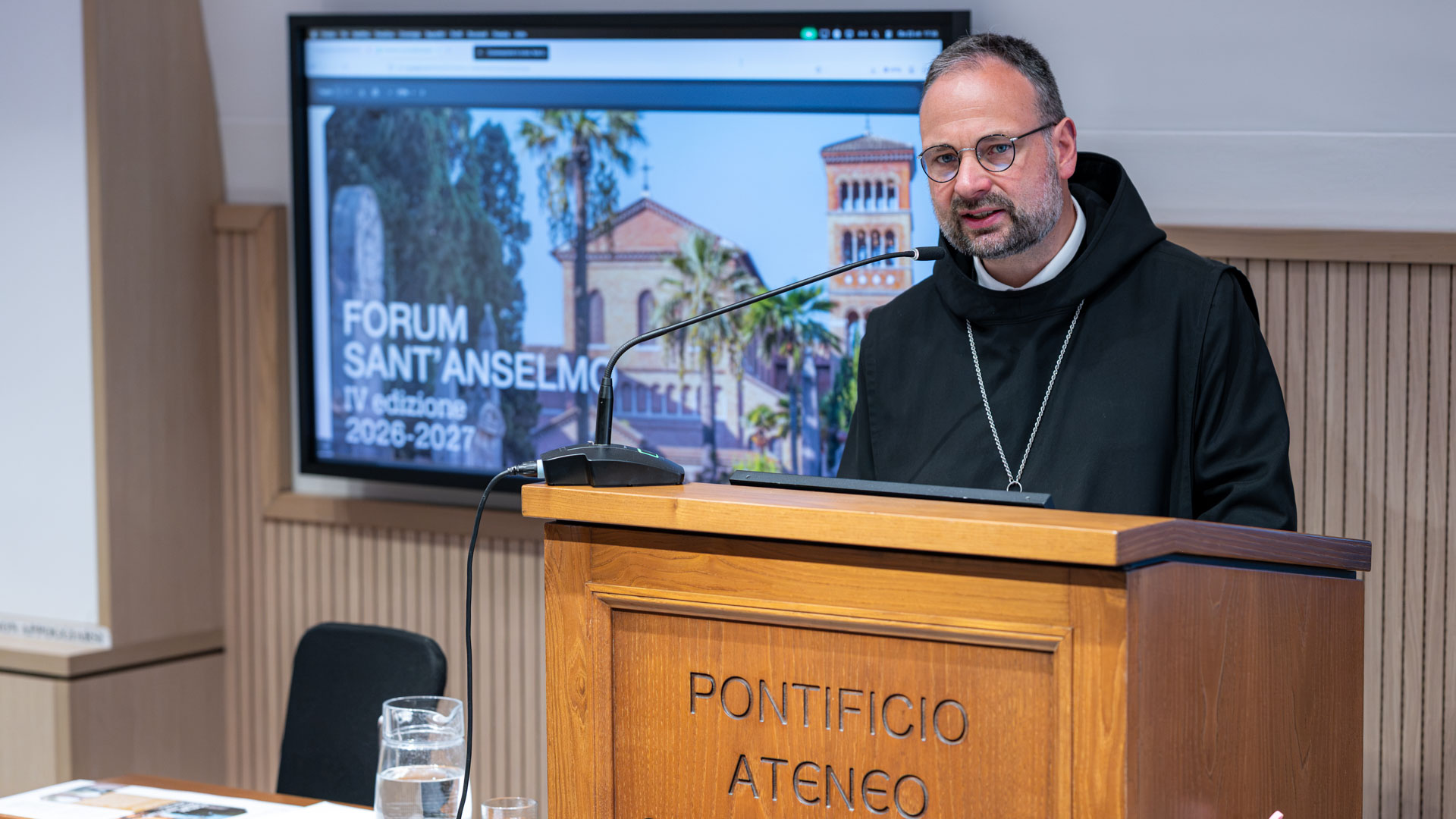
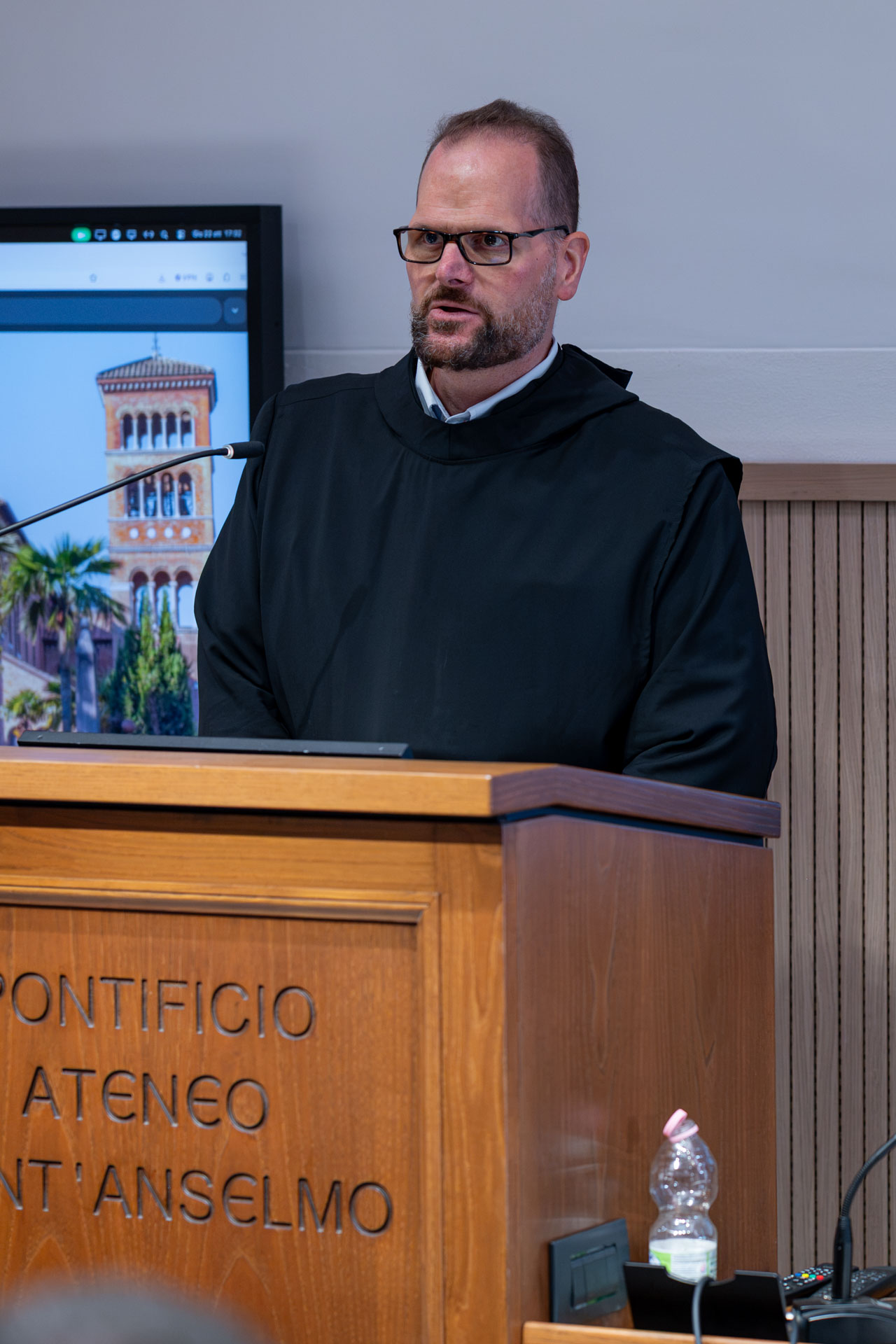
Abbot Nikodemus Schnabel OSB at the Sant'Anselmo Forum, 22 October 2026
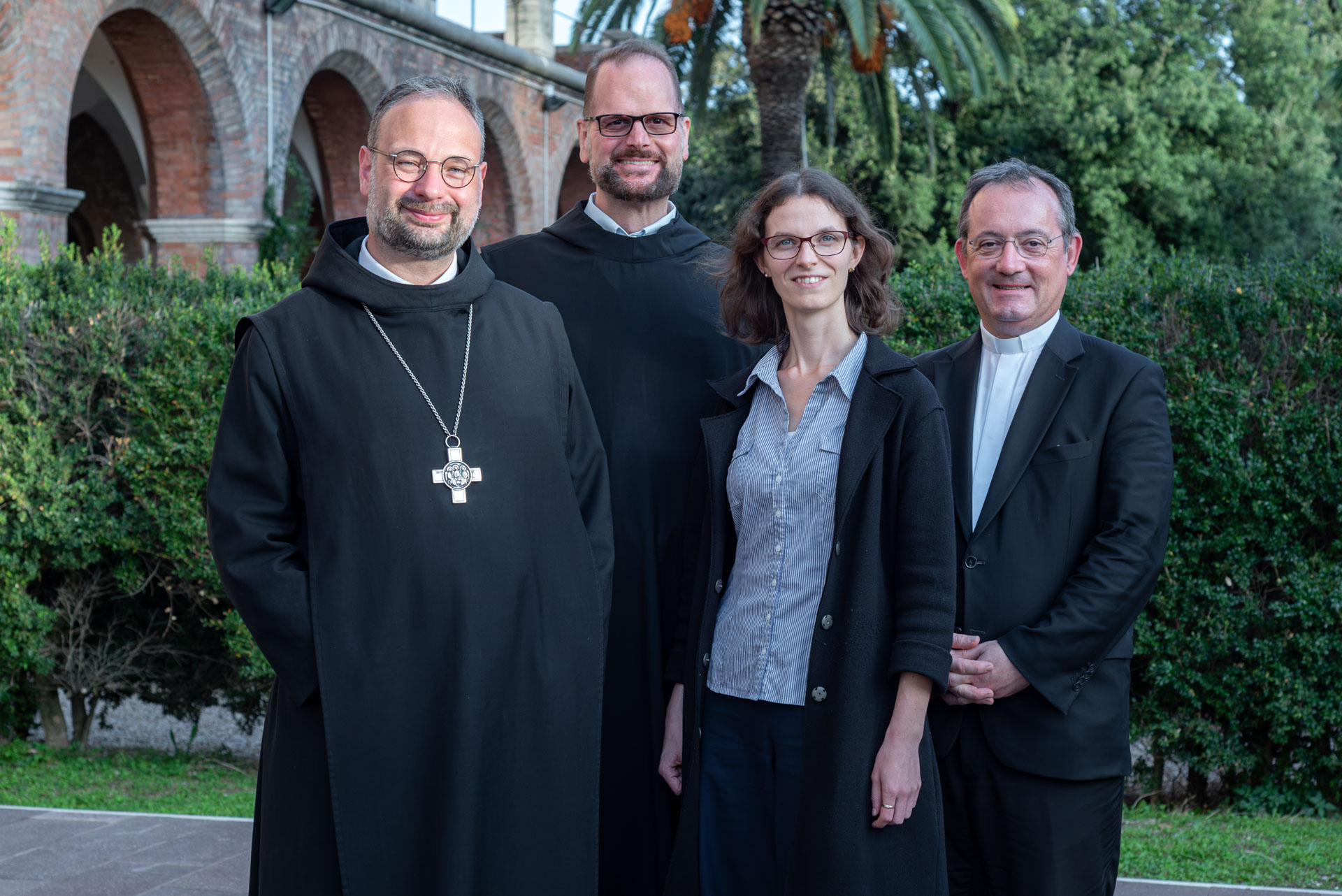
Abbot Nikodemus; Dr Fr Laurentius Eschlböck OSB, dean of Faculty of Theology; Prof.ssa Dr. Isabella Bruckner, chair of Thought and Forms of the Spiritual; and Dr Fr Michael Max, rector of Päpstliches Institut Santa Maria dell’Anima
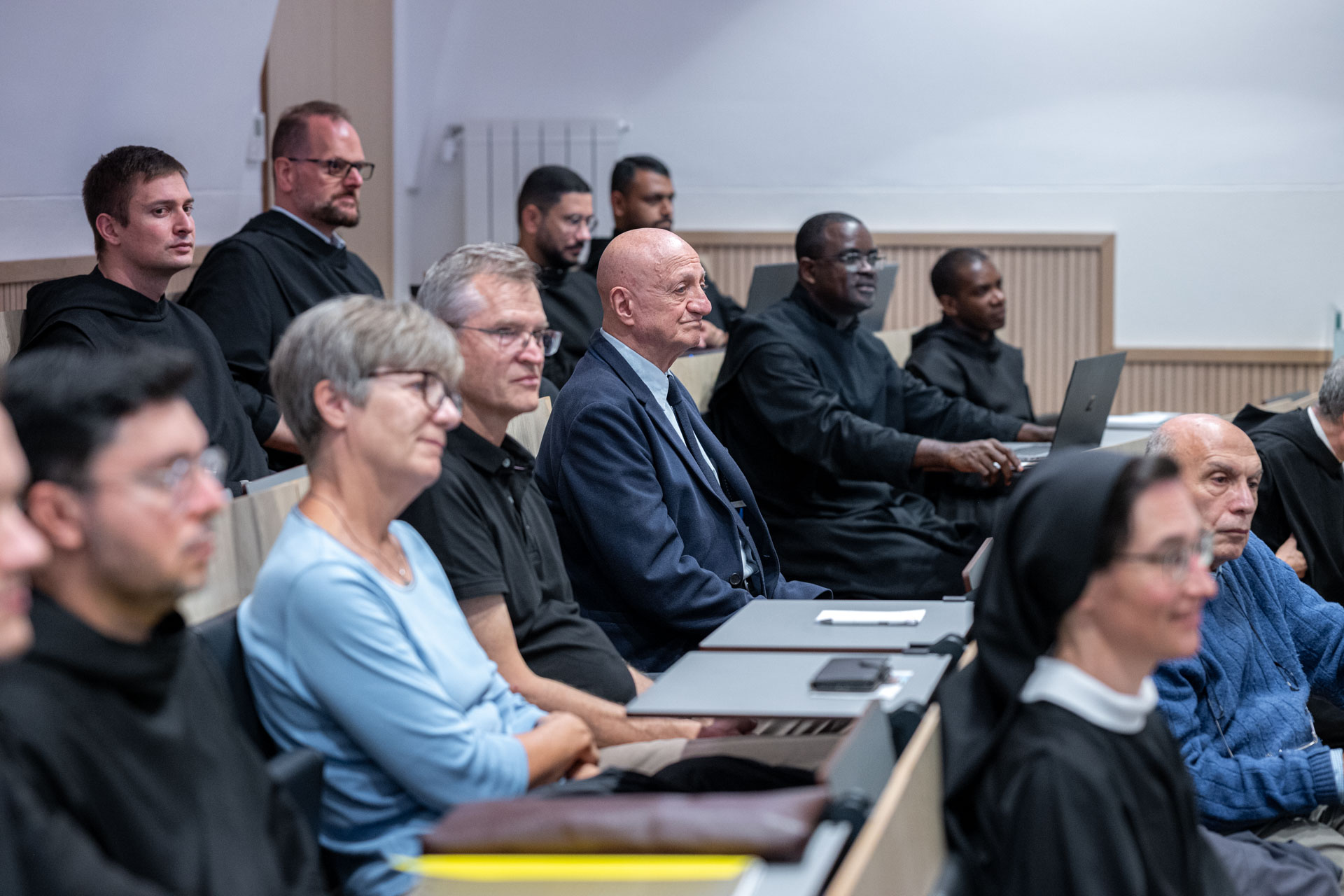
Forum Sant’Anselmo
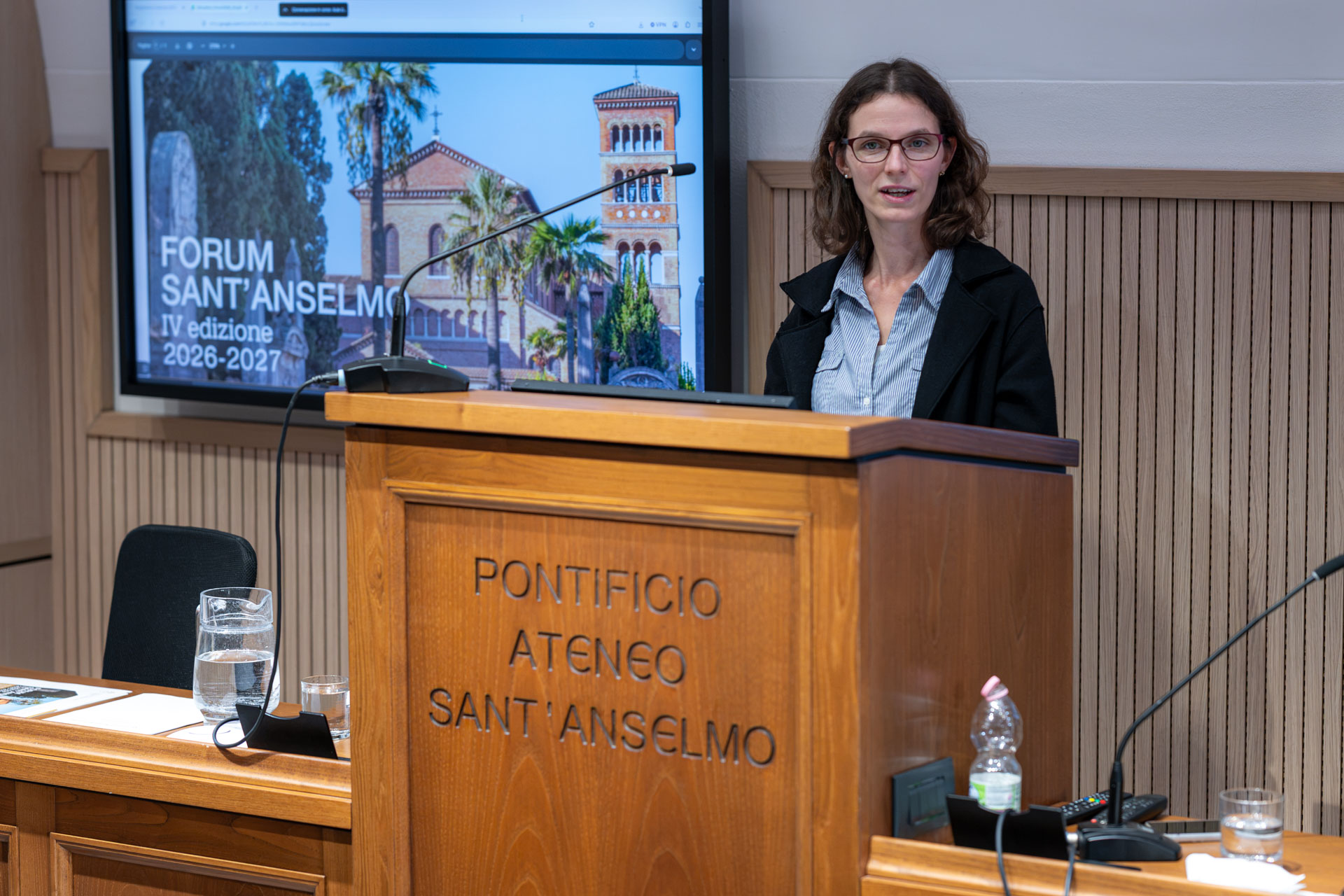
Prof.ssa Dr. Isabella Bruckner, chair of Thought and Forms of the Spiritual
Dr Fr Laurentius Eschlböck OSB, dean of Faculty of Theology
29 outubro 2026
Annalisa Reitano, scholarship holder of the Chair of Thought and Forms of the Spiritual and doctoral student in History of Theology at the Pontifical Atheneum of Sant'Anselmo
On 22 October 2026, the Pontifical Atheneum of Sant'Anselmo welcomed Abbot Nikodemus Schnabel OSB, who leads the Benedictine communities of the Dormition in Jerusalem and Tabgha on the Sea of Galilee. With his address, the abbot inaugurated the fourth edition of the Sant'Anselmo Forum, organized by the Chair of Thought and Forms of the Spiritual. The Forum, founded in 2023, aims to be a meeting place open to all, where reflection on the dialogue between faith, culture and personal experience can be explored in the light of the Benedictine monastic tradition. For the occasion, Abbot Nikodemus chose a particularly challenging title: "Seeking God among Those Who Seek God. Nostra Aetate to the Test of Jerusalem".
The guiding thread of the entire reflection was the Rule of Saint Benedict, starting from the question with which it, in chapter 58, invites us to discern the vocation of those who ask to enter the monastery: Si revera Deum quaerit, "if he truly seeks God." According to the abbot, in Jerusalem the decisive line is not only between Jews, Christians and Muslims but also crosses religions themselves: on one side there are those who want to possess God, on the other those who seek Him. The first are the "hooligans of religion”, for whom faith becomes a football shirt and God becomes the mascot of their own team, while the latter are the "seekers of God", who can be such regardless of the religion to which they belong. Some Jewish and Muslim friends of the abbot have adopted this expression, whose copyright, he recalled, belongs precisely to Saint Benedict. Interreligious dialogue, then, is not simply the encounter between different faiths but the place where "a seeker of God meets other seekers of God". Ultimately, "the seeker of God does not need an enemy. He needs God".
After 7 October 2023, when it seemed obligatory to choose a side, the abbot developed an answer that has become increasingly important over time. To those who ask him whether he is pro-Israel or pro-Palestine, he replies: "I am pro-human." This is not neutrality, but a profound conviction that every injustice must be judged based on its effects on human beings, on every human being, including enemies. Otherwise, human dignity would no longer be such, but would become "a reward for good behavior". With these words, the abbot invited those present to always stand on the side of humanity, reminding them that "those who seek God must not choose whose deaths they are allowed to mourn".
These convictions have translated into concrete decisions. After the decline in pilgrimages following the war, the monks decided not to lay off any of their 29 staff, on whose salaries a total of 101 people depend, because "this too is interreligious dialogue". In Tabgha, in the first weeks of the war, the monastery welcomed the Israeli community of Kfar Rafael, home to people with disabilities, in the belief that "in a moment of fear, opening a door becomes a theological gesture".
Seekers of God, the abbot recalled, have a name. Maoz Inon is an Israeli Jew whose parents were killed by Hamas on 7 October. Aziz Abu Sarah is a Palestinian Muslim who lost his brother at a young age, who died after being detained and mistreated by Israeli soldiers. Despite having every reason to be enemies, the two speak of each other as brothers. Thinking of them, the abbot returns to the question from the Rule: Si revera Deum quaerit: without denying the differences between his faith and theirs, he recognizes in both the fruits of an authentic search for God, such as the ability to not let one's wound become a weapon.
Among the images presented, one of the most significant was that of dance. In Rome, the abbot observed, interreligious dialogue sometimes resembles the Vienna Opera Ball: carefully chosen music, familiar steps, shared rules. In Jerusalem, however, it is a street dance: music isn't always there, you don't always choose your partner and you sometimes step on each other's toes. Hence his invitation, which transcends the confines of Jerusalem and touches everyone's daily life: "Have the courage to let someone step on your toes sometimes. And have the courage to ask for forgiveness when you step on them".
The abbot's hope does not coincide with an unrealistic optimism: war and peace are not destiny, but the fruit of human decisions, and precisely for this reason "another decision is possible". The Rule, which had opened the reflection, also marked its conclusion. In chapter 72, Saint Benedict hopes that Christ "may lead us together to eternal life." In that pariter, in that "together," the abbot recognizes a great word of hope. Hence his final wish: that Jews, Christians and Muslims continue to dance, not because they all believe the same thing, but because no one possesses God and each can seek him.
-
In Search of God, from Jerusalem to the Streets of the World
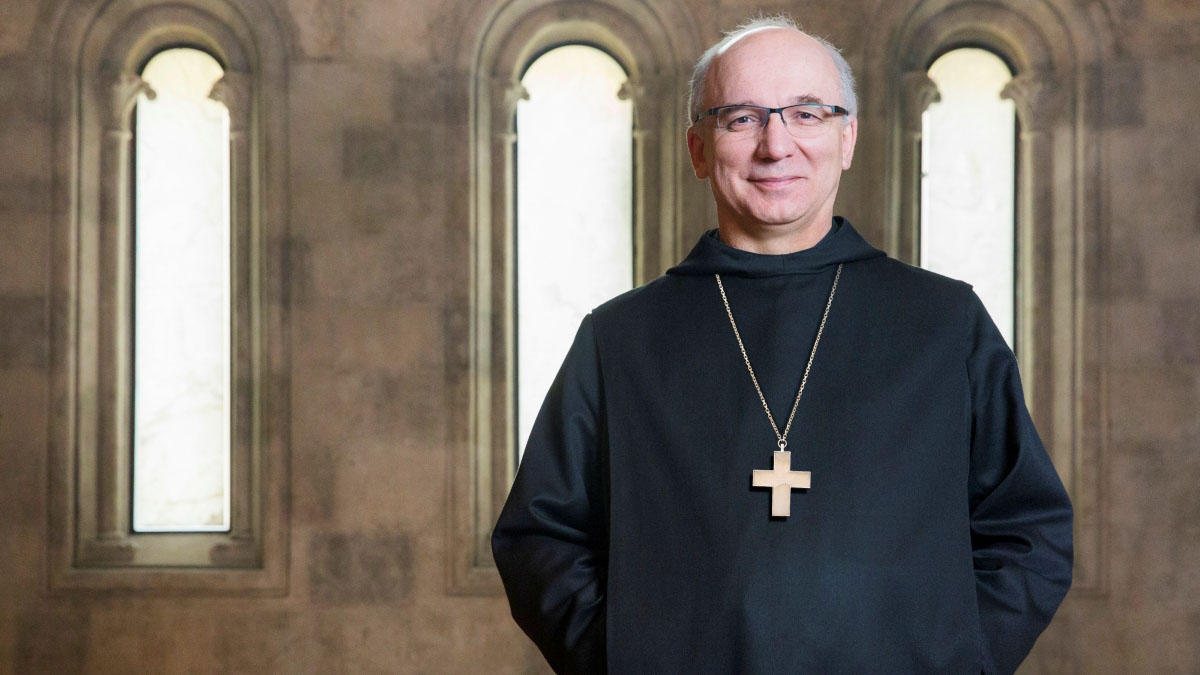
Arquiabade Cirill Hortobágyi OSB é confirmado para segundo mandato em Pannonhalma
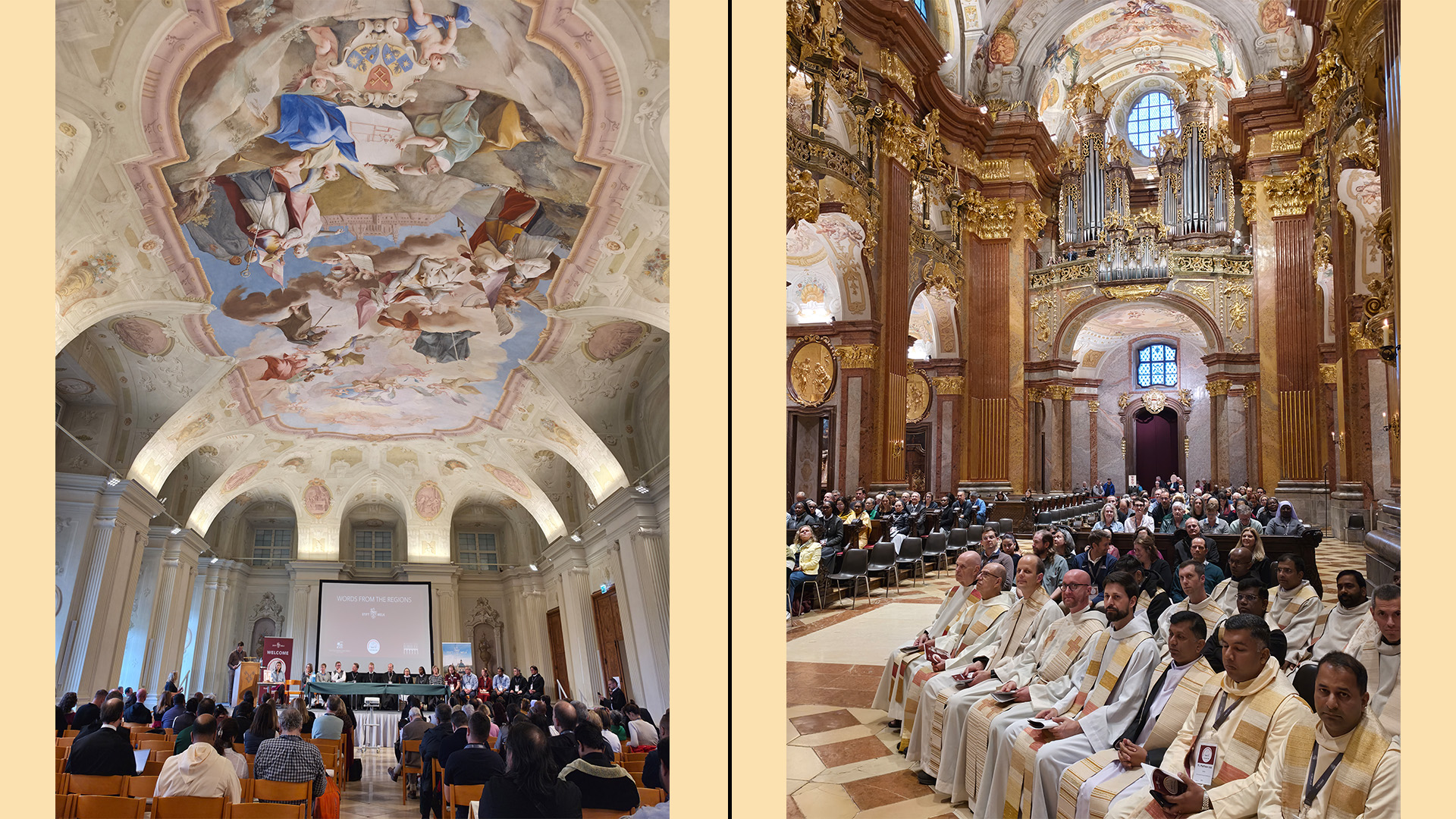
BENET 2026: Educadores beneditinos de cinco continentes reúnem-se na Abadia de Melk
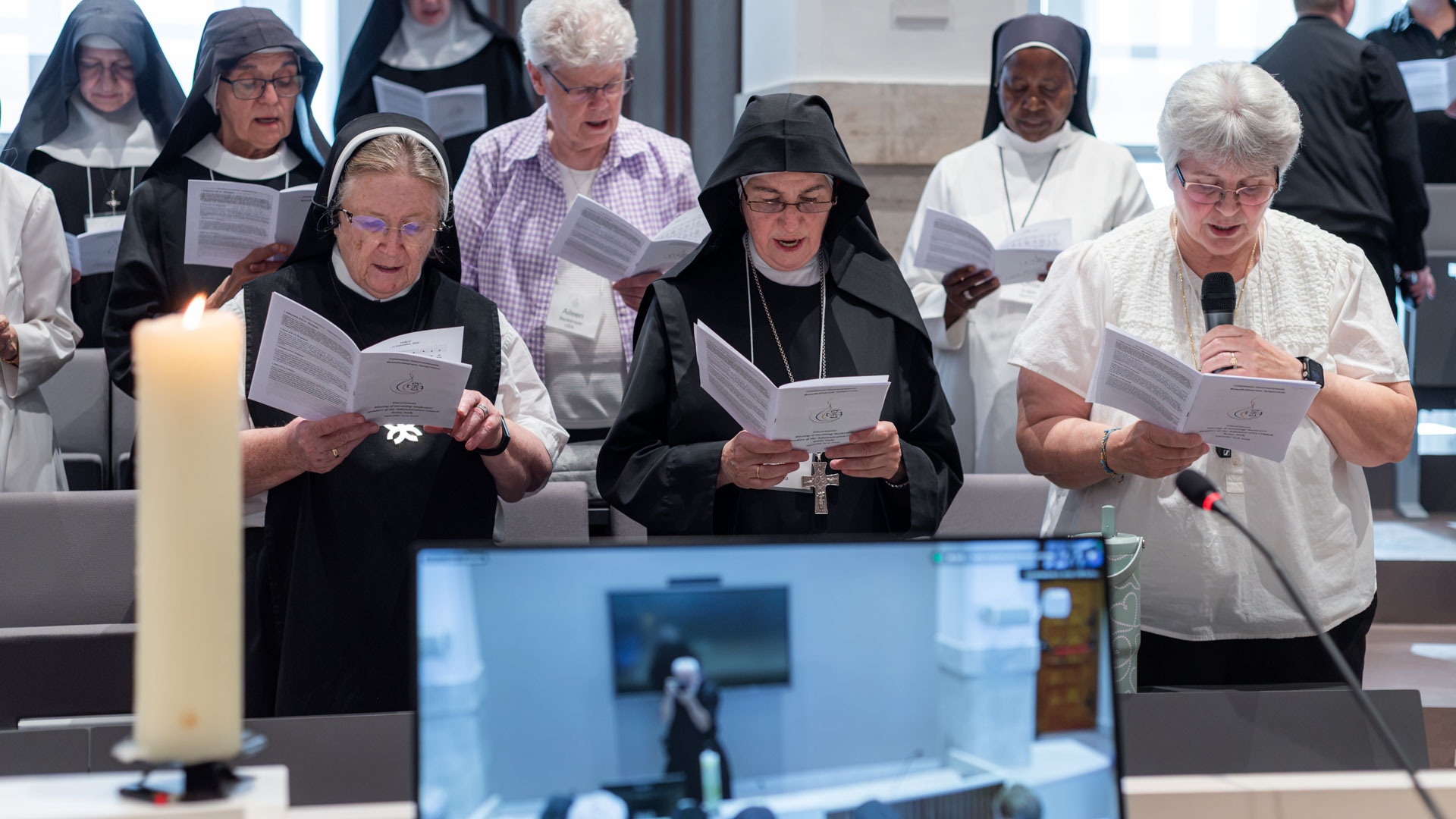
Eleições, Nomeações e Eventos | Outubro-Novembro de 2026
Notas do Aventino | agosto-outubro de 2026
O Verão Beneditino do Papa Leão