
The Interruption of Beauty: The Liturgical Art of Br. Emmaus O’Herlihy OSB
A monk of Glenstal Abbey explores the intersection of contemporary figuration and systematic theology, suggesting that the artistic vocation finds its fullest expression within the monastic life.
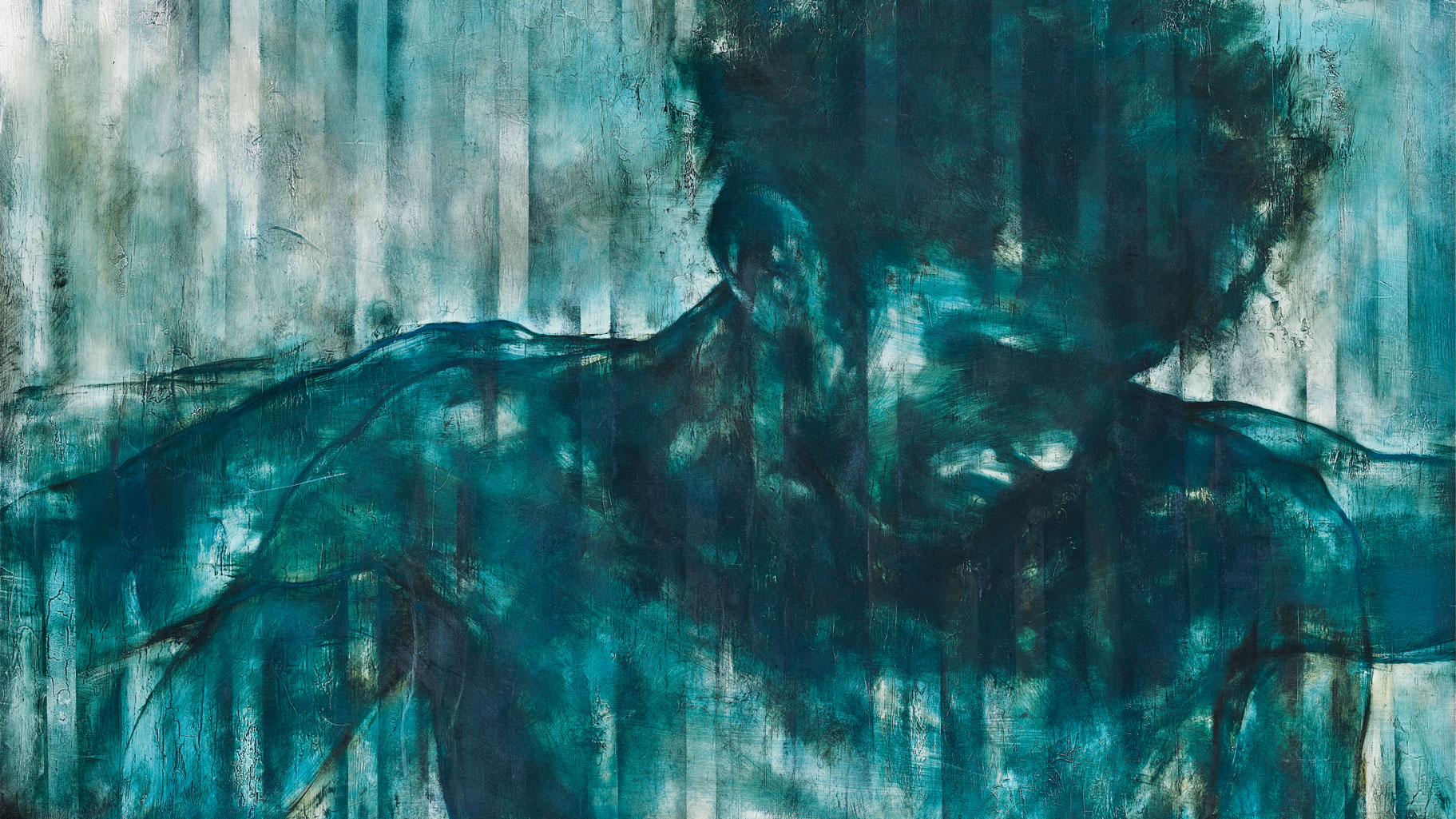
Photos courtesy of Br. Emmaus O’Herlihy OSB. Above: Kenosis
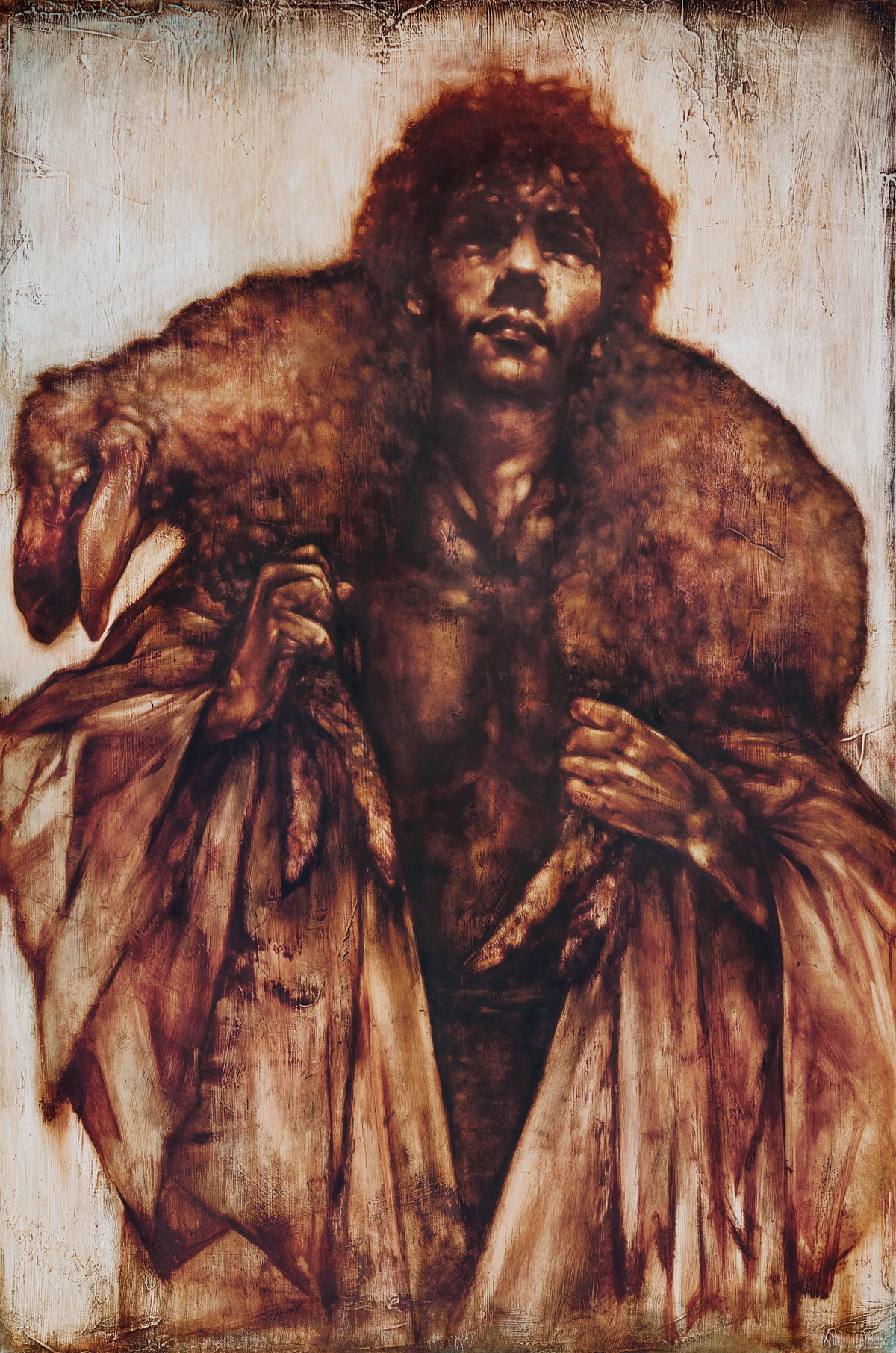
EMMAUS 0SB – Good Shepherd 2023

Emmaus OSB – Be Not Affrighted 2024-25

EMMAUS OSB – Catalyst 2023
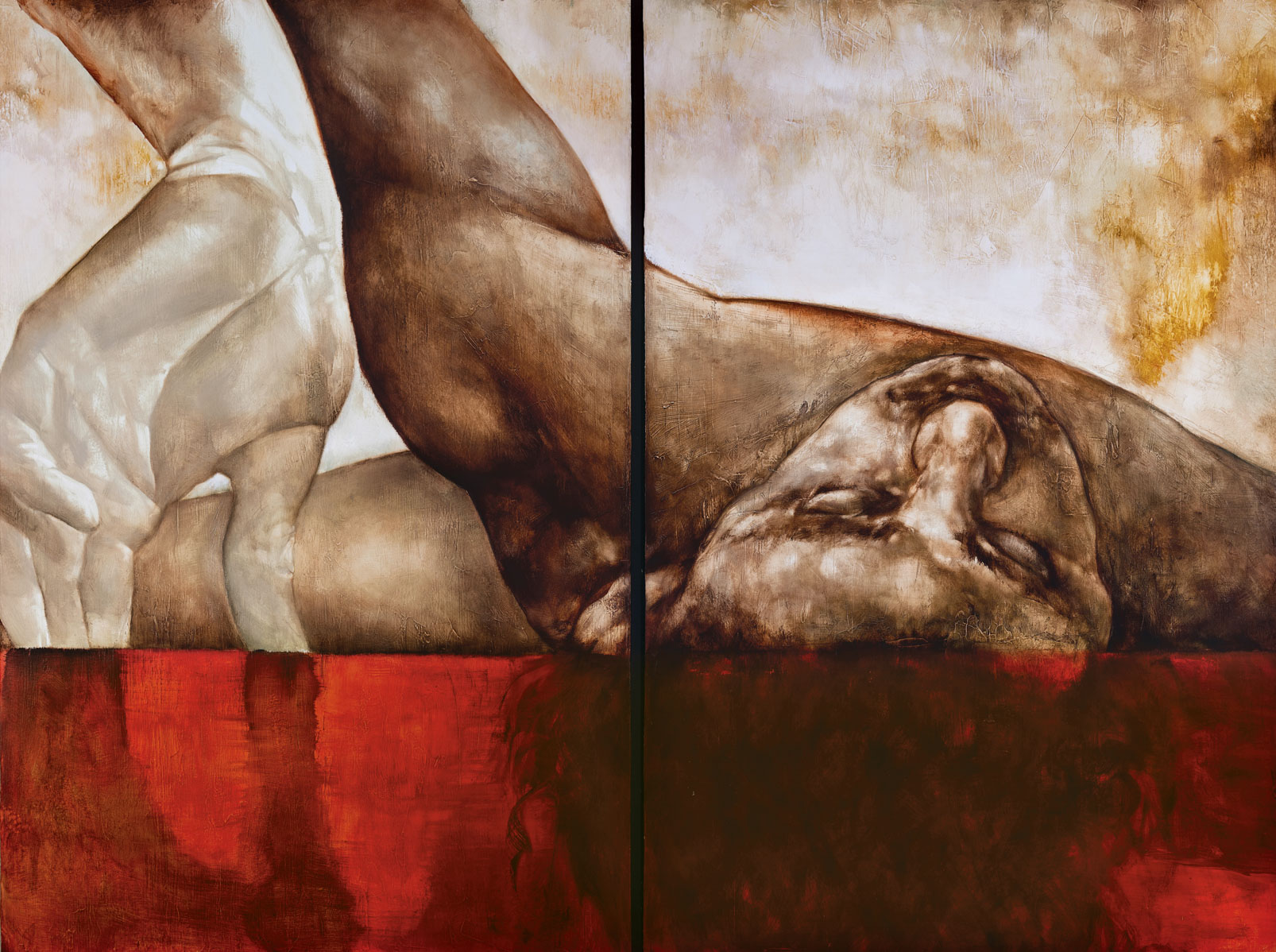
EMMAUS OSB – Conversion of Saul 2017
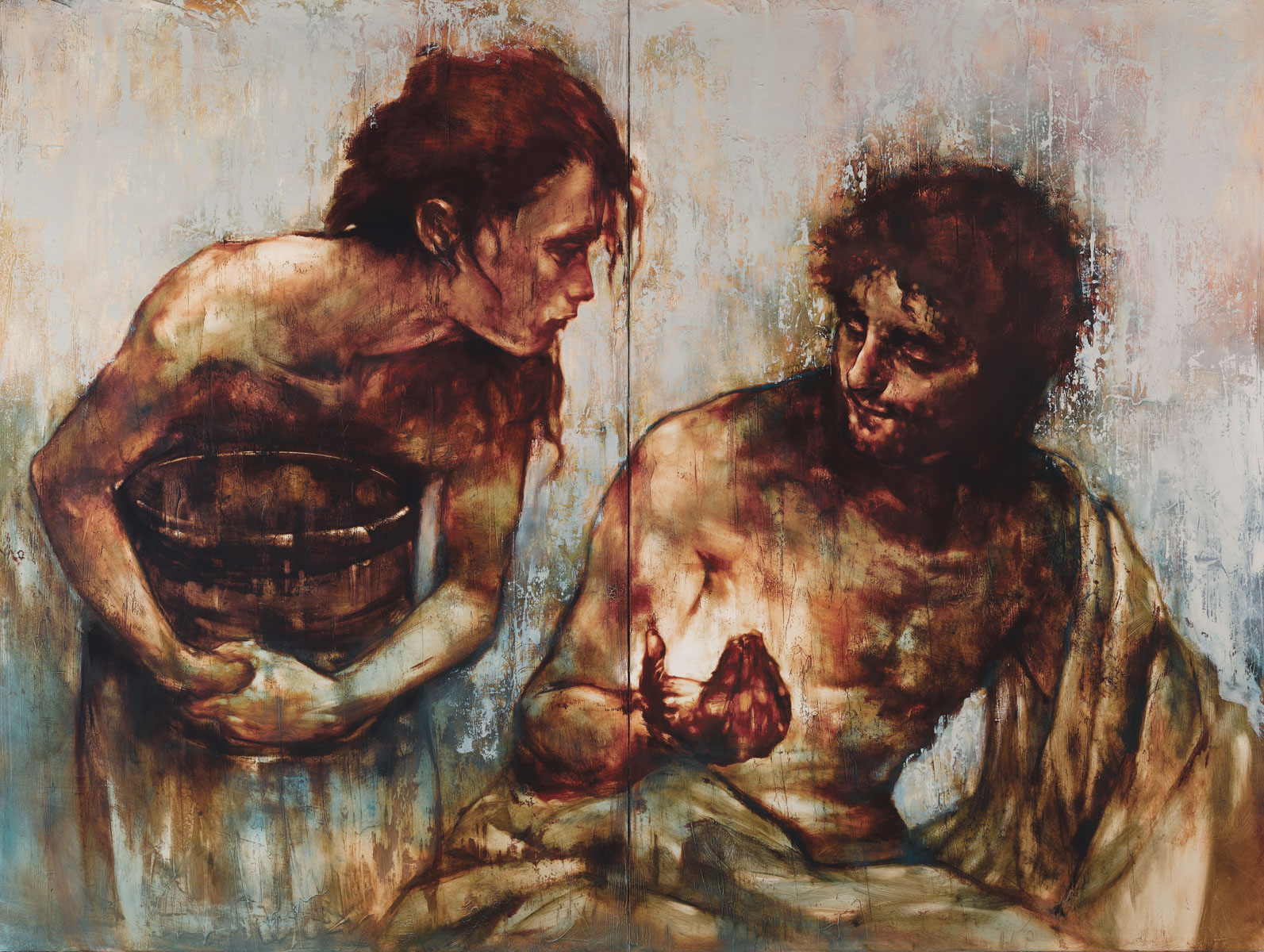
EMMAUS OSB – De Profundis 2019
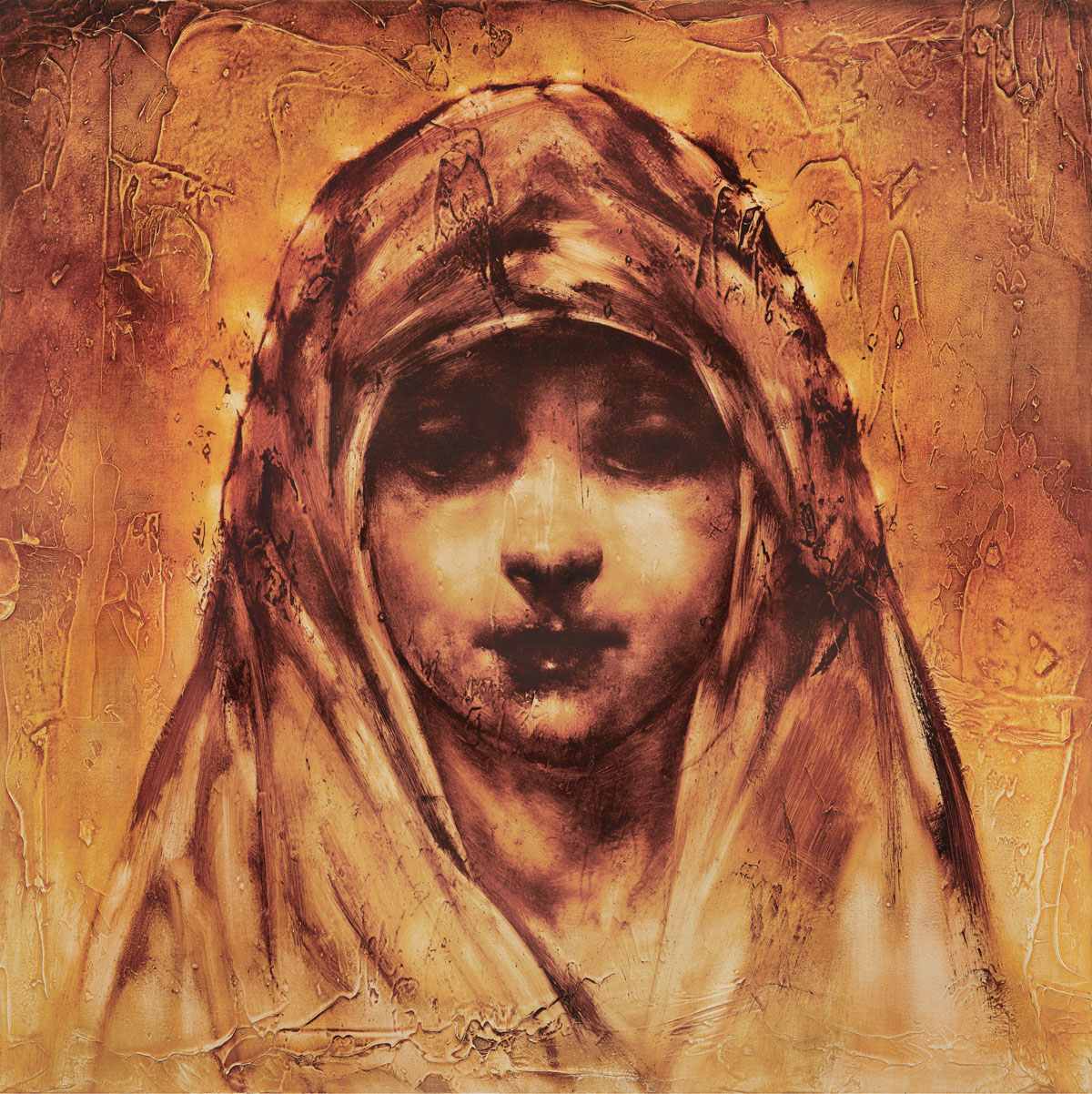
EMMAUS OSB – Immaculate Conception
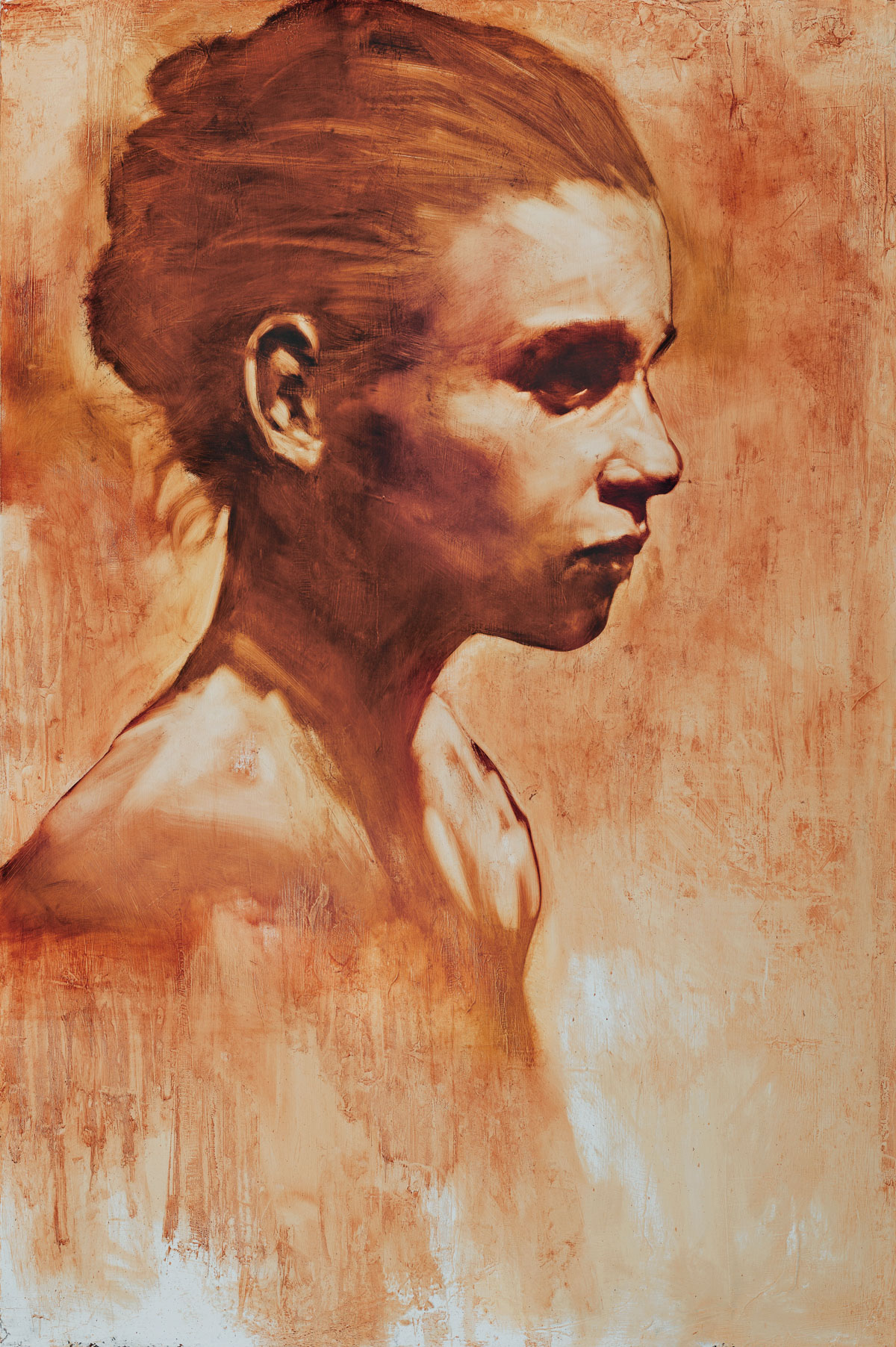
EMMAUS OSB – Neither Do I Condemn You 2025
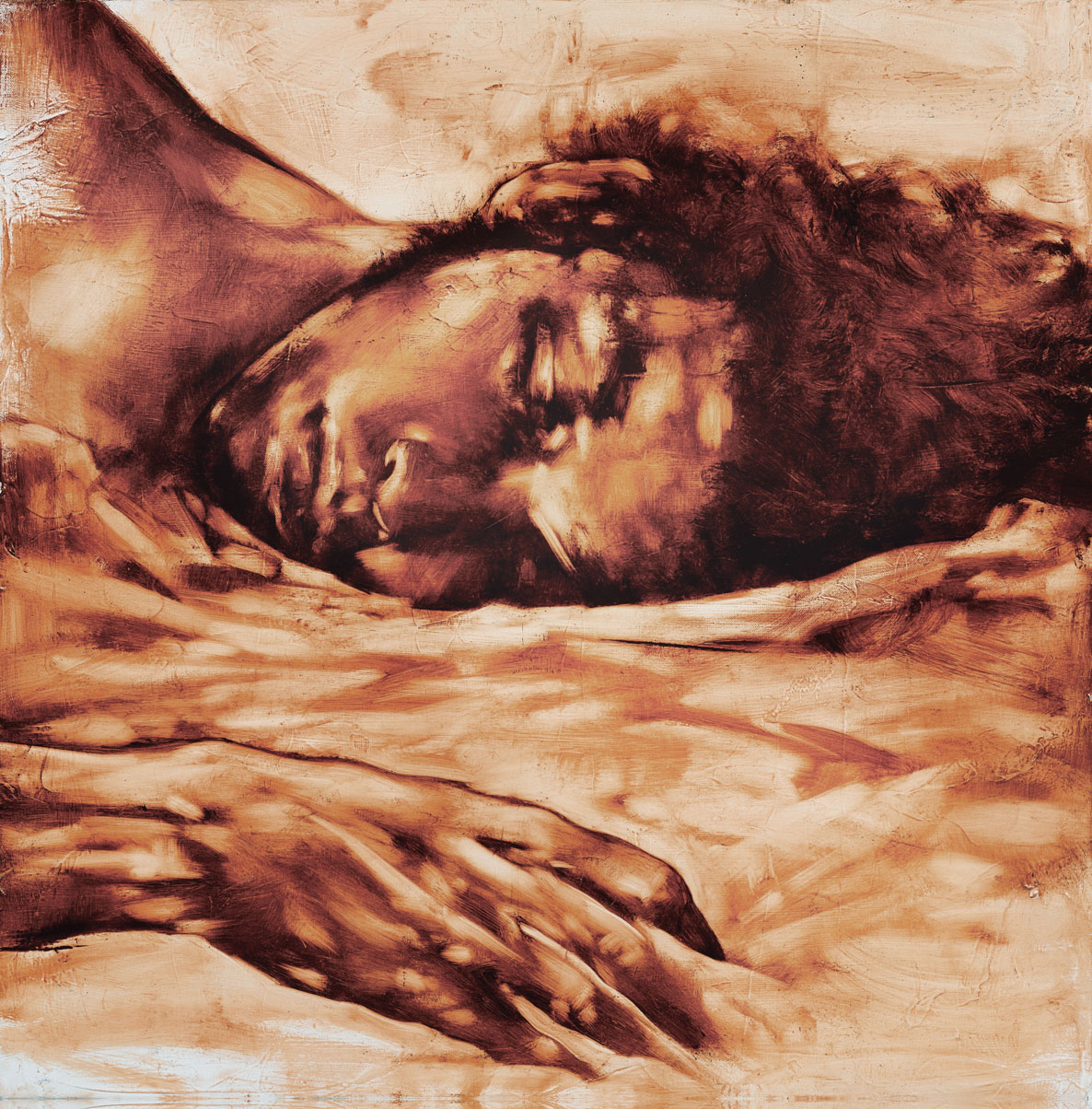
EMMAUS OSB – St Joseph Dreamer 2024
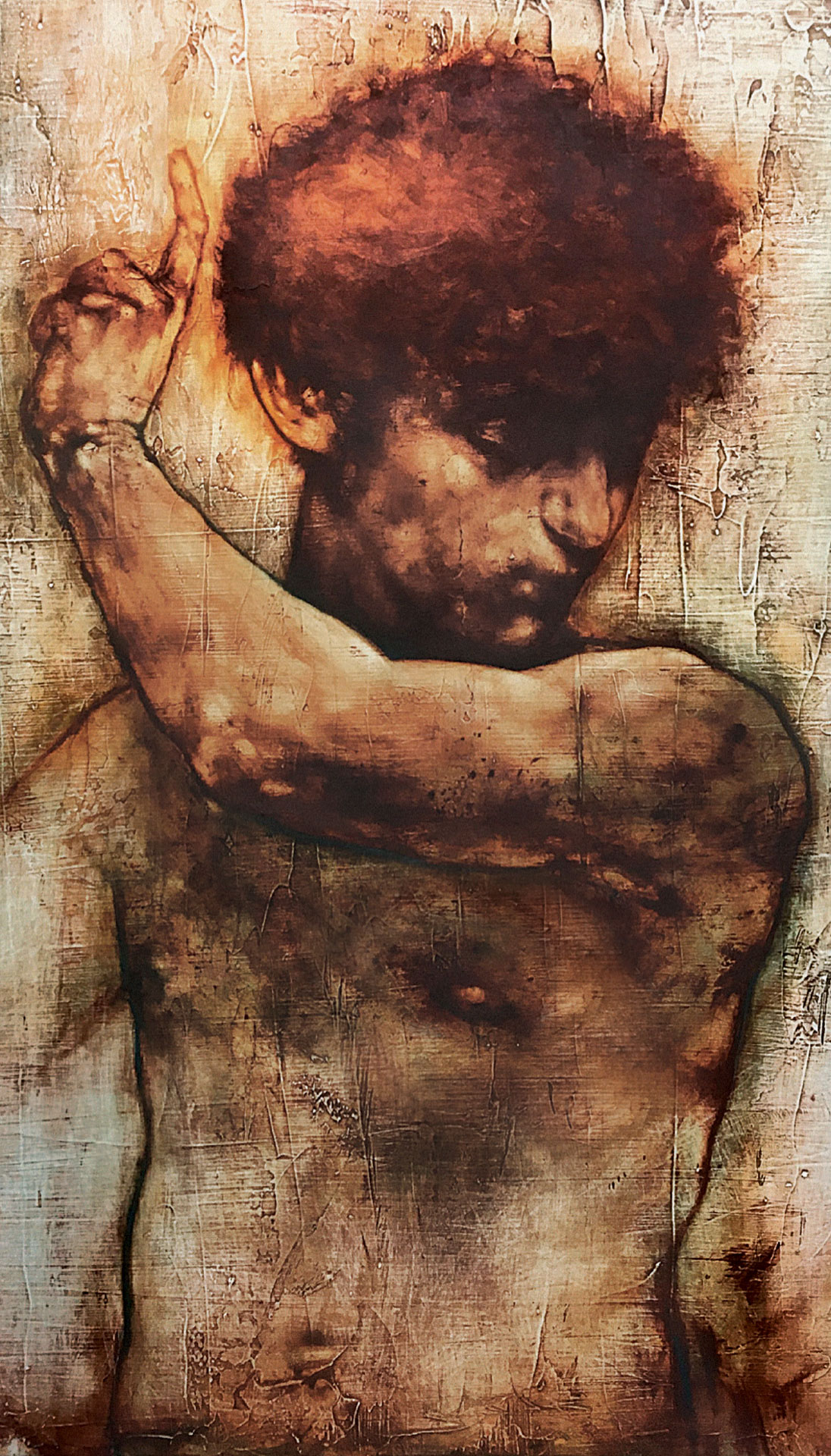
EMMAUS OSB – Theosony 2020
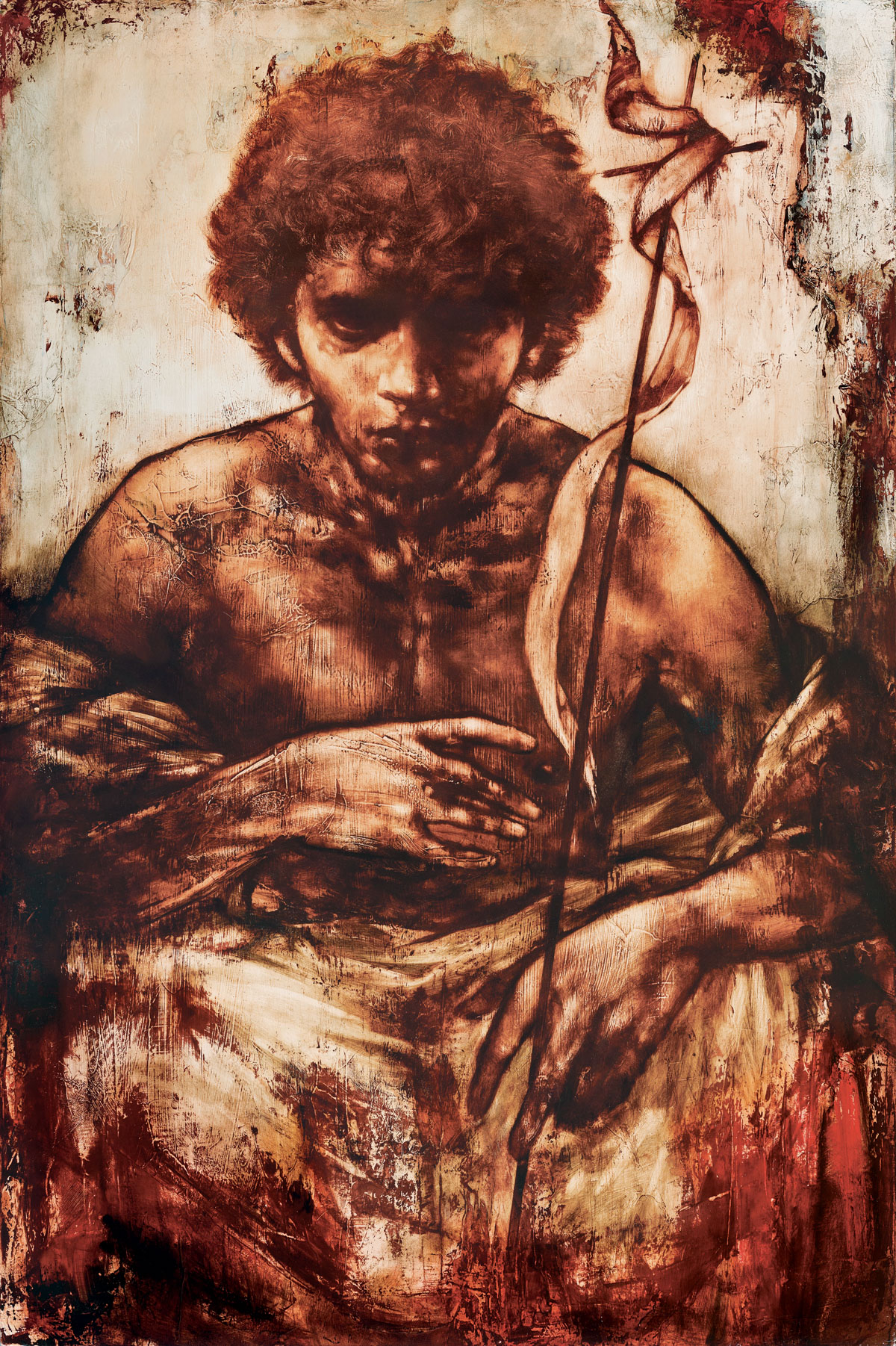
EMMAUS OSB – Vidi et Testimonium 2015-22
14 février 2026
The relationship between the visual arts and the life of faith has long been a cornerstone of the Benedictine tradition, yet it is rarely articulated with the academic rigour and creative vitality found in the work of Br. Emmaus O’Herlihy OSB. A monk of Glenstal Abbey, Br. Emmaus has developed a practice whereby the act of painting is less an aesthetic exercise and more a deliberate exercise in theology. By situating his studio within the living liturgical and monastic context of his community, he demonstrates how the pursuit of professional artistic excellence and deep intellectual inquiry are not merely compatible with the cloister, but are fundamentally enriched by it.
Br. Emmaus’ academic background provides a robust foundation for this synthesis. Having earned a Bachelor of Design from the National College of Art and Design in Dublin, he continued his studies at the University of Saint Michael’s College in Toronto, where he received both a Master of Theological Studies and a Doctorate in Theology. His doctoral research, awarded the Governor General’s Gold Medal for Academic Excellence, was published in 2024 as "Worship Reshaped by Interruption". This monograph examines how contemporary art can foster liturgical participation by challenging static perceptions of the divine, a theme that permeates his own canvas.
Central to his work is the principle of caro salutis est cardo—salvation hinges on the flesh. Drawing on the theology of Tertullian and the more recent scholarship of Cipriano Vagaggini, Br. Emmaus uses art to challenge a dualistic mentality that would over-spiritualise the human person at the expense of our physical reality. His preference for burnt sienna, an earthen pigment used to delineate the human form, serves a specific theological purpose: it recalls the "dust of the ground" from Genesis, underscoring that our relationship with God is inseparable from our embodied nature. This focus on the physical form aims to move beyond the fixed, harmonious bodies of Classical art toward a representation that is open to the messiness of lived experience.
Influenced by the "theology of interruption" proposed by Lieven Boeve, Br. Emmaus views the encounter with the "Other" as a primary space for revelation. In the biblical narrative, from the Old Testament prophets to the person of Jesus, God frequently interrupts human indifference and complacency. Br. Emmaus’ paintings employ postmodern strategies of appropriation—quoting historical visual tropes only to reconfigure them—to unsettle the viewer’s expectations. By depicting bodies that bear the marks of struggle and trauma, he invites an encounter with the "dangerous memory" of Christ, found in the vulnerable and the marginalised.
For the Benedictine Confederation, the work of Br. Emmaus serves as a contemporary witness to the enduring relevance of the monk-artist. His commissioned works, found in cities ranging from Munich and London to Los Angeles and Toronto, reflect an ecclesial identity that is in constant dialogue with postmodern sensibilities. His practice suggests that the monastic vocation provides a unique "cultural matrix" where the arts can mediate between tradition and the contemporary world, allowing the Gospel to be thought of in new contexts and with new possibilities of association.
Ultimately, these paintings are intended to participate in the evolving mission of theology itself. Rather than presenting a closed system of creedal formulations, they offer a visual language attuned to the complexities of the 21st century. As Br. Emmaus notes, the sanctified life is not found in a conventional norm of piety, but in the recovery of our capacity to be fully present to the world. In this way, his work remains grounded in the wisdom of the Christian tradition while remaining courageously open to the disruptions of the present moment.
-
The Interruption of Beauty: The Liturgical Art of Br. Emmaus O’Herlihy OSB
Extrait des archives de l’abbaye de Buckfast : la voix privée de l’abbé Anscar Vonier
Dom Geraldo González y Lima OSB élu quatrième abbé de São Geraldo
Changement de la garde : Sant’Anselmo renouvelle sa Commission financière
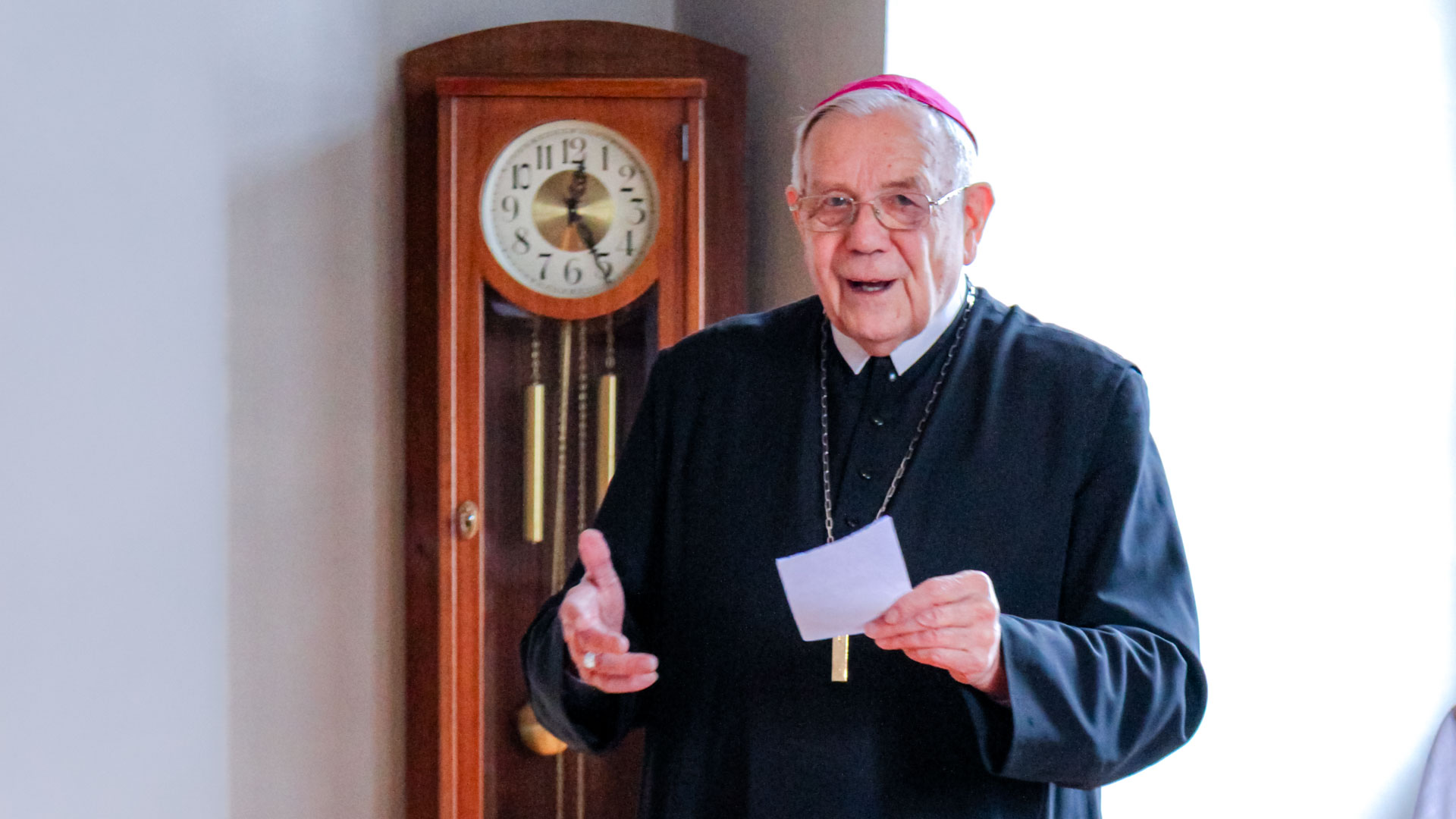
Mgr Maximilian Aichern OSB, évêque émérite
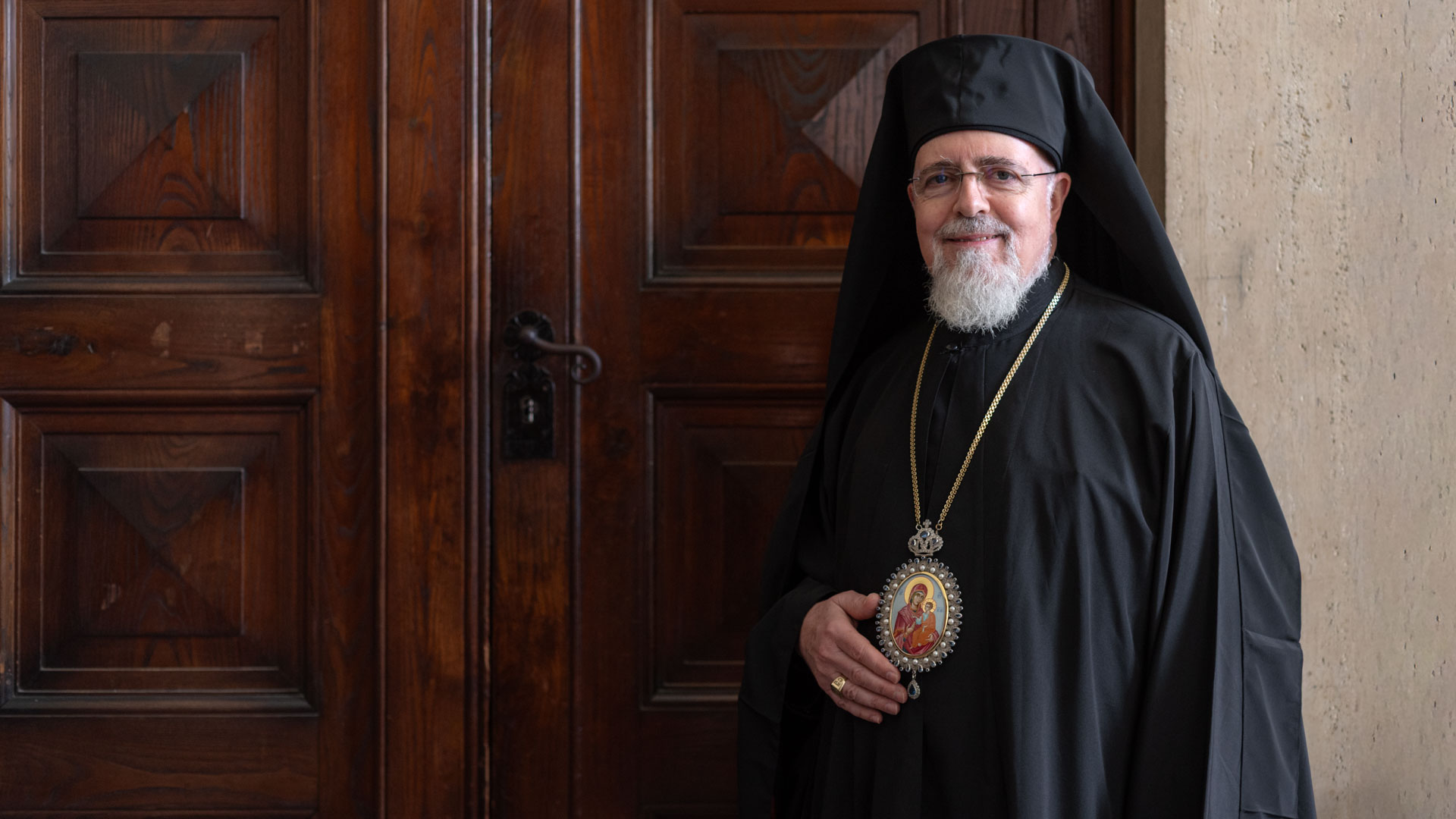
L’évêque Manuel Nin Güell, OSB, nommé exarque de Grottaferrata