
Reflections on Beuronese Art in the Conception Abbey Basilica
The striking Beuronese murals in Conception Abbey’s Basilica were the first in the United States, executed by its own monks after the 1893 tornado. They testify to the monastery's aspirations and preserve a replica of the destroyed Emaus originals.
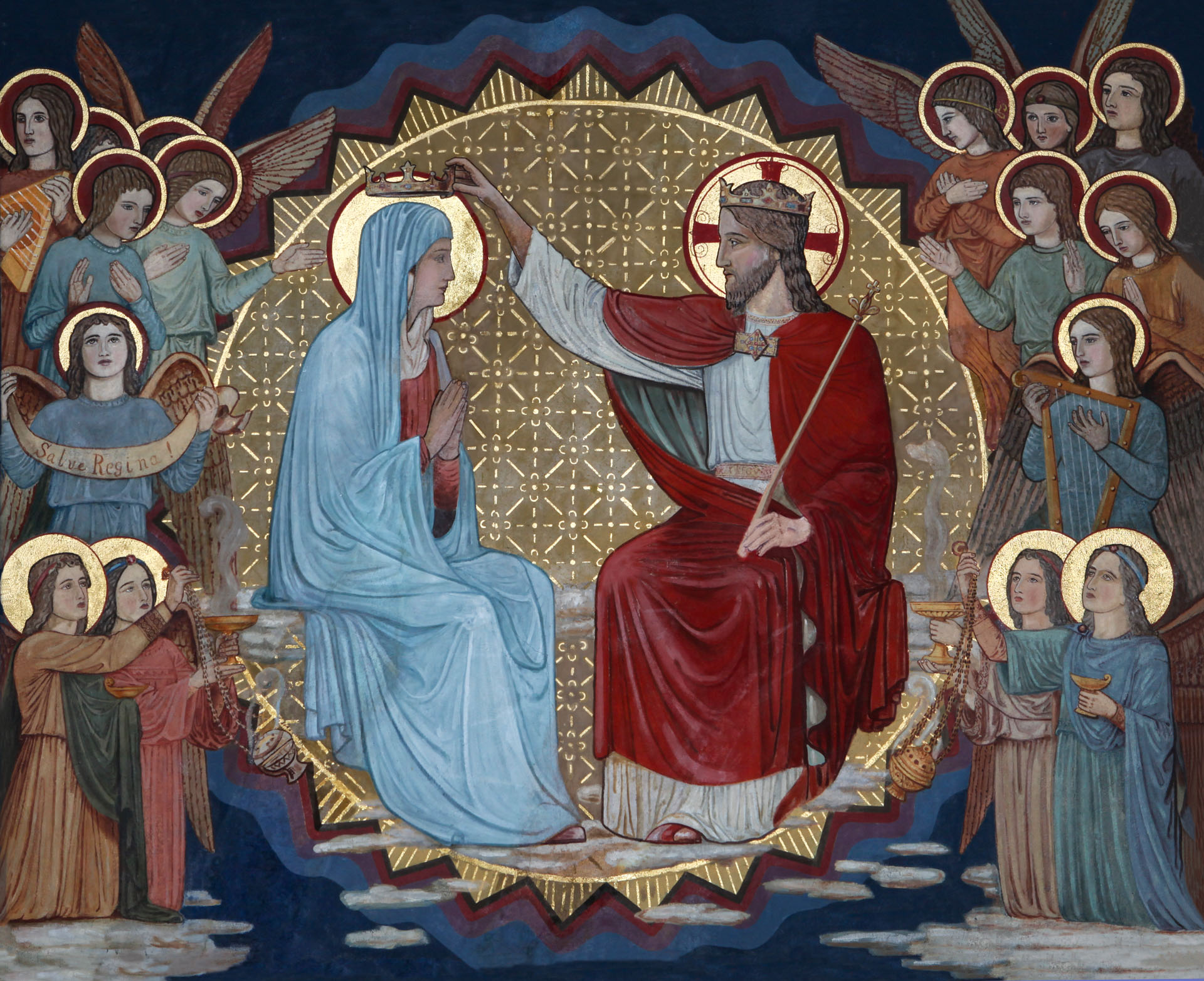

Immaculate Conception
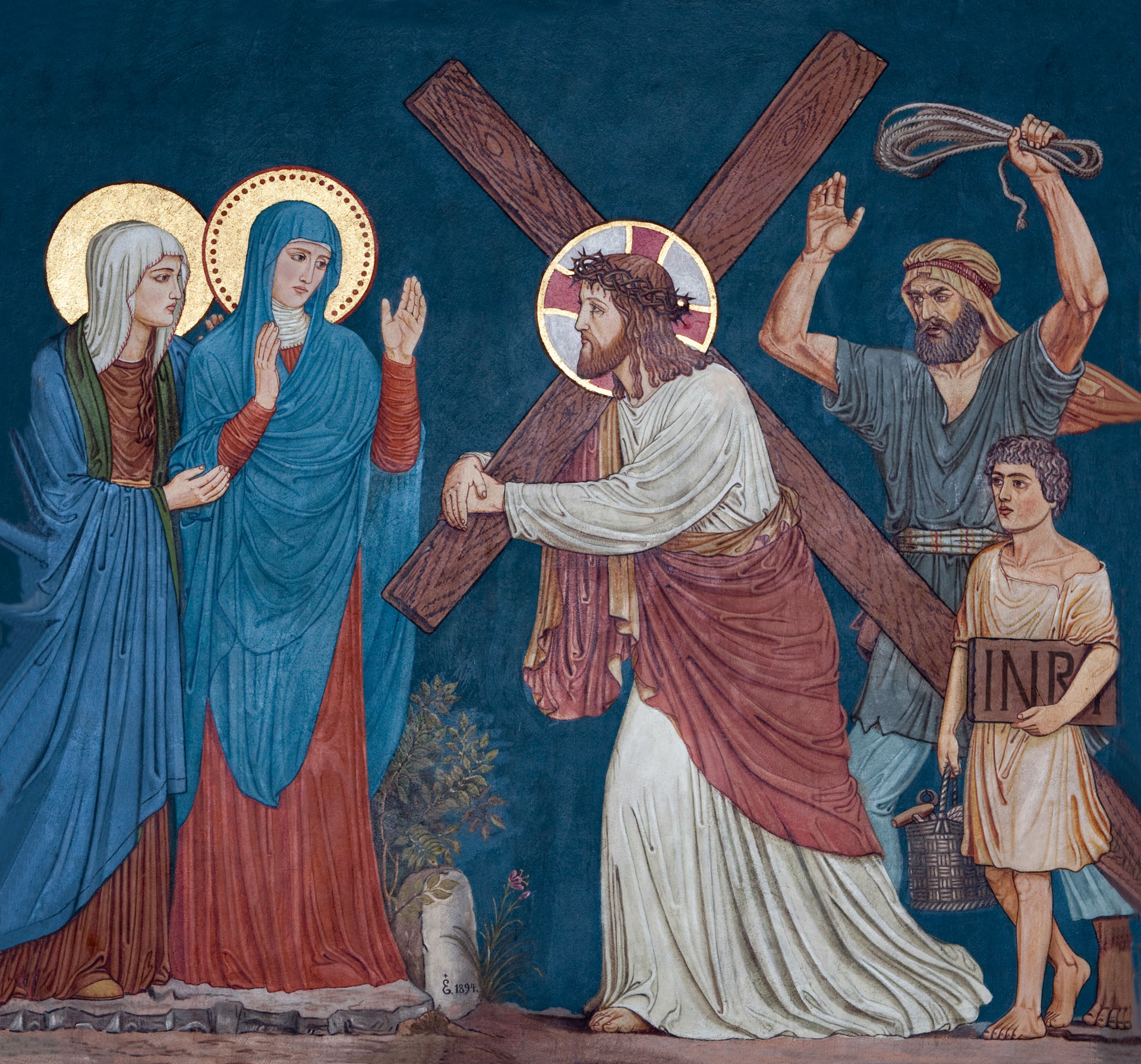
Carrying the Cross
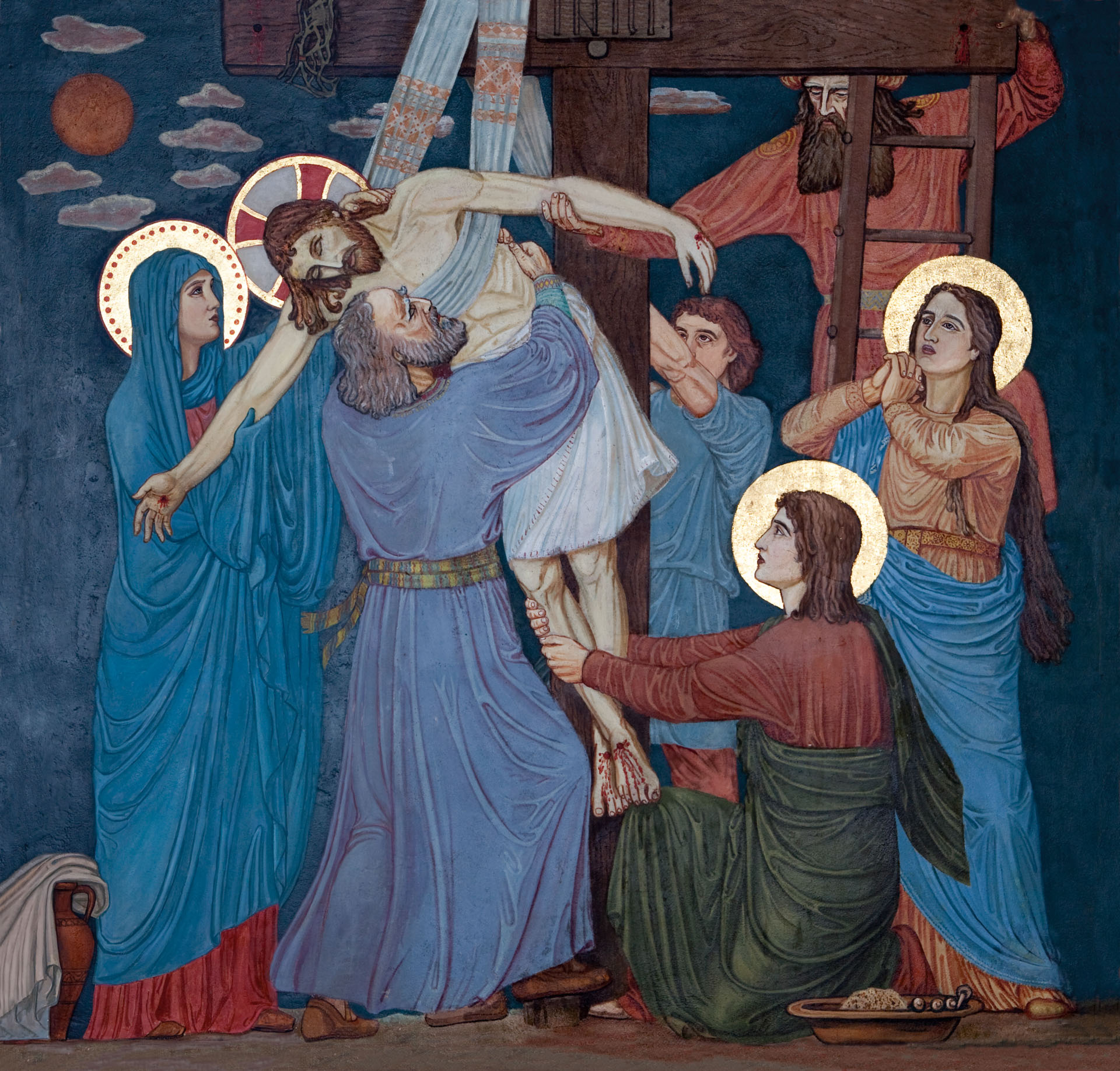
Deposition
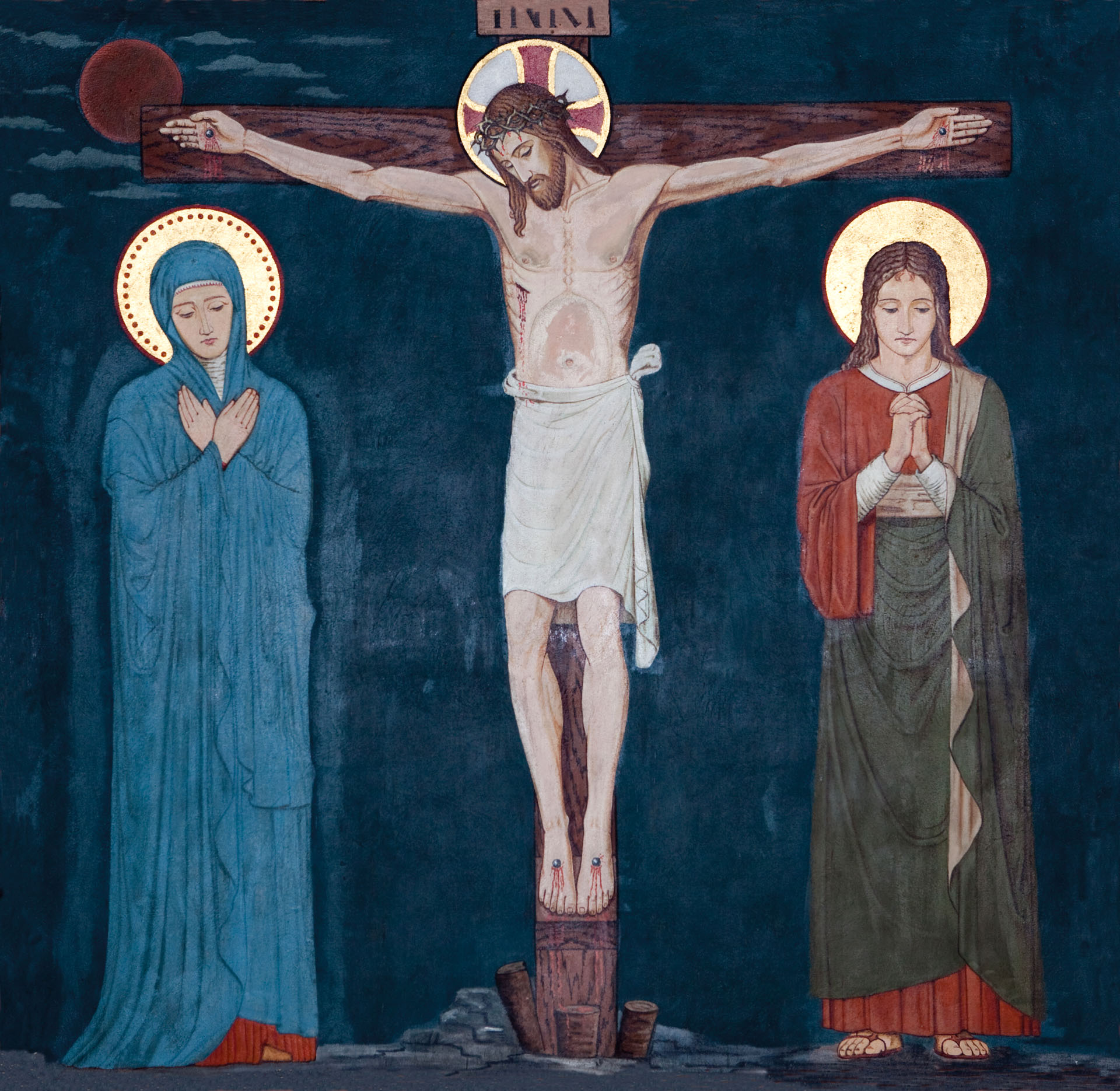
Crucifixion
Dormition
Pentecost
Flight
Saint Benedict
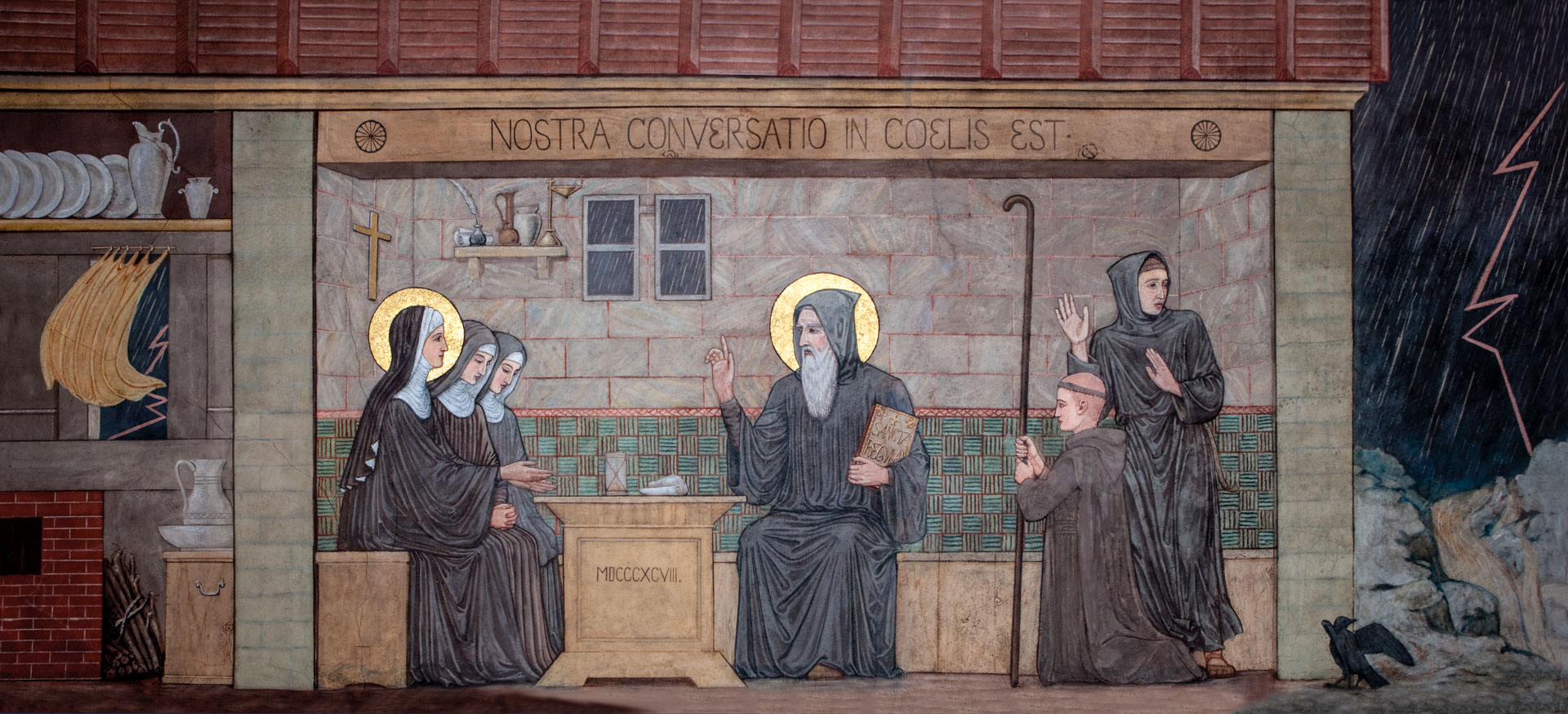
The Conversation
27 marzo 2026
The Right Reverend Benedict Neenan OSB
Abbot of Conception Abbey
Conception, Missouri, USA
It is difficult to talk about the Beuronese Style as a coherent entity when, in fact, there were a couple of styles that competed for «canonization» at Beuron and elements came in and out of favor. The movement was never able to achieve sufficient independence to really qualify as a «style»; it always remained the expression of the strongest individuals in the Beuronese Art School. Yet the work of the Beuronese School does display unique and recognizable characteristics and its existence is increasingly considered significant in the history of 19th-century art.
The three main characters in the development of Beuronese art are the artists, Peter Lenz (later Fr. Desiderius) and Jacob Wüger (later Br. Gabriel), and the first abbot of Beuron, Maurus Wolter. Lenz and Wüger had been trained in Munich and came under the influence of the Nazarene group in Rome. This group got its name from their archaic way of dressing, but their principal goal was to revitalize Christian art, especially on a monumental scale. They studied old masters and tried to relearn the technical skills needed to undertake large frescoes. At the same time, Lenz became fascinated with Egyptian art which was now available to be studied after Napoleon brought back many pieces from his exploits in that country. He believed that the highly stylized form of art that the Egyptians had devised lent itself better than any subsequent style of art for expressing the religious ideal. Lenz and Wüger dreamt of forming a monastic community of artists for they were convinced that, to make sacred art, one should lead a Christian life in community. Their elaborate plans were never carried out but in 1868 they were commissioned to build and decorate a small chapel in honor of St. Maur near Beuron and there they met Abbot Maurus who had a dream and vision of his own. He also hoped that art could be brought back to the service of the church and wanted his new community to play a role in the revival of church art just as the Abbey of Solesmes in France had played a role in the revival of church music. In fact, there were many comparisons made in those days between Beuronese art and Gregorian chant. The three men put their ideas together, not always with harmony and agreement, and the School of Art at Beuron gradually came into being. Consistent with their ideals, Lenz and Wüger became monks. But the artistic ideas and styles of the two men were very different: Lenz looked almost exclusively to Egyptian models and Wüger favored the gentler forms of the Nazarenes. Finally, Abbot Maurus stepped in and decreed that Wüger’s approach would dominate for he considered Egyptian art incapable of expressing the sentiments of Christianity. Nevertheless, Lenz remained leader of the school and his influence is evident in the art that the school produced.
Several monks were active in the art school; some came to Beuron as proficient artists, such as Jan Verkade; others, like Ildephons Kuhn and Hildebrand Müller, were trained at Beuron. They worked together on several churches including the Torretta and crypt at Monte Cassino, the monasteries of Emaus and St. Gabriel in Prague, the monastic church at Seckau, and the Church of the Virgin in Stuttgart. The high point of the reputation of the Beuronese artists was probably 1905, when they were the centerpiece of an exhibition of avant garde art in Vienna. Artists such as Cezanne and Van Gogh were familiar with the Beuronese work and it had some influence over the French school of artists known as Nabis. However, after the early years of the 20th century, the school focused more on reproductions and less on original commissions and eventually the vitality of the early years drained away. Most art historians of the early to middle years of the 20th century, if they discussed Beuronese art at all, dismissed it as a desperate and naive attempt to resist the course of modern art. However, later in the 20th century, art historians began to re-evaluate the style. Anton Henze interprets it as anticipating the 20th century with the instinct that art and community are connected. Harald Siebenmorgen considers Beuronese art as one of the first expressions of the abstract movement that has dominated 20th-century art.
How would one characterize the Beuronese style? What were its proponents trying to achieve? Joseph Kreitmaier calls it a type of mystical art which «veils a rich fullness of mystery behind the sensible form and forces the mind of the viewer to draw back the curtains of these external appearances.» This art is not meant to tell a story, teach a lesson or evoke an emotion; it is meant to push the people who see it into an encounter with God. Granted, in any period, certain attributes of God are emphasized more than others and the artists from Beuron were typical of the late 19th century. If El Greco, another Christian mystical artist, used abstract forms which evoke a sense of Christian fear to bring the viewer to encounter God the Judge, the Beuronese artists used forms which evoke a sense of worship and invite the viewer to join in that worship of God the King.
Beuronese Murals
From Conception Abbey’s web page
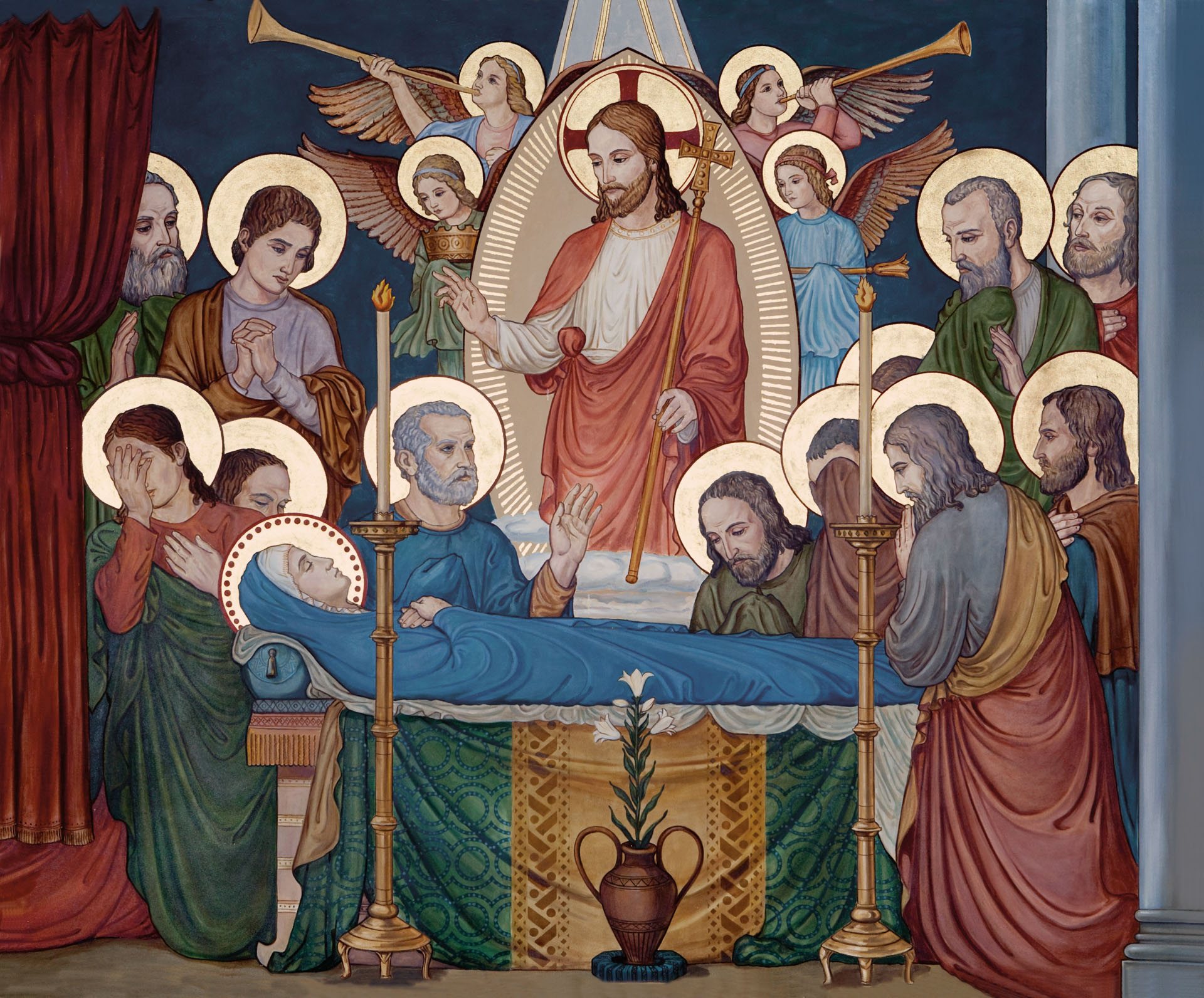
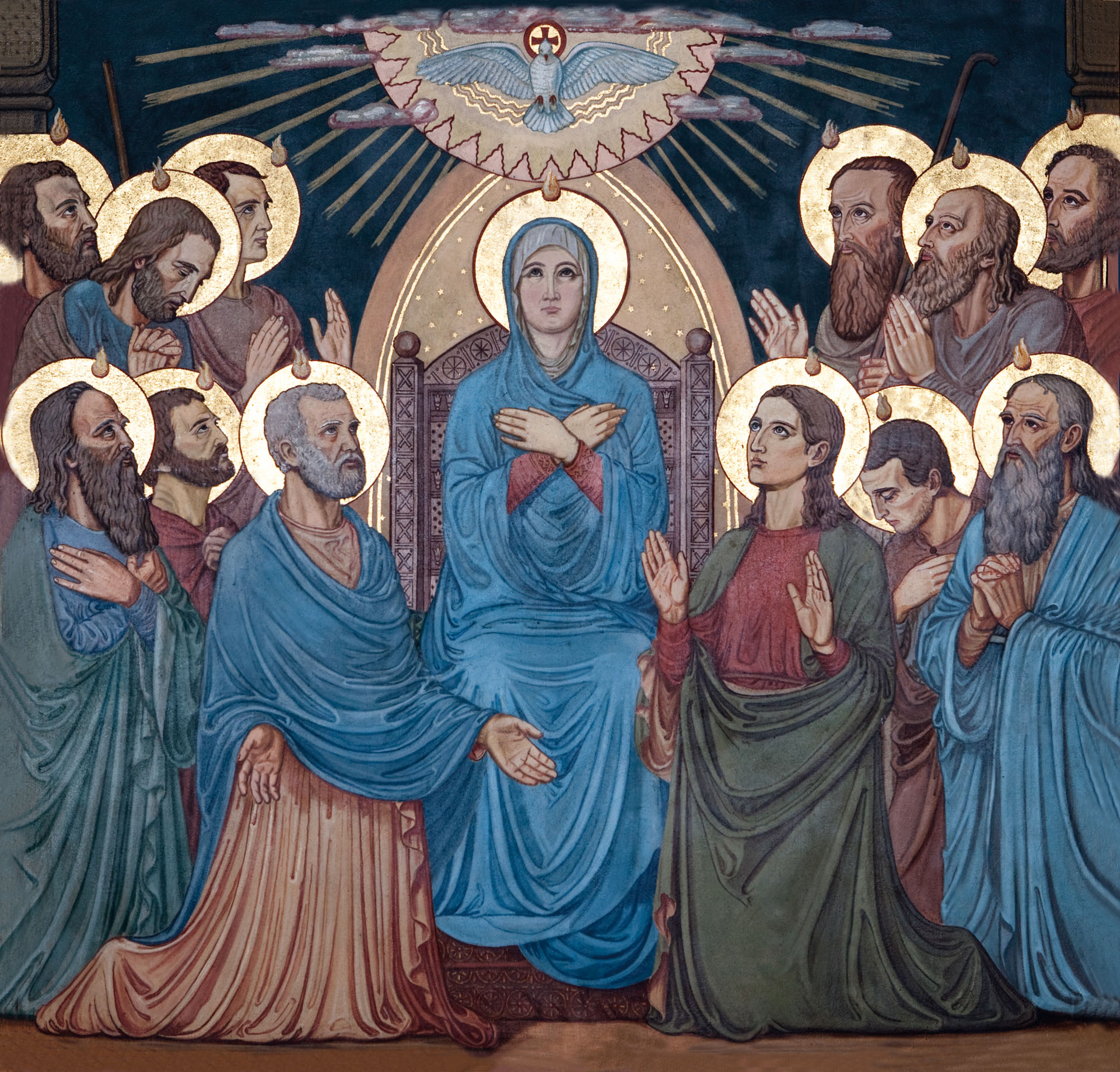
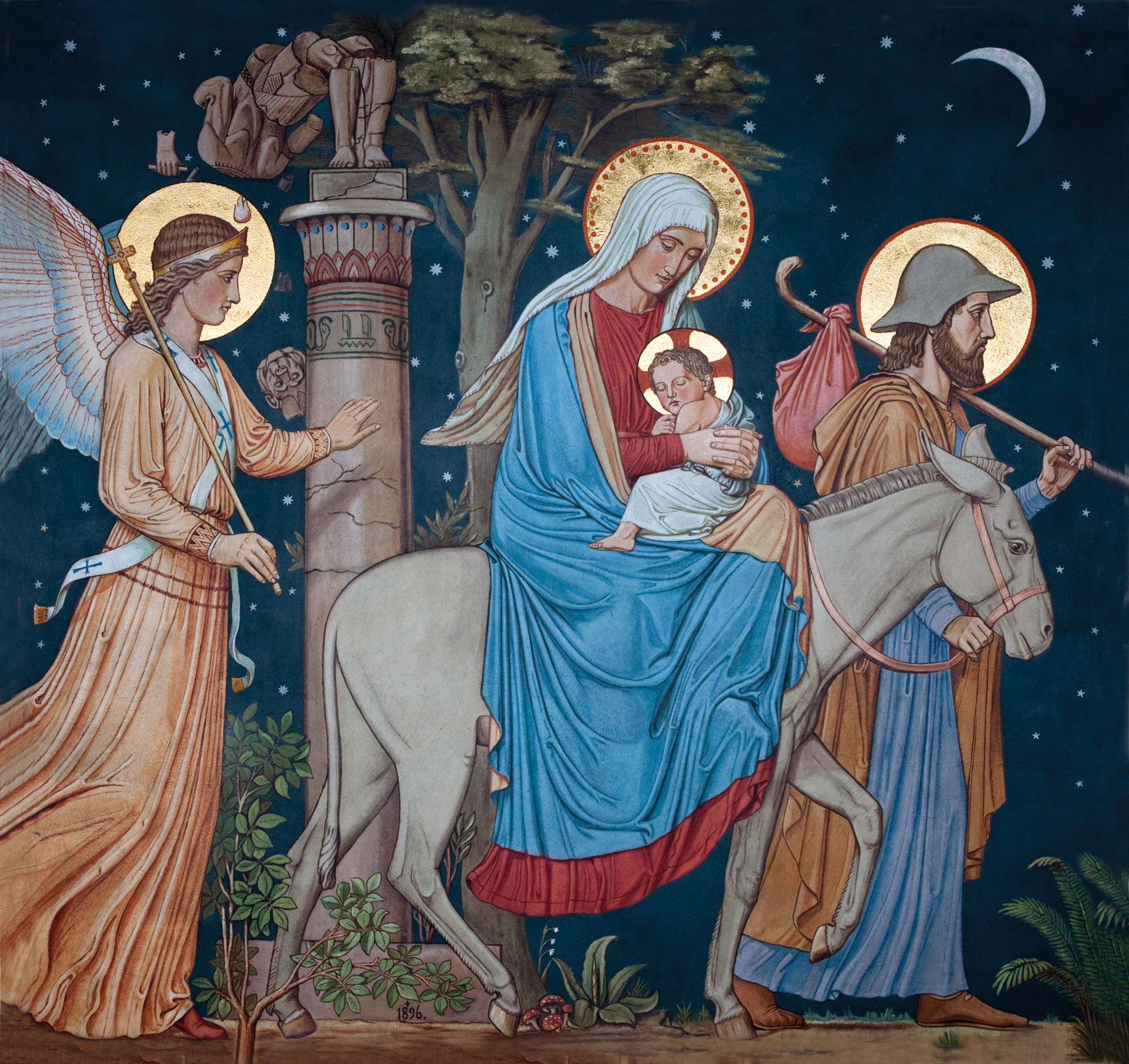
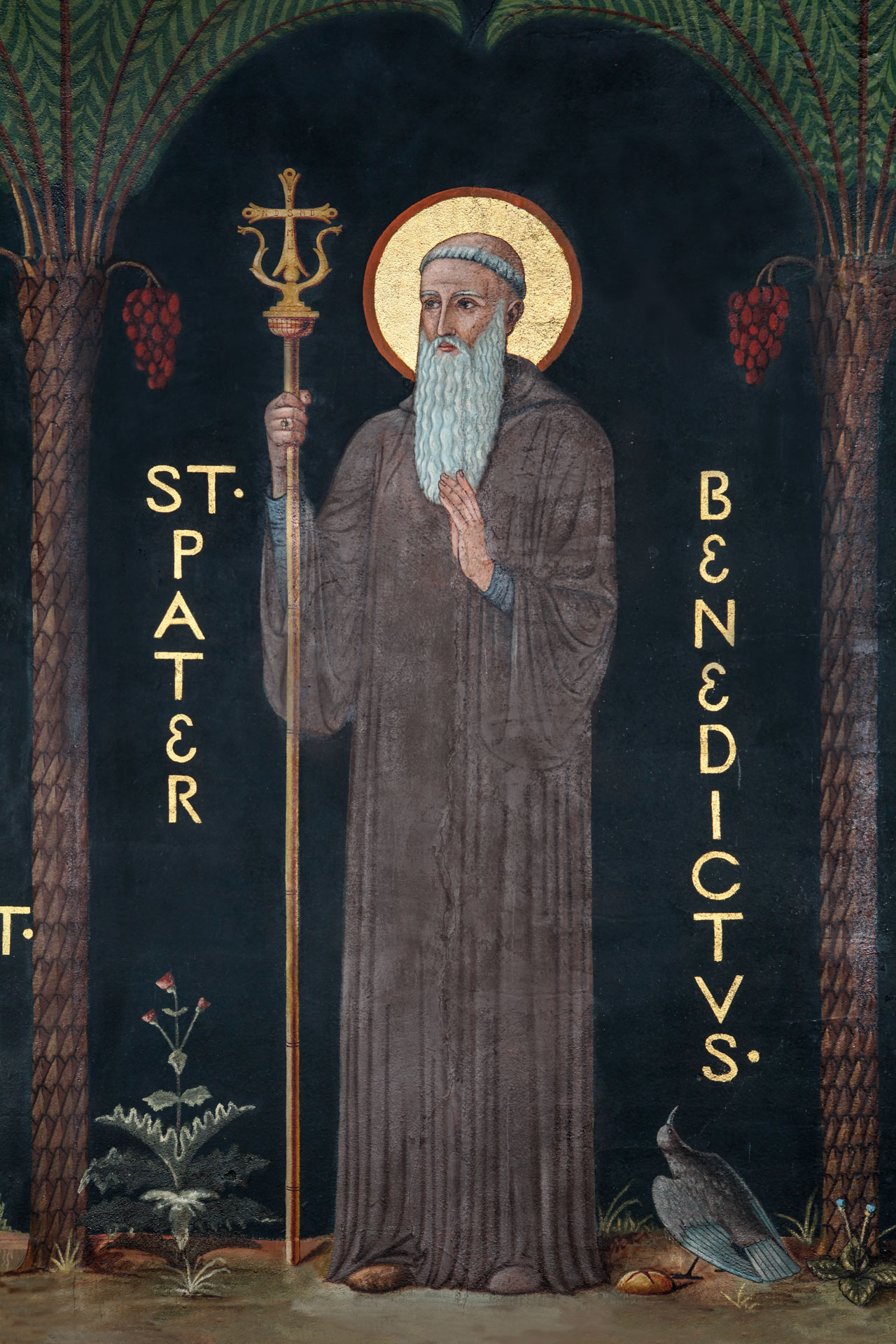
The Basilica’s murals are the most striking feature of its interior decoration. They are fine examples of a style of art called Beuronese. More important, however, is the fact that the murals – as well as the entire interior decoration – were executed by the monks of Conception Abbey. As much as the building itself, the murals testify to the aspirations of the monastery’s forefathers. In 1892, three candidates arrived at Conception from the monastery of Beuron in southwest Germany, two of whom had studied art there. This opened the way for the Basilica’s redecoration after the damage of the 1893 tornado was repaired. Abbot Frowin wrote: «On the advice of Fr. Lukas, I am ready to paint our church with the help of our fraters and brothers … To my regret, I found out that the archabbot of Beuron could not accommodate us by lending a painter from his school.» (Diary, 17 August 1893)
Beuronese art was revolutionary for its time, and also characteristic of its time. It offered a stylized, simplified, and hieratic approach to art which went against the grain of contemporary romantic forms. Yet its search for the pure and ideal is not unlike the movements in the revival of the liturgy and music – and even non-Catholic and “secular” counterparts such as the utopian movements or, as in literature, the transcendentalist movement. Abbot Frowin, also a child of his time, was searching for the simplicity of a “pure” romanesque. It is not surprising that he saw the “pure” simplicity of Beuronese art as fitting decoration for his church.
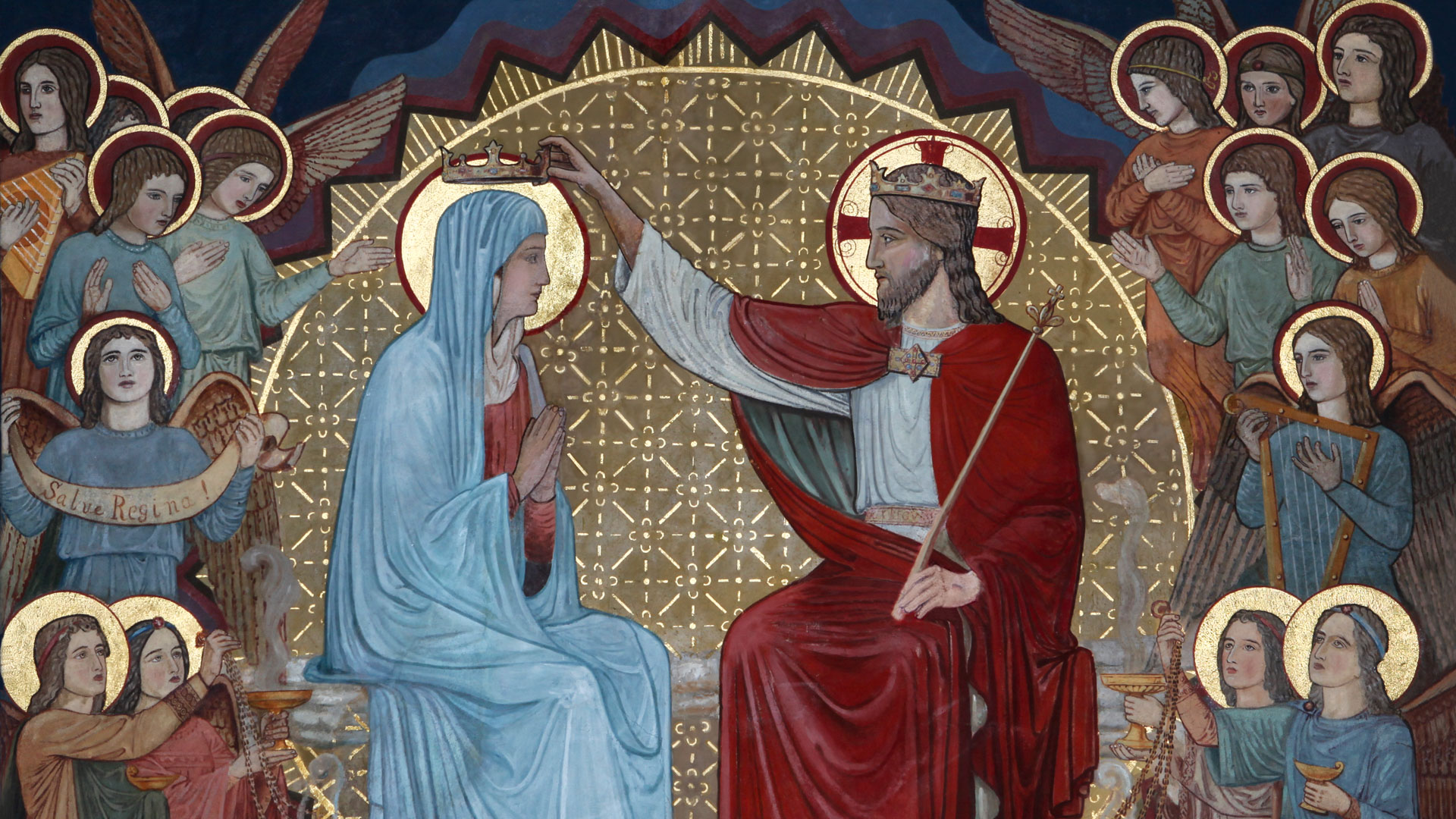
Between 1893 and 1897, several monks of Conception, most notable Lukas Etlin (d. 1927), Hildebrand Roseler (d. 1923), and Ildephonse Kuhn (d. 1921), the latter two of whom had studied art at Beuron, redecorated the walls and ceiling of the Abbey church primarily in the Beuronese manner, retaining elements of the original Victorian stenciling. This is a curious anomaly since one of the Beuronese canons was that all decoration should be done without a stencil. Conception’s was the first church in the United States so decorated. The apse painting of the Immaculate Conception is an original work by Lukas Etlin. The eighteen murals in the central axis are copies from 22 scenes of the Life of Mary cycle painted in the church of Emaus Abbey in Prague, Czechoslovakia, under the direction of Lenz, Wüger, and Steiner between the years 1880-1887. Wüger, who favored less stylized figures and softer tones, was the principal artist behind this project. The church at Emaus was bombed and gutted by fire in 1945, leaving Conception’s murals as perhaps the most complete replica of the Emaus originals. The four transept murals are scenes from the Life of Benedict cycle originally painted at the abbey of Monte Cassino in Italy. Executed under the direction of Lenz and Wüger in the years 1876-1880, they were destroyed in the bombardment of that monastery during World War II.
Reflections on Beuronese Art in the Conception Abbey Basilica
In Memoriam: Padre Joan M. Recasens i Puig OSB
Planificar el futuro de la CIB: estatutos, simposios y la alegría de la vida compartida
La reunión de la BCC aborda las complejas realidades de la Iglesia en China y busca caminos de unidad
Liturgia marcada por la diversidad y la guerra: cartas desde Kuwait
Un signo de esperanza: San José de las Lajas en medio de la crisis energética total de Cuba